
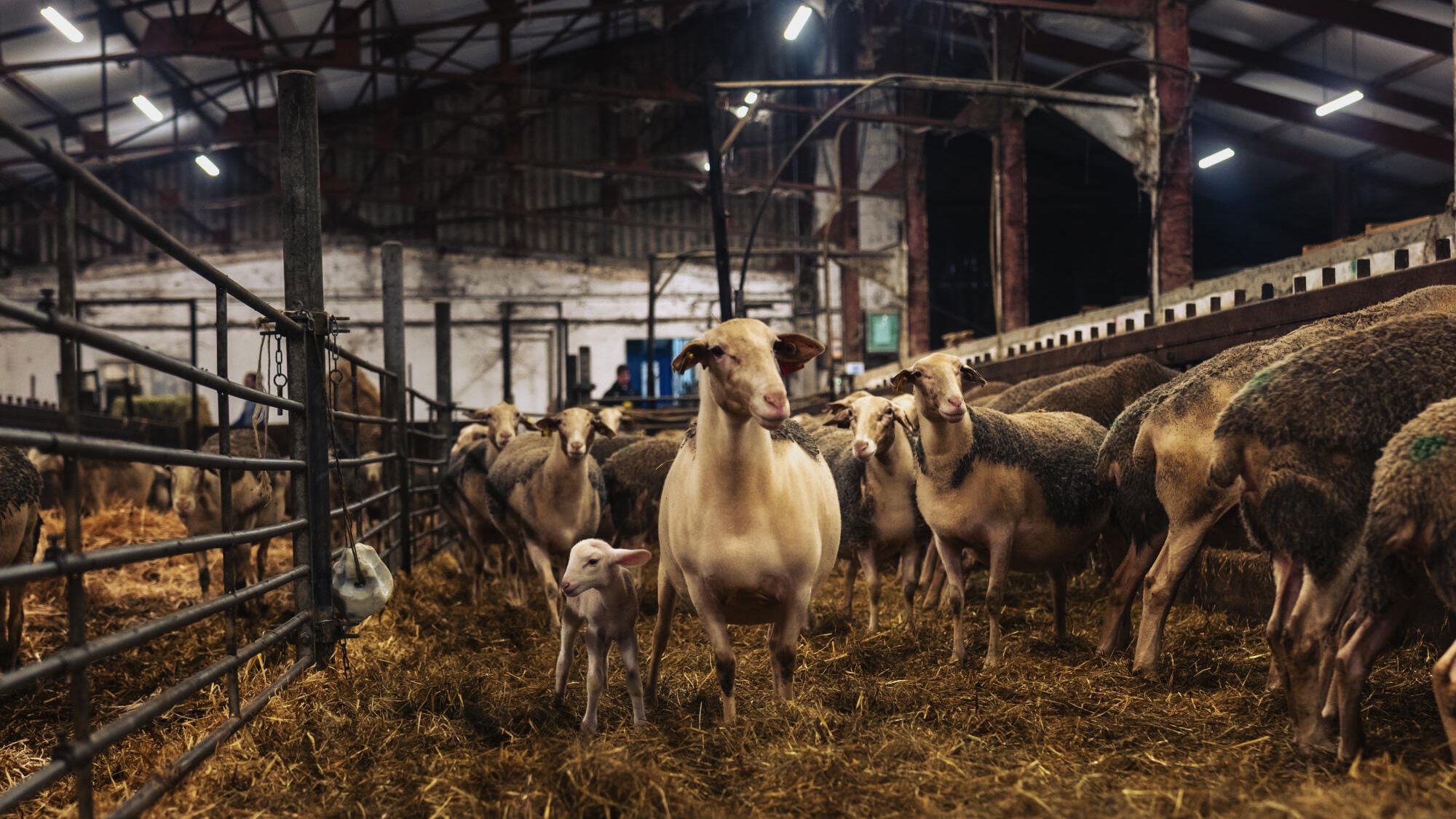
Agricultural Show 2026: the revenge of the sheep
In this year 2026, the International Agricultural Show surprises. In the main hall, an unusual silence: no mooing, no wet noses extended towards the lenses, no star cow to admire. Lumpy skin disease has kept cattle on the farm. An absence that opens up an unexpected space. Because in this void, another herd is in the spotlight, more discreet but just as essential: sheep, first and foremost the Lacaune sheep.
“For two years, I have been saying that one day the face of the Salon should be a sheep! » Jean-François Rousset, deputy for the 3rd constituency of Aveyron, told me in December during an interview for a report on Roquefort. Because, according to this native, highlighting the Lacaune sheep is about much more than a sheep breed: it is about revealing an economy, a culture and a landscape. “She’s the champion. It is robust, it holds up on slopes, it resists temperature variations. And above all, it nourishes an entire territory,” he insists.
He put this conviction down on paper with Thomas Mogharaei in In the land of sheeppublished in 2025. Richly illustrated by photos by Quentin Tourbez, the book crosses the south of Aveyron, from the Causse du Larzac to the greener valleys, and gives a voice to those who live to the rhythm of the herds: breeders, shepherds, artisans.
A discreet world, often ignored, but deeply structuring. Because the Lacaune sheep goes far beyond the pastoral image. “We get much more added value from this animal than from the cow,” says the MP. The beef industry is powerful, but sheep irrigate everything: milk, wool, meat, leather, and even the landscape thanks to pastoralism. »
On wool, long considered a bulky waste, the discussion is coming to life. “We were paying to get rid of them! Whereas with nearly a million sheep here, each producing around ten kilos per year… imagine the resource. »
Little by little, initiatives emerged. In Millau, a soap factory transforms sheep’s milk into fragrant breads with the accents of yesteryear. On Larzac, a craftswoman makes infant slippers from raw wool and lambskin. Others invent natural yoga mats or organic fertilizer made from dehydrated wool. So many avenues that restore value to a long-neglected material.
But the Lacaune sheep is not only a producer of milk and wool. She is also a landscape gardener. “The open meadows of Larzac, these open horizons that we believe to be wild, it was the sheep who designed them,” recalls Jean-François Rousset. Where they disappear, the woods advance, closing the spaces and increasing the risk of fire. “The best way to protect against this is still to put the sheep back in the undergrowth. »
From then on, in the aisles of the Porte de Versailles exhibition center, visitors discovered another agricultural heroine. Less spectacular than a show cow, but infinitely present. A sheep capable of being both an economic pillar, an ecological ally and a source of innovation. Behind each sheep, in this case the sheep breed, hides an entire world, patient gestures, silent know-how, maintained landscapes, which were simply waiting to be told.


