
250 years after Independence, “America is a message of hope and prosperity”
Why has the United States become a model for millions of people?
America has attracted, and continues to do so, those who have nothing left to lose in their home country. It also offered, during the 19th century, something unique: job prospects, available land and, beyond that, a message of prosperity and hope unparalleled in the world to those who could afford a one-way ticket to cross the ocean. The Chinese who fled the Taiping revolt in the 1850s and 1860s, responsible for tens of millions of deaths, found work, even poorly paid, to build the railway. Today, this mixture of despair and the chance of a better life upon arrival explains the significant migratory flows from Central America.
What has this promise changed for the rest of the world?
There is in the American experience a unique capacity to convince the rest of the world that it is a place of economic and social freedom without equivalent. A sector like high technology is a dream for engineers in India who are starting out. An immigrant may suffer from adjustment problems or discrimination, but he knows that his children will become full American citizens and will be entitled to a future full of possibilities. This was not always the case. But American cultural domination in the 20th century helped spread this message.
“It is the first successful model of a viable republic, on a large scale and based on a Constitution such as the Enlightenment thinkers had dreamed of. »
If you had to choose the most important contribution of the United States in two hundred and fifty years, what would you remember?
The first successful model of a viable, large-scale republic based on a Constitution as the Enlightenment thinkers had dreamed of. This political system established a democracy, albeit limited, where slavery in the South supported the economy, but which did not degenerate into anarchy as the defenders of the monarchy predicted and which laid the foundations of modern democracy and the culture of freedom that we know today.
America is identified as a modern genius of innovation, which disrupts our daily lives, from the can opener in 1858 to ChatGPT. How to explain it?
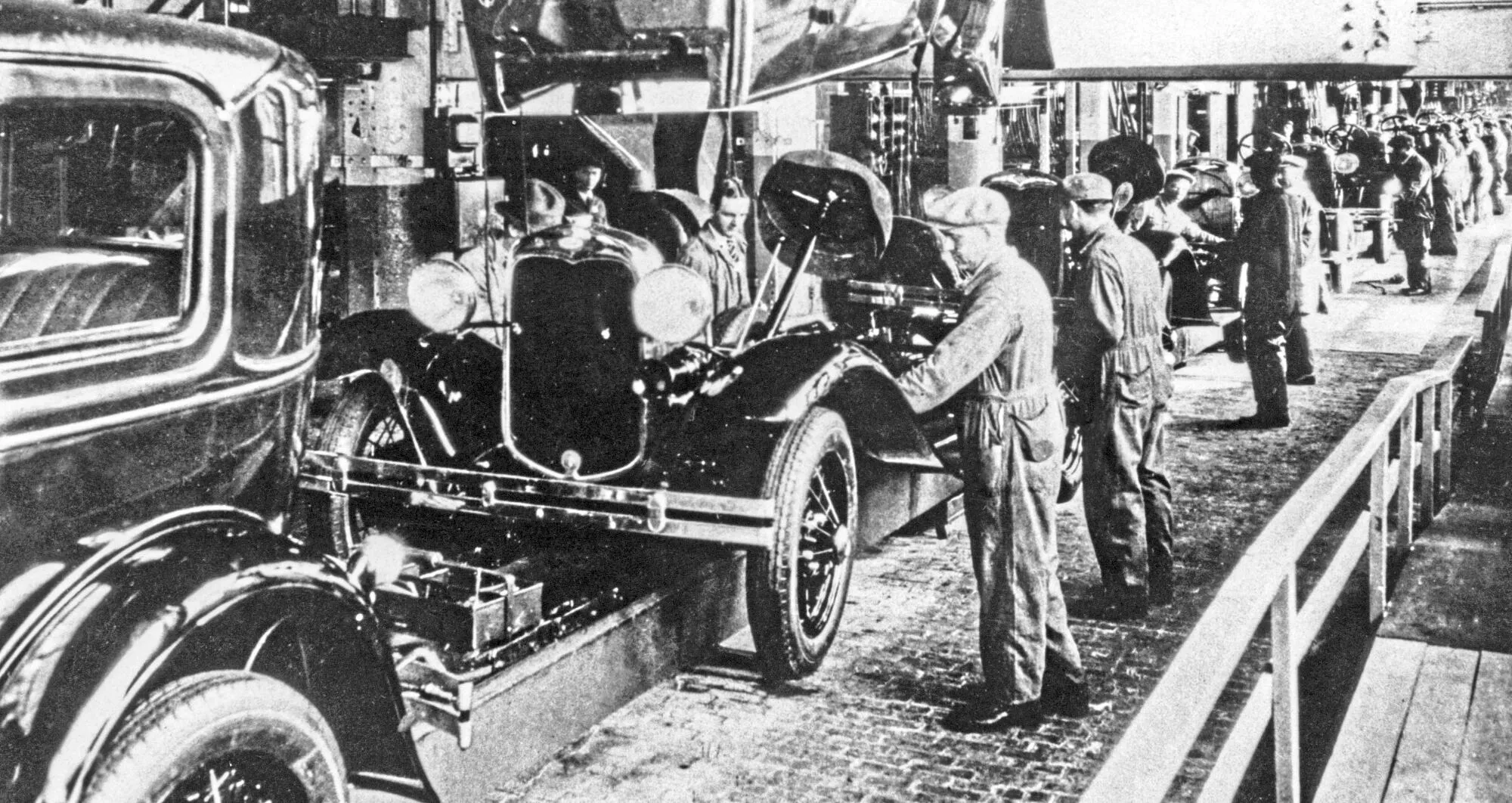
The tin can, the car, the cinema, the plane… Europeans played their role in the development of inventions in the 18th and 19th centuries. But the Americans thought of economic productivity as an extension of democracy, with reduced production costs, rapid manufacturing on assembly lines and well-paid workers, so that, on the model desired by Henry Ford for his automobiles, workers could access the goods they created. This democratization of consumption has become a driving force for innovation.
Why does this vitality fascinate us?
The iPhone is not only a technological feat but also an accessible promise. Without the existence of a market with a high standard of living, there cannot be such a pace of innovation. This is what American capitalism understood and later taught it. The availability of vast space made it possible in the aftermath of World War II to expand the suburbs and allow the middle class to benefit from houses and cars that Europeans, at the time, could only dream of. This helped set in motion a circle of prosperity. The cultural expectation is that if you have an idea, you should implement it and you will not be hindered by bureaucratic obstacles. The downside is the possible exuberance of the market which leads to financial crises, but Americans accept to live with these uncertainties.
How did the culture of this country establish itself?
Hollywood took off in the 1920s, then in the 1950s, following the two great wars. American cinema, particularly in the post-war period, nourished a happy imagination, bathed in optimism and faith in inevitable prosperity, where good always prevailed over evil. Walt Disney’s cartoons are a brilliant illustration of this. For a Europe devastated by war and other parts of the world struggling to escape colonial rule, this message was extraordinarily appealing. The culture industry portrayed an innocent America and contributed to the spread of the American dream beyond its borders.


