
Commissions of inquiry: a spectacle of public utility
It almost felt like a boulevard theater. For six months, the basements of the National Assembly were transformed into an arena where everyone from the world of television paraded: popular presenters, powerful press bosses and star journalists.
At the beginning of April, billionaire Xavier Niel, an influential shareholder in several media outlets, was outraged by questions deemed too offensive. A few days earlier, billionaire Vincent Bolloré, owner of Canal +, CNews and Europe 1, praised the merits of his channels.
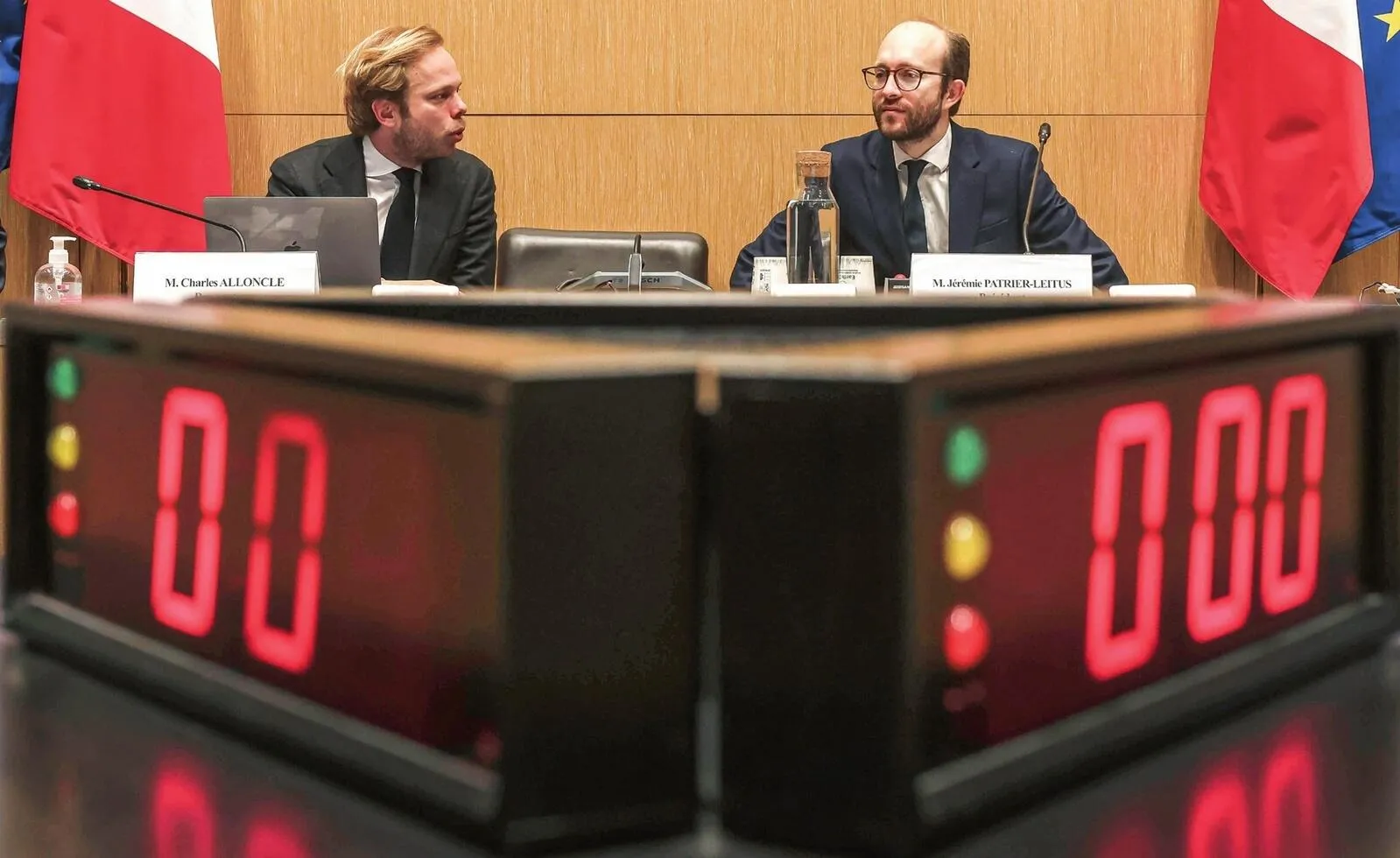
Between these two hearings, host Nagui settled scores with MP Charles Alloncle. The reason for all this parade? The sulfurous commission of inquiry into public broadcasting, launched in October 2025 and due to end on April 27.
Twenty-four weeks of work, 67 hearings, 234 people heard. All the fuss led by rapporteur Charles Alloncle (UDR, Eric Ciotti’s party), and curbed as best he could by President Jérémie Patrier-Leitus (Horizons, Édouard Philippe’s party), who never missed an opportunity to quarrel like ragpickers.
The fact remains that through this uproar, elected officials once again recalled the strength of the commission of inquiry, this tool capable of bringing to light very real dysfunctions. This commission noted failings at France Télévisions and Radio France: exorbitant taxi expenses, reservation of sumptuary hotel rooms during the 2023 Cannes Film Festival, concentration of programs in the hands of a few private companies.
Even before the end of the work, changes were initiated by the president of France Télévisions, Delphine Ernotte-Cunci: taxi costs halved, end of company vehicles, systematic online publication of the surnames of guests on the sets, for the sake of transparency.
Neither rules nor prohibitions
The commissions produce concrete results and that is their entire democratic interest. Created in 1958, during the founding of the Fifth Republic, they give deputies the possibility of investigating on behalf of the citizen.
Intended to monitor government action and reveal possible state dysfunctions, they are formed at the initiative of the opposition. Their thirty members must proportionally represent the Assembly, and their field of investigation cannot relate to facts already investigated by the courts. Apart from this point, neither subject is prohibited nor rules strictly defined.
Despite certain divisive issues, commissions sometimes result in a beneficial consensus. That on drug trafficking ended in May 2024. To conduct his investigations, his rapporteur Étienne Blanc (Senator Les Républicains) mobilized all the prerogatives offered by the institutions: summoning any useful person, demanding documents, access to sensitive information, protecting witnesses, hearing behind closed doors, and even discussing with foreigners, as was the case with the Italian justice system on the status of repentant mafia members.
“These attributions allowed us to precisely document the threat,” explains Étienne Blanc. When it was released, the report was greeted with relief by the police, customs and magistrates.
The government and oppositions took notice of the text, and the bill was largely adopted in Parliament – a rare consensus in a divided Assembly. A national anti-organized crime prosecutor’s office is created based on the model of the anti-terrorism prosecutor’s office.
In 1991, the Senate commission on the contaminated blood affair had already clarified responsibilities. Fourteen years later, that on the Outreau affair led to a profound reform of the judicial system.
Americanization of debates
If the usefulness of these parliamentary commissions no longer needs to be proven, the benefit of their proliferation remains to be demonstrated. In the space of ten years, the tool has gone from exceptional use to frenetic use.
Under the mandate of Nicolas Sarkozy (2007-2012), seven commissions of inquiry were set up; 31 under François Hollande (2012-2017), and already more than fifty since the start of Emmanuel Macron’s second term. “There is a very clear multiplication which poses a risk of weakening the system,” warns the former Minister of Justice, Jean-Jacques Urvoas.
Benalla affair
This profusion is primarily due to the current political context. The day after the dissolution, in the summer of 2024, the government no longer has a majority. The Assembly is fragmented into eleven groups. Few laws are passed.
“The deputies have less power and they turned to this tool which instantly gives them back a capacity for action”, analyzes the former minister who sees, here too, a way “to occupy the media space”. Popular with the media and invested in by the parties, the commissions of inquiry become a spectacle.
The subjects are diversifying – sexual violence in cinema, football governance, Islamist entryism – and the hearings, broadcast live, sometimes take on the appearance of trials under oath, inspired by American practices staged by Hollywood. A form of Americanization of national political life.
One date particularly highlights this shift: July 2018. While France celebrates its victory at the Football World Cup, Emmanuel Macron continues reforms without being rushed. But the broadcast of a video showing one of his close collaborators, Alexandre Benalla, hitting two demonstrators, triggered the first crisis of the five-year term.
“Logically we want to shed light,” recalls Jean-Pierre Sueur, then a socialist senator and co-rapporteur of the commission responsible for investigating this murky affair, where nickel-plated feet and high levels of power mingle.
Very quickly, the debates became passionate. Images saturate television screens and channels achieve huge audience ratings. “They even stopped me at the pump to ask me about the auditions,” laughs Jean-Pierre Sueur in an almost childish voice.
Under the crackle of flashes, the senators, impeccable suits and well-informed questions, assert themselves like the characters of a major summer soap opera, opening the way to unprecedented media coverage.
Obviously, the commissions were not thought of “in the age of social networks, news channels, clash and buzz”, underlines Jérémie Patrier-Leitus, met in the gardens of the Assembly, who regrets the repeated appearances of his friend Charles Alloncle on TV sets.
To avoid any exploitation, he pleads for a form of “media diet” during the work. Others are opposed to it, pointing out the risk of cutting off citizens’ institutions, and of returning a now appreciated system to anonymity. The ridgeline is narrow, the noise still threatening to cover the bottom.
How many people were affected?
234 people were interviewed by the commission on public broadcasting.
Source: National Assembly.