In Lebanon, the deceased are also condemned to exile
At the end of an April day, the light is slowly fading on the heights of Haret Saïda, in South Lebanon. Many families came to the cemetery to pay their respects at the graves of their loved ones. The hill overlooks the city and the sea, in a deceptive calm.
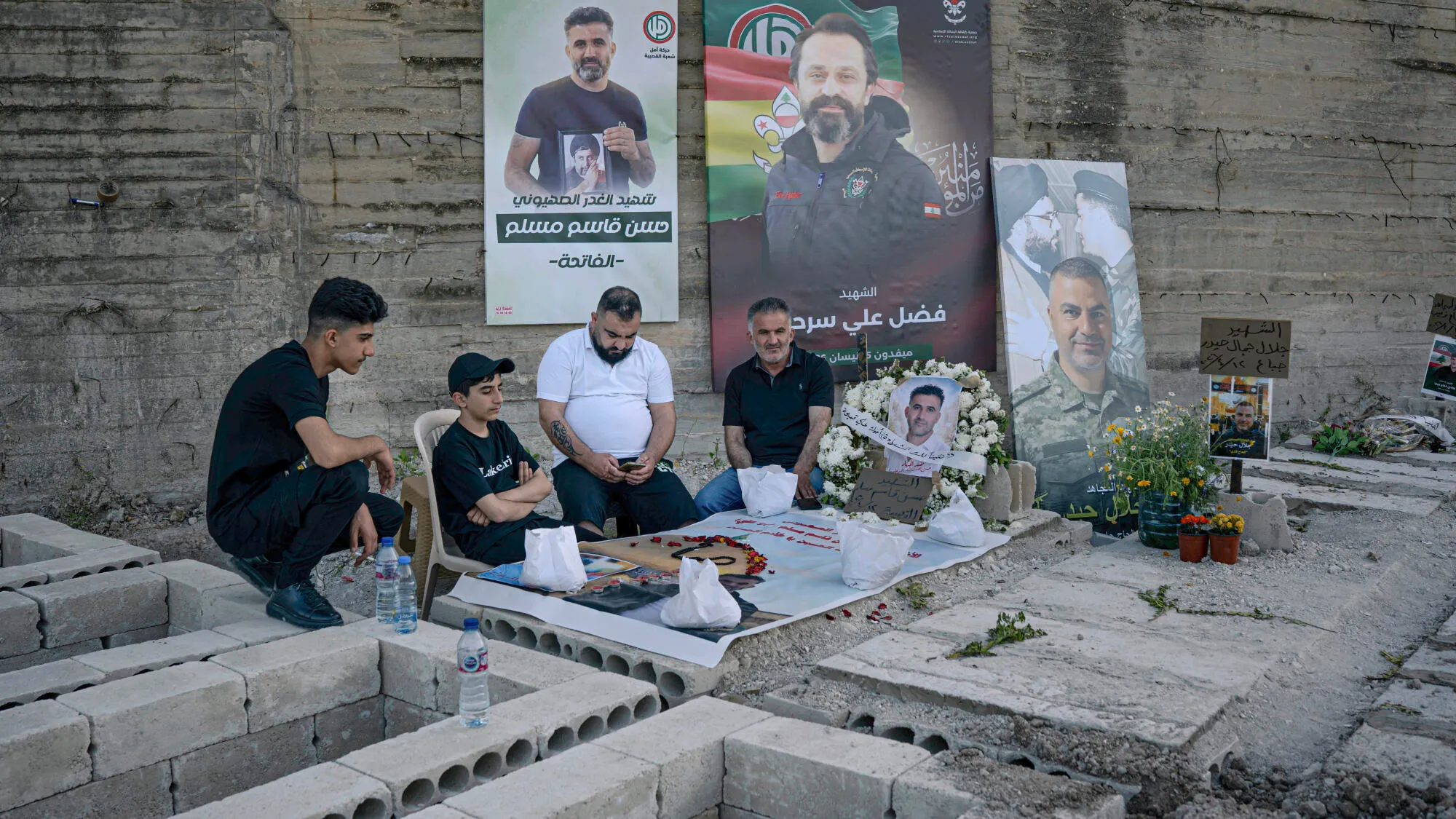
Since March 2, the place also bears the marks of the war which is striking the country. High up, an extension of the cemetery was hastily built on the side of the hill. These are the temporary homes of the dead in exile. The earth is still fresh, the grass that usually covers the graves has not had time to grow. In place of tombstones, simple wooden signs, planted in concrete blocks, indicate the first names of the deceased. Those who rest here are not intended to stay here.
Impossible to return to the village
In the Shiite tradition, a principle is that “to honor the dead is to bury him”. The body must be buried as quickly as possible, before any deterioration. But the war disrupts these habits.
Since the outbreak of a new conflict on March 2 between Israel and Hezbollah, due to rockets launched at the Hebrew state by the Lebanese Shiite militia party in the service of Iran, bombings by the Israeli army have left at least 2,294 dead, including 177 children, according to the Lebanese Ministry of Health. But also more than a million displaced people. So, the funeral rites adapt. Shelling and massive displacement make it impossible to return to the village. Burials take place elsewhere, in waadia, in “deposit”.
In the shade of a tree, a sheikh*, who has been accompanying these temporary burials for several weeks and preferring to remain anonymous, explains: “It’s like a good that we entrust and which will be returned later. These bodies will not stay here. One day, God willing, they will be brought home. »
He himself fled the Nabatiyeh region, located in the southeast of the country, on the border with Israel. Normally, when a death occurs, the body is washed, wrapped in a shroud, then directly buried. But in times of war, the remains are placed in coffins to preserve them for future transfer.
Once placed in waadia, the body will no longer be handled. The violence of the strikes makes certain gestures impossible. “Many remains are burned, mutilated or in pieces. They are too damaged to be washed,” regrets the sheikh.
In Haret Saïda, the graves are now lined up by the dozens. Around 70 people are buried in the temporary cemetery, says Abu Al Abd, alias of the member of Hezbollah’s media section responsible for showing people around the site.
“The number changes every day,” he says. Around ten graves are ready to receive new remains. At the entrance to the place, an empty plywood coffin. They are found in each of the places dedicated to burials in waadia, where the Shiites have been displaced.
The double punishment of families
Sitting on a plastic chair, Oum Fadel, draped in black, stares at a grave. She speaks to her son as if he could still hear her. “Why did you go to work that day?” » she questions, her face buried in her hands.
On March 28, Fadel Abdallah Ayoub, 36, was killed in an Israeli bombardment on his village of Kfar Tebnit. Displaced, he returned there to collect some things and stopped in his uncle’s café to greet him before leaving. A strike on the establishment kills them both. He leaves behind a wife and two children.
A little further away, Zeinab** came to pray at the grave of her cousin, his wife and their two children, killed during a strike on Jbaa on April 8. During this day of massacre, the Israeli army struck Lebanon more than a hundred times, killing at least 357 people. “We chose to bury them where we are now. In our village, we could not go to the cemetery,” she explains.
Rana Naji’s husband also chose to bury her near him, where he was moved. This mother of two little girls, originally from the Nabatiyeh region, volunteered to help other exiled families. On April 8, she was killed during a bombing on the village of Keyfoun while on her way to the pharmacy.
Israel’s strike left six other victims. In the cemetery of his place of exile, his grave is covered with flowers. A large poster with his image was installed nearby. As he meditates, her husband is joined by Rana’s father and brother.
All three hug each other, crying. “Not being able to bury her at home, on our land, constitutes another form of violence in this war. This adds to our pain,” he confides.
“In Lebanon, the connection to the land is deeply rooted,” claims Wael Jawhar, mayor of Keyfoun. To be buried in your village is to belong to a lineage, to a history, to a community. It also allows the living to maintain a concrete link with the dead. “We want those who defended it to be buried there, so that we can go to their graves, read the Koran, pray for them,” adds the local elected official.
Caution and uncertainty
When the temporary ceasefire was announced on April 16 between the Israeli army and Hezbollah, some uprooted people returned home. But many remain cautious. Strikes can resume at any time. Uncertainty dominates.
“Even in the event of a ceasefire, I will not return straight away. Israel does not respect its agreements,” Zeinab confided the day before this announcement. During the previous ceasefire, the United Nations Interim Force in Lebanon (UNIFIL) counted more than “10,000 Israeli air and ground violations” one year after its entry into force, on November 27, 2024.
In Tyre, two vacant lots have been developed, one at the entrance to the city, the other near the archaeological site. These cemeteries had already been used during the 2024 war, before being emptied during the ceasefire.
In the second, the coffins rest in a large trench. Here the dead have no name, simply a number which indicates the location of their remains. At the time of writing, none of the families met have yet taken steps to repatriate the bodies. In Lebanon, the dead wait, like the living. The war uprooted them too.