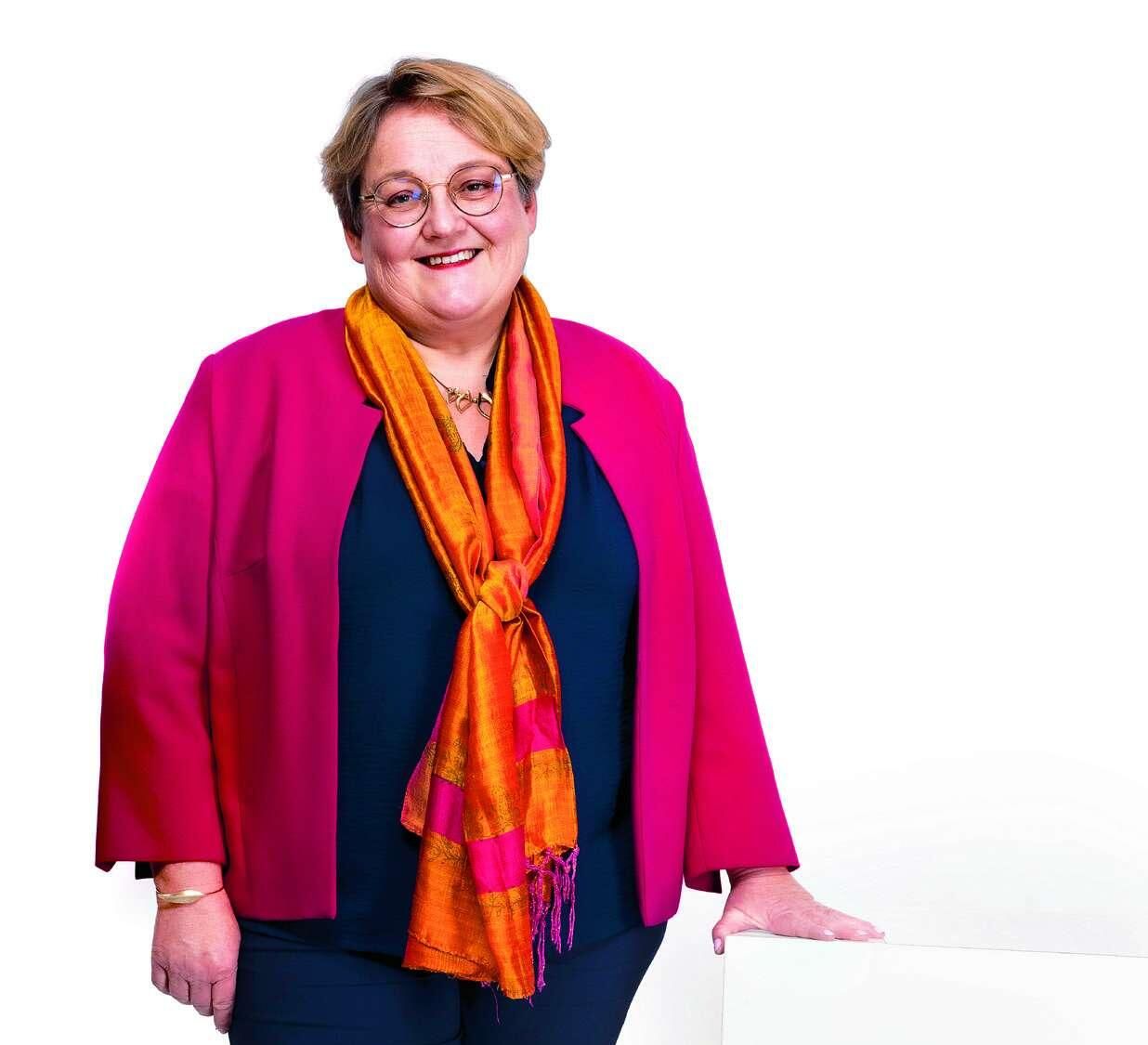
(Editorial) “A worried identity”, by Marie-Yvonne Buss
“Dear friend, on the eve of our expulsion (…), would you agree to be the custodian of our most precious possession, the relic of Saint Peter of Tarentaise? » The missive, dated October 9, 1880, is signed by the abbot of Tamié.
And this is how the Savoyard branch of my family found itself secretly hosting a reliquary… This unusual request illustrates the harshness of the anticlerical measures which, at the end of the 19th century, set French political life ablaze.
Born in 1873, The Pilgrim had thrown all his strength into the battle, and his Catholic activism, too, was not smooth. At the turn of the following century, the passing of the 1905 law would organize the respective places of the secular State and religion in a less warlike manner. To the State and its agents, a strict obligation of neutrality. To the clergy and their flock, an expression of faith limited to the private sphere. To summarize colloquially what Aristide Briand, rapporteur of the law, pleaded at the time: everyone at home, and the Republic will be well guarded.
This distribution of roles still remains the main compass for elected officials on the ground. When creativity is also present, local life does rather well, as shown by our survey in Suresnes, in Hauts-de-Seine. But does reducing secularism to a “neutrality” imposed from above still allow us to take into account the social complexity of France today? The result of the first round of the municipal elections is, from this point of view, eloquent. Do the Muslim Ile-de-France voters who voted for La France insoumise in Saint-Denis all attend the mosque regularly? Nothing is less certain. But they undoubtedly express an identity malaise which serves the party founded by Jean-Luc Mélenchon. Especially since our republican secularism is still seeking its instructions for combining faith and civic commitment, as Yasmine testifies..
Welcoming this uneasy identity is today a major challenge for our democratic practices. And Catholics, who are not spared the temptation of voting for the extremes, are also concerned. It turns out that the current president of the Conference of Bishops of France, Cardinal Jean-Marc Aveline, is a figure in the Phoenician city, where the outgoing mayor finds himself closely followed by the candidate of the National Rally. The time is no longer, and fortunately, for voting instructions given from the pulpit. There is no doubt, however, that the public voice of the main leader of the Catholic Church remains awaited. And will be closely scrutinized.