In Georgia, priests denounce Moscow’s influence on the country’s Orthodox Church
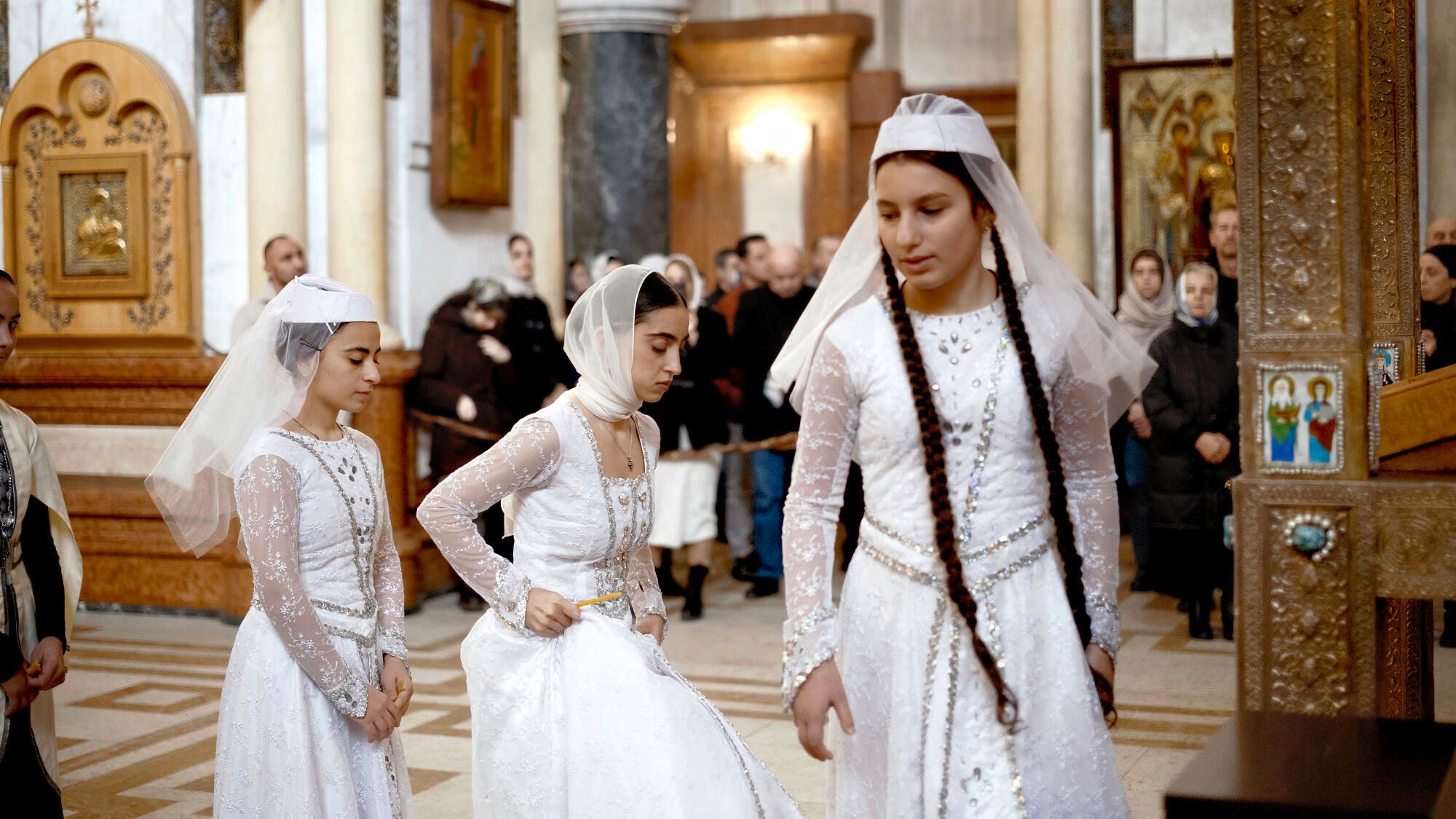
No matter the gusts that sweep through Tbilisi, the Cathedral of the Holy Trinity has a festive air. The communion of 80 teenagers is celebrated there, a few days before Orthodox Christmas, on January 7.
The boys proudly wear the tchokha, a traditional coat fitted at the waist and fitted with a silver dagger; the girls, long dresses of white or red silk. Polyphonic chants resonate in the nave while around ten priests in sumptuous robes perform the rites.
Mamuka watches over the young people: it was he who ensured their theological education until this mass. A member of the Tchokhosnebi order, a brotherhood which defends traditional Georgian values, he owes everything to the Church: “Our country was built thanks to religion and its leaders.”
One of them focuses his adoration: “I am so proud to have been born during the reign of Ilia II,” exclaims the fifty-year-old. The Patriarch of the Georgian Church “knows everything about everything, he holds the truth.”
Ilia II is one of the most powerful figures in post-Soviet Georgia. Inducted in 1977, he lived through the end of the USSR, a civil war, the fledgling arrival of democracy and the Russian invasion of 2008, until the recent return of an authoritarian regime.
In thirty years, the Orthodox Church has become the most influential institution in the country: 85% of the population declare themselves to be believers. Although fiercely independent, the institution receives several hectares of land and tens of millions of euros each year from the State, which cannot govern without it.
Shio, maligned metropolitan
It is not uncommon to hear that when the patriarch dies, the flood will hit Georgia. But Ilia II is dying. At 92, seriously ill, he speaks with difficulty and no longer walks. The question of his succession arises, half-heartedly, in the secrecy of the holy synod.
From 2017, the appointment of Metropolitan Shio as number two in the Church fueled rumors. Close to pro-Russian identity movements, he is seen by his detractors as an agent of Moscow. “Shio only exists to defend Russian interests at the highest level of the clergy,” adds Beka Mindiashvili, a theology researcher.
More recently, the ruling party, Georgian Dream, has made a liberticidal about-face: the opposition is threatened with a ban and arrests are increasing. A drift that civil society claims is controlled by the Kremlin.
Then, the anger suppressed for too long in certain priests exploded. “The highest dignitaries of the Church are relaying the speech from Moscow, in cahoots with the government,” insists the leader of the revolt, Archimandrite Dorote Yurachvili, 57 years old. There are only a handful of them who openly rebel, as the risks of ending up defrocked are so real; but they are shaking up an institution where silence is golden.
They flood their Facebook pages – very widely used in the country – with calls for the resignation of the executive and the holy synod. “Many priests live in fear but, deep down, they support us,” assures the monk with the long white beard.
The slingers in the viewfinder
Accusations of collusion are not new. Destroyed by the Tsarist Empire, the Georgian Church was partially restored by Stalin – a Georgian – after the Second World War.
The clergy, trained in Russia, is headed by the “fifth department” of the KGB, responsible for ecclesiastical affairs. “The religious conscience of Ilia II is imbued with Sovietism,” specifies Beka Mindiashvili.
In 1990, the Church became formally independent again, but exchanges with the Russian patriarchate persisted. Many subjects bring them together: defense of ultraconservative family values, rejection of European influence or refusal of ecumenism.
Some faithful, for their part, support their Church. “I don’t believe these rumors of Russian influence for a second,” says Ana, 19. She who never misses a service at the Holy Trinity also has complete confidence in Shio: “If Ilia II chose him, it’s because he deserves it.”
Contacted, the patriarchy refutes any foreign interference and denounces “the shameful comments of a few agitators”. In mid-December, Dorote Yurachvili was deprived of the right to celebrate masses. Others are in the sights.
“They can poison me, kill me, it would be worthy of Russian practices,” believes the clergyman, but he is not about to give up. For more than a year, demonstrations have been organized daily to denounce the regime in power. The fallen monk has exchanged his altar for processions.