
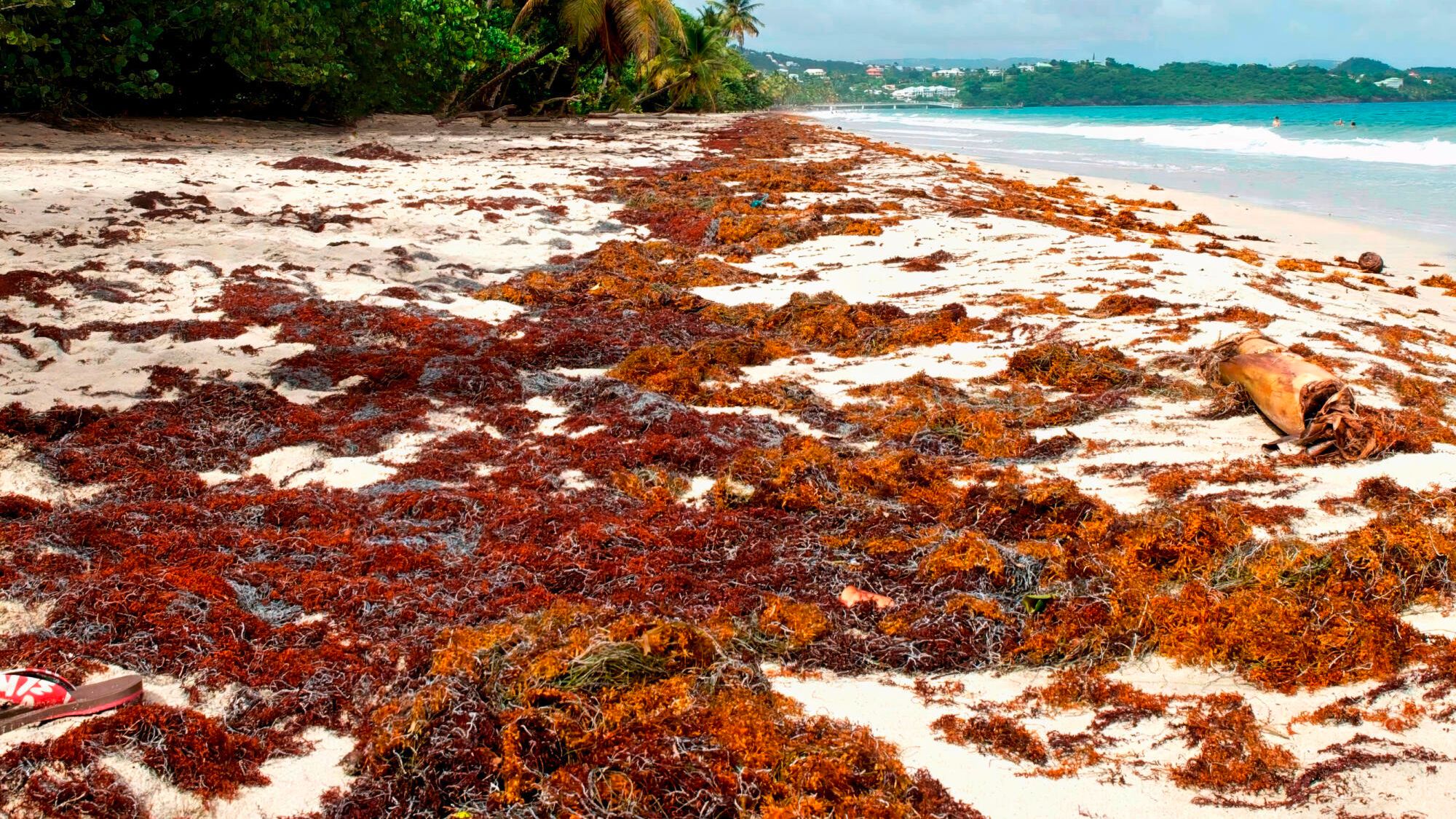
In the Antilles, sargassum boosts biodiversity
Stuck for four days. Setting off on October 25, 2026 for the second stage of the Mini Transat, Alexandre Demange’s small sailboat, which was leading the race, found itself trapped south of the Cape Verde Islands in an immense bank of floating algae, reducing its lead to nothing. He finished second in the race, a little disgusted by this mishap. It must be said that the phenomenon is becoming problematic: over the past fifteen years, a large belt of Atlantic sargassum has appeared, 8,800 km long in 2025, between the Caribbean and West Africa.
Uncontrollable proliferation
Two predominant species of algae coexist in these immense rafts of plants which also form real islands of biodiversity, offering shelter and shelter to different species of fish and crabs. These algae, when they are not attached to the seabed, float with the currents thanks to the small plant vesicles present all along the plant and which form so many floats. Taking advantage of the sun for their photosynthesis, they benefit from nutrients and minerals from natural upwellings of deep water. But also those that deforestation in the Amazon and the subsequent soil erosion throw into the sea. To the point of causing uncontrollable proliferation.
A growing problem, especially since the queen conch, a large marine mollusk which naturally grazes on these algae, has been overfished for human consumption and no longer fulfills its regulatory role.


