
Marine Rosset President, assumed controversy
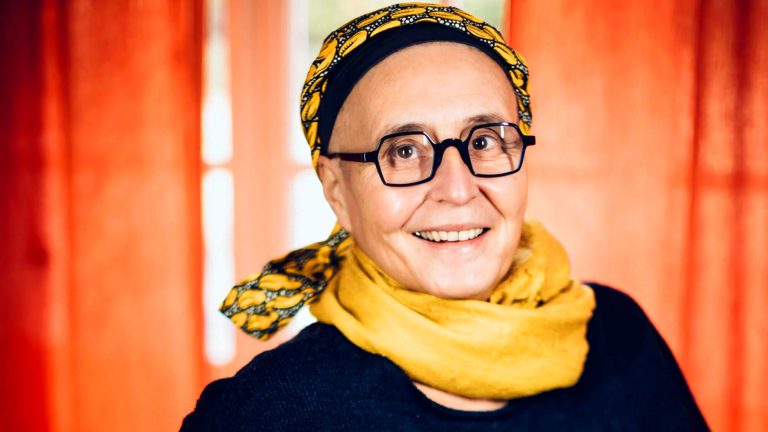
The Scouts and Guides of France are struggling to get out of the turmoil triggered by the election of their new president. Saturday, June 14, the Board of Directors (CA) of the association elected Marine Rosset, 39, former candidate NUPES then new Popular Front in the legislative elections of 2022 then 2024, married to another woman and mother of a child born by PMA. It is also openly favorable to the right to abortion. His arrival at the head of the first Catholic scouting movement in France caused a shock in part of the clergy and the faithful.
This large majority election (22 votes, 1 against, 1 abstention) highlighted tensions hitherto contained and questions the Christian identity of the movement. “The question that arose at the time of the vote is not to be for or against the Church, but who we wish to elect as president,” says the Scouts and Guides of France (SGDF). “Marine Rosset, vice-president for several years, was distinguished by her work and her investment,” explains the association, who also assures that “the choice of the new president is not an act of opposition to the church.”
“I am not in favor of naval candidacy”
However, the tension was palpable at the time of the election. Father Xavier de Verchère, chaplain general of the movement, spoke that morning before the board of directors, and concluded with these words: “I am not in favor of the naval candidacy for the chairmanship of the SGDF and I will not vote for her.” A significant position, even if, recalls the movement, the voice of Father Xavier de Verchère is advisory.
This refusal expressed by Verchère’s father is not a simple isolated opinion. His opinion, the Salesian father said they share it with his assistants and the other chaplains general, and having discussed it with Cardinal Jean-Marc Aveline, president of the Conference of Bishops of France (CEF). “We are not immune to weakening, a fracture, silent or thundering departures of a certain number of members, families and chaplains, even a darkening of our relations with the CEF,” he warns. He adds that Mgr Loïc Lagadec, the bishop accompanying scout movements,, After having “consulted our ecclesial bodies at the highest level”, alerts the risk of “cleavages” and “media storms”. These concerns reflect the fear that the Scout movement would swelled in a lasting crisis of confidence.
“Priests do not understand”
SGDFs are a church movement. To be able to say Catholic, they received canonical statutes constituting them private association of faithful, after approval of the CEF. According to canon law, private associations of faithful are “subject to the government” of “the competent ecclesiastical authority”, “to which it is up to have care that the integrity of the faith and the mores are preserved there”. In the introduction of current statutes, obtained in 2005, it is stipulated that the educational mission of the movement is carried out “in communion with the Church”.
Taken in the crisis, the general chaplaincy and the French episcopate remained silent. The church is faced with a delicate situation because it cannot lose the link with a movement that connects it to 66,000 young people and children. The chaplains of local groups, they are struggling to situate themselves. “We all feel a discomfort that is linked to our place as a priest in the movement,” says Father Clément Barré, priest of the diocese of Bordeaux and chaplain Scout. “The priests do not understand what is happening in the movement,” admits Christophe Jantzen, an assistant chaplain.
In this type of structure, the succession is preparing several months in advance. “The Board of Directors has addressed the possible candidacy of Marine Rosset since February”, specifies the communication department. Even if it means assuming the possibility of confrontation with the church? “The hierarchy of the movement considers that it must advance the institution on certain subjects such as homosexual marriage or bioethical questions”, analyzes the Dominican Yves Combeau, scouting historian in France. There is a kind of “pretension of the movement to want to reform the Church,” says Christophe Jantzen, a deputy chaplain. “It is a wealth that different sensitivities within the Church can express themselves,” retorts movement. “We prefer to have a synodal relationship to the church rather than vertical,” he adds.
“We hear the dissatisfaction”
The base, for the moment, remains rather far from these considerations. Local officials generally have few political motivations and young people, mostly, remain indifferent to the turmoil caused by the election. “I saw the name of the new president hyper quickly, between chefs we did not talk about it, and I think that scouts and guides are not aware,” said Thaïs, chief to Yvetot (Seine-Maritime). “Le Louveteau is not concerned with the president but to prepare its summer camp,” adds David Crépy, member of the CA from 2005 to 2017 and project manager in the national team. On the side of those responsible, on the other hand, the election arouses more marked reactions. Group leaders challenge their superiors, chaplains express their embarrassment. In the parishes, the subject is talked about, putting the priests of the galling movement.
Did this part of the controversy expect it? “The association was preparing for any possibility,” replied the SGDF. “Our association is not reduced to one voice, and it is healthy”. On July 9, the chaplain general and four members of the turnover attempted to reassure by sending an email to the priests and spiritual guides of the territories: “We hear the dissatisfaction (…) and strongly wish to open a fraternal dialogue with each”. The movement remains “attached and rooted in the wisdom of the Church”.