Prefect Lépine faced with the chaos of Belle Époque Paris
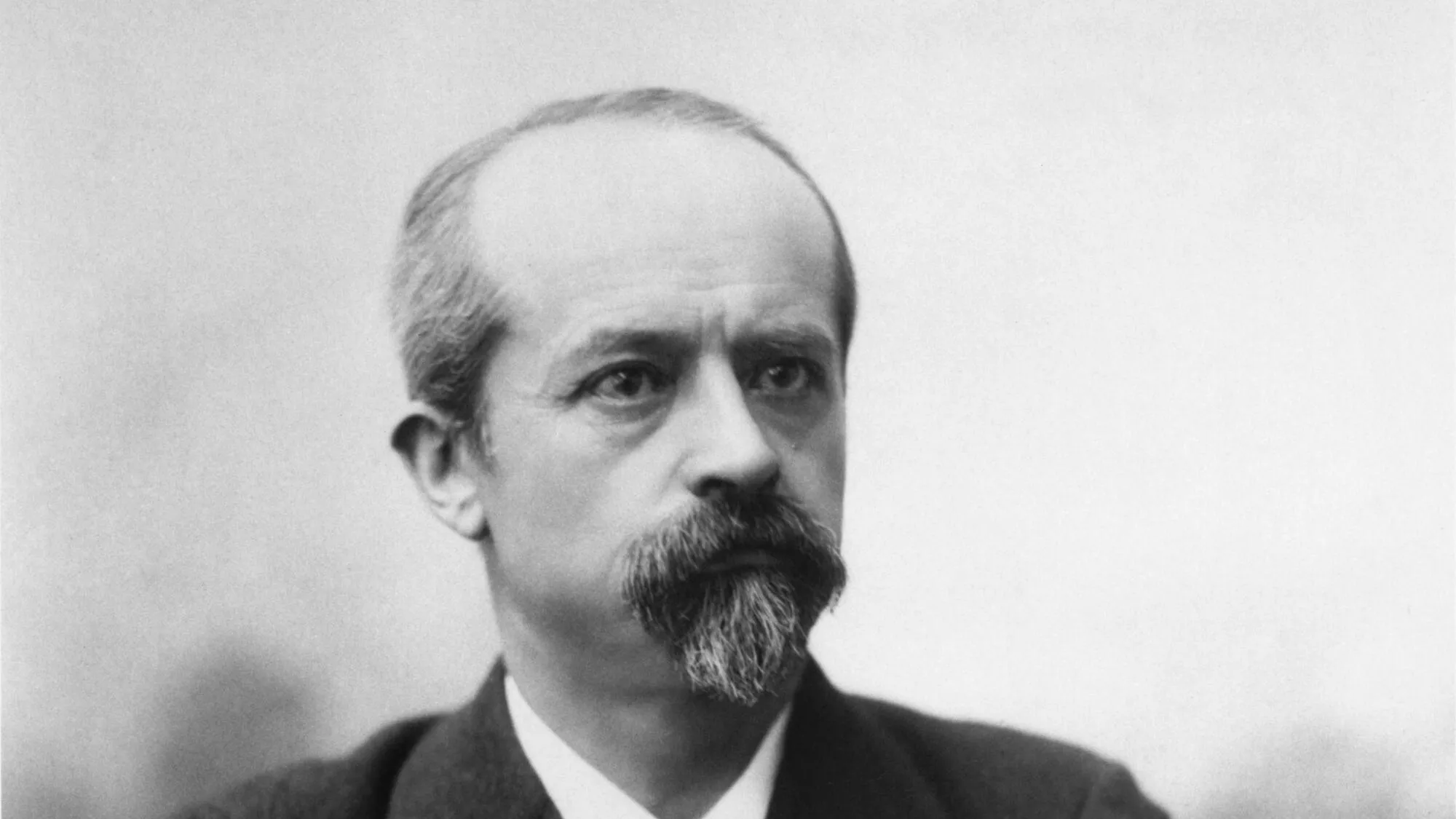
Paris 1929. Like every day, I leave my home on rue Joseph-Bara, cane in hand. With small steps, I reach the Boulevard du Montparnasse, breathing the familiar air of my neighborhood. “Hello, Mr. Lépine,” some passers-by say when they see me. I respond with a discreet greeting, each time happy to see that the Parisians have not completely forgotten me, even if I have become an old man of 83, with a disheveled goatee, always dressed in the same gray coat.
I have been retired for sixteen years now. For the first time, I took up the pen to write down my memories (see box at end of article). My daughter Madeleine supported me in this endeavor. Because I was rather a man of action, even if that is hardly obvious from my stooped figure. But if I told you how I used to walk around this city…
Here I am, Louis Lépine, appointed police prefect of Paris on July 11, 1893, after a career in the sub-prefectures, then the provincial prefectures.. And just five days after taking office, my portrait appears in the daily newspaper Gil Blas : “He is a 47-year-old man, stocky, solidly built, with a surly and energetic appearance… His mustache is graying, his eyes have a glint of steel and are looking for a culprit. In his most insignificant gestures, we feel the iron fist. The iron fist without the velvet glove. » Some journalists even dare to twist the expression “He who rubs it, stings it” by playing on my surname. This reputation as an authoritarian man suits me. Very quickly, the newspapers also gave me the nickname “prefect of the street”. Which also suits me, I think.
Paris, organized chaos
Already, the chaos of Parisian traffic engulfs me. Clogs clicking on the cobblestones. Tram that groans. Coachman swears. The famous “Paris embarrassments” took shape. ” Attention ! » I turn around just in time: a bicycle slips between a cab and a merchant’s cart. But it is above all the automobiles, new arrivals, ever more numerous, which capture my attention. They backfire, stink, take over the road. One ramps at 5 km/h, the other tumbles at 30 km/h: “Push yourself! » shouts a driver. Driving a motor vehicle cannot remain a matter of daring.
A few weeks after taking office, I imposed a certificate of competence and a minimum age for driving. Soon, we must also limit speed and curb uncontrolled parking. The license plate will remind drivers that they are responsible and liable. But regulating is not enough. In certain places, Paris is asphyxiating. I then introduced one-way traffic, then roundabouts, starting with Place de l’Etoile. An idea inspired by the American William Phelps Eno and his rational code of the New York street.
Three years later, still to make traffic flow more smoothly, I equipped my peace guards with a stick painted white so that they could be seen from afar. Torn between pride and apprehension, I observe them, stationed at the intersections with their whistle and their new accessory, like conductors trying to impose a rhythm on the flow of vehicles. My men find themselves directing a cacophony of horns and invectives.
Three years later, still to make traffic flow more smoothly, I equipped my peace guards with a stick painted white so that they could be seen from afar. Torn between pride and apprehension, I observe them, stationed at the intersections with their whistle and their new accessory, like conductors trying to impose a rhythm on the flow of vehicles. My men find themselves directing a cacophony of horns and invectives.
I also see myself that my initiatives do not work miracles. In June 1901, on the way back from the Saint-Cloud racecourse (Hauts-de-Seine), my team was hit by a tram. Luckily, I came out unscathed. This accident, both brutal and revealing, made me realize how everything can change in an instant and how precious it is for me to be able to count on Marie, my wife. Discreet and faithful, she accompanied me on each of my assignments, from Montbrison (Loire) to Fontainebleau (Seine-et-Marne), via Langres (Haute-Marne). When I return from my endless days, its calming presence reminds me why we must continue to move forward, in the heart of this City of Lights already focused on the Universal Exhibition of 1900.
The State, like the French, then demands that the capital shine, but also that it be safe. The challenge is immense while the condition of my men leaves much to be desired: neglected attitudes, brutal words, contempt for the population, and sometimes this violence of those who believe themselves to be above the law. I know from experience what it costs. In 1870, I voluntarily enlisted in the Mobile du Rhône, a troop hastily recruited in the suburbs of Lyon, my hometown.
My company was just a collection of men without education or cohesion, dressed in odds and ends. We maneuvered with wooden pikes, due to lack of rifles, while waiting to defend Belfort. It was under enemy fire that we learned to become soldiers. This ordeal and the defeat of our army convinced me that we cannot protect anything without seriously prepared men.
A reform of the Parisian police
However, within my department, at the idea of reviewing police recruitment, people listen to me with incredulous politeness, convinced that I will end up giving up. However, giving up has never been part of my vocabulary. I get this stubbornness from my paternal grandmother. Gentle with her grandchildren, this widowed laundress became intractable as soon as her convictions were offended.
One morning, in my office, I ushered a young man in with a curt gesture. He removes his cap, hesitates, then stands up. I observe him: the build, the neat mustache, without excess. “Come closer. Your name? » “Martin, Mr. Prefect. ” ” GOOD. Where are you from? » I listen to the accent, the diction. This is my “hoe review”. I also check the height: no less than 1.70 m. Paris is a modern capital, its guards must have style. Martin doesn’t know it yet, he has just crossed the threshold. The police are waiting for him.
But it only takes a few steps in the streets to measure the gap that still exists between the dream police and the one that is at work. One morning, on the Place de la République, I observed the crowd pouring out between the cabs and omnibuses. A police officer tries in vain to pursue a pickpocket who already disappears around the corner. On foot, my men are definitely too slow! I then decided, in 1901, to create cycling brigades. Very quickly, Parisians gave them a nickname: swallows. Because of the brand of their bicycles, but especially because of this black cape which, when they pedal at high speed, spreads like wings.
What a joy, when my schedule allows me, to accompany them during their rounds! “Catch him!” » shouts a seller from Les Halles in front of me, a few years later. Two figures appear, darting between the stalls… This time, my cycling brigade manages to stop them. Day and night, she now watches to track down thieves and put an end to the solicitation that is plaguing certain neighborhoods.
May 16, 1897: fire at the Bazar de la Charité
I was confronted with major tragedies, like May 16, 1897 with the fire at the Bazar de la Charité. Flames ignited the curtains and dresses of the ladies who flocked to this very fashionable charity sale. On site, I witness the unspeakable: the fire soldiers fighting against the inferno and removing 121 charred bodies. Subsequently, I had a custom outfit made to encourage them in their missions. The press sneered: “The prefect is playing fireman. » Let them speak. I am taking action by replacing their horse-drawn vehicles with automobile trucks equipped with a 20m ladder. Saving lives doesn’t wait! Another disaster brought me into the field.
In January 1910, the city waded into the icy water of the Seine, which had flooded. The metro closes. The stations stop. The factories are silent. I hire everyone: police, firefighters, army. I invite ministers to come and measure the extent of the damage. They are putting pressure on me to find solutions to shelter the victims and for activity to resume, for fear that public opinion will rise. Price of exhaustion: I ended up struck down by a severe flu, bedridden for a week.
“Mr. Prefect… The Mona Lisa… she has disappeared! »
Certainly, this city of Paris will not have granted me any respite! On August 22, 1911, I heard shouts from my office: “Mr. Prefect… The Mona Lisa…she disappeared! » At first I think it’s a joke. On site, I was forced to notice a bare wall and an abandoned frame. The prank ends short. “Was she moved?” Wouldn’t the museum photographer have borrowed it to take a photo of it in his laboratory? »
I accompany my men who search every corner of the museum but the painting has vanished. It is so serious that I must warn at the highest level: “Mr. President of the Council, we have stolen The Mona Lisa. » Joseph Caillaux orders me to evacuate and close the museum. The scientific police with Alphonse Bertillon, its leader, arrive. Its experts inspect the protective glass of the painting. “A thumbprint!” » They compare it to those of the entire staff. Result: zero. The investigation is stalling. The director of the Louvre resigns.
We would only talk about the Mona Lisa again two years later, when, in Italy, a certain Vincenzo Peruggia, former glazier of the Louvre, tried to sell the painting to the owner of an art gallery. He took down the Mona Lisa on a closing day and then hid it under his blouse before leaving it to sleep under the table in his apartment! It was not until January 1914 that she returned to Paris to acclamations. But, this time, I have nothing to do with it and I salute my Italian colleagues.
The creation of the Lépine competition
If my name remains in history, I think it will be for an action that is certainly humanist, but which has nothing to do with my noble mission as police prefect. One afternoon of this Belle Époque – not so beautiful –, while I was strolling along Boulevard du Temple, I heard: “Get out of there! You’re taking the barge away from us! » The shopkeeper emerges, fist clenched. The craftsman takes a step back, his box shakes, a tin soldier rolls on the cobblestones. Street selling has become, for some, the last resort. Because small French toy manufacturers are struggling to survive in the face of a more powerful German industry.
In this tense climate, an unprecedented initiative imposed itself on me in 1901: creating a competition for toys made by Parisian artisans to awaken French inventiveness. I no longer know if this intuition took shape during my solitary walks in the Forez mountains or during my rest, at my wife’s family castle, in Sauvain, near Montbrison.
For the first edition, four hundred exhibitors were welcomed at the Paris commercial court. I chair the jury. I go up to the podium and announce in a thunderous voice: “It is with the greatest honor that the first prize is awarded to Mr. Chasle for his board game, Les Œillets courseurs.” »
After toys, other major inventions are in the spotlight, such as the ballpoint pen in 1919, the iron in 1921 or even the foldable cradle in 1924. Since then, an edition has been held every year whose success has never been denied.
As I walk along the Boulevard du Montparnasse, my memories pass by. Solitary, without partisan ties, I nevertheless experienced political involvement in my youth, as a lawyer for the Republicans in Lyon. I rubbed shoulders with heads of state and powerful people, but above all I liked being as close as possible to my men. My career, rich in success, was too long to be without rough edges. I accepted the biting caricatures and the acerbic pamphlets, without ever claiming to achieve unanimity. However, I claim one merit: having known Paris from the inside, in its shadows as well as in its lights.