
story of a world tour to meet its producers
I don’t like being offered coffee. Of course, this is with good intentions. Those close to me know my love for this drink. Few of them, however, know how to find good grains.
So I was both touched and worried when my wife gave me, on December 1, 2025, an Advent calendar filled with small coffee bags. One for every day. Honnies be my first thoughts! She had found an excellent roaster.
I was able to discover the exquisite pleasure of tasting a different terroir every morning. And the magical one of reviving buried memories, as I crushed the beans and inhaled their aromas, like the madeleine of Marcel Proust’s narrator who took him back to his childhood. Except that here, these are countries, fields, faces, encountered during a world tour for my investigative book on the underside of its production, which come back to me.
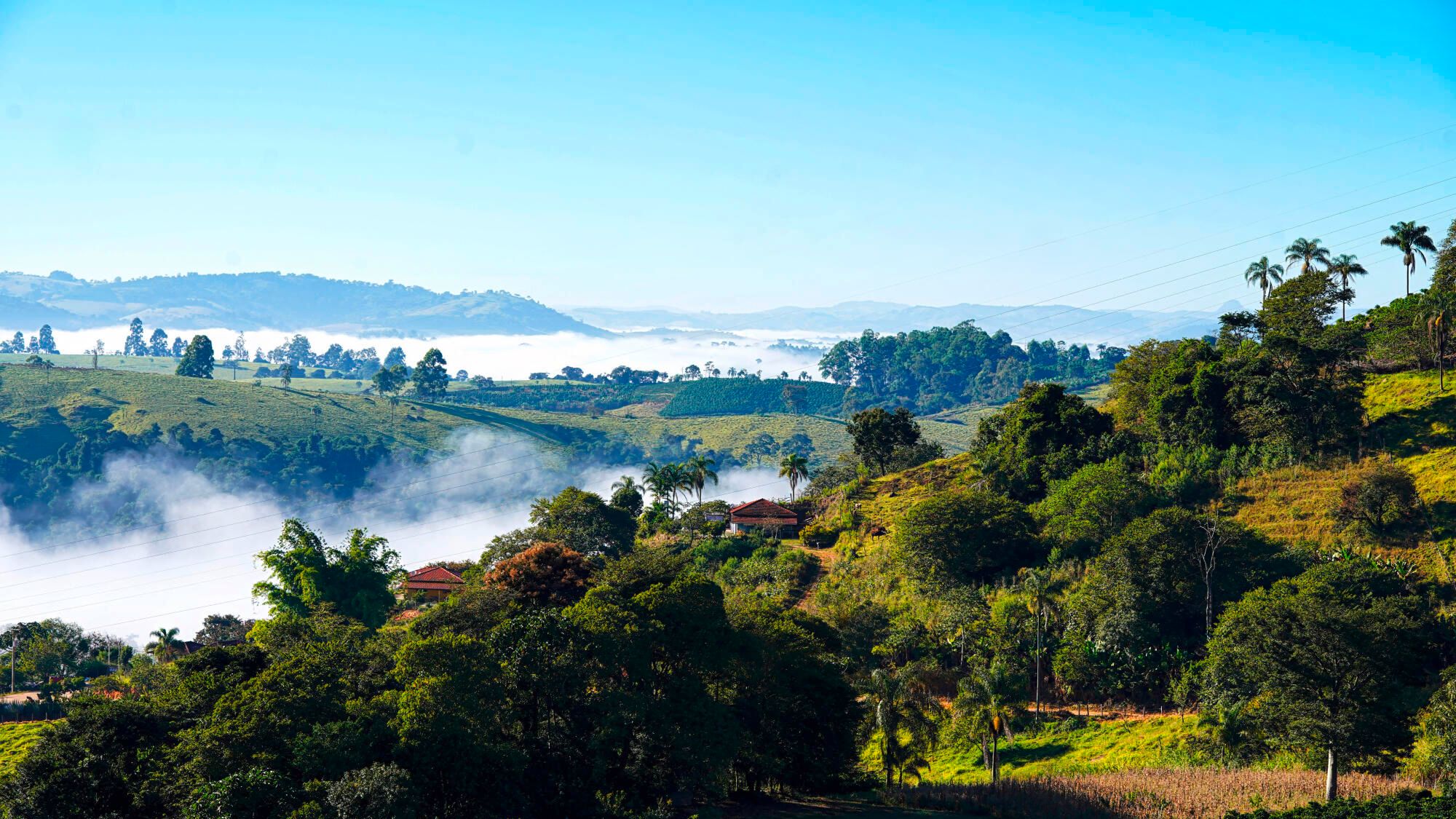
Take coffee from Brazil, the world’s largest producer. I can no longer drink it without thinking of the many pickers reduced to the state of modern slaves in the coffee plantations. During an operation carried out by labor inspectors in the state of Minas Gerais, I met one of them, Joao Manuel de Oliveira, with striking dignity.
Living in a quilombola a community once established by fugitive slaves, he has been picking coffee since he was 12 to survive. He is 71 when I meet him, and works every day. The owner pushed him to this extreme by paying him per kilo collected, at a ridiculous price.
Joao had to sleep on a mattress in a busy place. And pay for the rental of a portable motor harvester. All this is prohibited. He was also paid 3,500 reals (653 euros), far from the promised salary, while his debt amounted to 562 euros. A month of work brought him almost nothing.
Joao, who has always worked hard without complaining, would never have dreamed of reporting his situation to the labor inspectorate, if his employer had not committed the abuse too many: forcing him to pick up the coffee berries that had fallen into the brambles. He could not bear this ultimate humiliation.
I asked him what his worst harvest memory was: “I lost a son,” he replied, recounting how a mosquito bit the baby he and his wife kept by their side in a bassinet during the harvest. He died of yellow fever.
But this pious evangelical, who owns land that he cultivates, refuses to live in resentment. “In Portuguese they say that hatred leads to no path.”
Ricardo, one of my translators, was troubled by this story: “As a child, I picked coffee to help my poor family,” he told me. He hated it. He escaped poverty by emigrating to Canada and only returned to Brazil to care for his sick mother.
Ricardo firmly refused to allow me to pay him, despite my insistence: “Everything cannot be paid for in this world.” In the evening, he invited me to chat with the students in his English class over pizza.
A boon for those starting from nothing
Another December morning, another bag of coffee subtracted from my calendar. Here is one from Uganda which became, in 2025, for the first time in its history, the main African producer, surpassing Ethiopia.
In Uganda, growing the precious grain remains a boon for those starting from nothing. Because in this country, living conditions are deplorable: smelly smoke rises from wood fires lit for cooking or to burn garbage in the absence of collection; clothes are washed in the river…
It was the first time I met coffee farmers without electricity and without drinking water, the first time I heard them answer “ten” or “twelve” when I asked them how many children they had. But even here, the coffee culture does not allow you to make a decent living from it. Because raw beans, not yet roasted, are bought for a pittance by multinationals.
Lukia Mutesi is the symbol of their difficulties. This 8-year-old Ugandan orphan is struggling to stand when I meet her in Jinja. She suffers from malaria. She was raised by her coffee-farming grandmother who didn’t earn enough to take her to the doctor or buy medicine.
When Lukia was a baby, her father died of typhoid fever, probably due to the polluted water in the surrounding area. As for his mother, she is gone. The pain that tightens Lukia’s features twists my stomach. The little girl often comes to mind when I think of the suffering of these producers.
However, the cooperative on which Lukia’s grandmother depends is well managed thanks to a charismatic leader, with a smile bathed in gentleness, Baamu Moses. Having obtained very productive varieties of coffee from the government, he sought to have them adopted by farmers.
To achieve this, he planted them on four of his five hectares, leaving the old varieties on one hectare. “It’s the only way to convince. By showing the difference between the qualities of plants.” Baamu had clearly seen that the cooperative’s meetings on the new varieties had no effect.
This Pentecostal pastor eventually understood: “Coffee farmers are like Thomas in the Bible. They do not believe in the resurrection of Jesus until they have touched his wounds.” Baamu also persuaded the authorities to redo the roads around the farms. “I came back to them without asking for money. I said: I want development, not money. Because money can be easily misused. It ended up impressing them.”
The passion for brown gold
Money. Contrary to what some claim, he is not the driving force of all humanity. This explains why so many producers refuse to abandon their plantation, even though it sometimes brings in nothing.
Many cultivate brown gold out of passion for this drink, respect for their ancestors and their customs, or even out of love of nature. I think about it while sipping the delicious Colombian coffee on my calendar.
In this country I met the Tovar brothers, Rafael and César. They own a five-hectare coffee plantation, not far from Bogota. They could have planted as many coffee trees as possible there to get a greater profit. These contemplatives preferred to plant a thousand trees there, often rare, to attract birds to their foliage.
Nothing excites them more. This is good, Colombia is the country that is home to the most avian species in the world. “A hummingbird! Listen. It goes vrrr, vrrr, vrrr,” Rafael lights up, raising his index finger towards the branches of a guava tree.
His brother César grabs his tele lens to immortalize the moment. They produce very little coffee per hectare. But this one is fantastic. It is a Typica, a variety as unproductive as it is refined. For the Tovar brothers, beauty must prevail in all circumstances.
Coffee farmers experience this grace on a daily basis. Take the smell of a coffee flower. It’s one of the most exquisite sensations there is. It exudes a sweet scent of sweet jasmine.
This beauty led Abriyanto, an Indonesian farmer, to buy a plantation on the edge of a primary forest of suffocating splendor. He sometimes stays a week in an isolated cabin because getting there takes forever.
He wouldn’t change his job for anything in the world. He likes to observe the bears which venture between the trunks or to hear the tigers howling. This activity makes him free: “You don’t need to be punctual. You wake up whenever you want.”
Jungle nibbled
We almost forget that this forest, located on the island of Sumatra in a protected park, is threatened by thousands of other penniless coffee farmers. They eat into the jungle to plant illegally. Poverty pushes them to destroy their biodiversity.
How can you blame them? These men and women are often pushed into this profession by necessity. Two goals drive them: to pay for school for their children and to build a small house.
Tarmidi, another coffee grower on the edge of the illegal zone, also dreams of making a pilgrimage to Mecca. At 57, he has never left his country. He serves us his coffee and splits a coconut for us.
From his toothless mouth, he puffs on his cigarette, looking exhausted, his shirt torn. “Are you happy?” Tarmidi dodges with finesse: “Today, I am happy that you are here. I will never be able to go to France. But you brought France with you.”
Planters tell me they love this simple life because they are sheltered from the violence of the cities. I know something about it. When I arrived in Addis Ababa, the capital of Ethiopia, some young people stole my cell phone on the way to the hotel.
In Nicaragua, on a street in Managua, at nightfall, a teenager jumped on me from a scooter driven by an accomplice. After a brief struggle, I fled in a taxi that had heard my screams.
In Venezuela, I discovered the joys of baton a charming local custom which sees the police extorting their citizens. To leave, I had to pay 100 dollars (85 euros) to the soldiers who had locked me in a sentry box…
Fortunately, during such journeys, you just have to keep your eyes open to marvel again. Those flights of toucans in Brazil come to mind. With their large iridescent beaks, they looked like multicolored candies that had flown from a bakery. Or these volcanoes rising from the waters while approaching Sumatra by boat. They spewed plumes of smoke colored by the pinking twilight.
From this odyssey, I returned with few objects. I wanted to be as light as possible. My bag did not exceed 9 kg. The treasures brought back to the native country are internal.
These are the memories of this brilliant nature. And these beautiful souls that I met. I am now lucky enough to be able to count on the fragrances of coffee to awaken them, almost intact, in my memory.


