The primaries, a false good democratic idea?
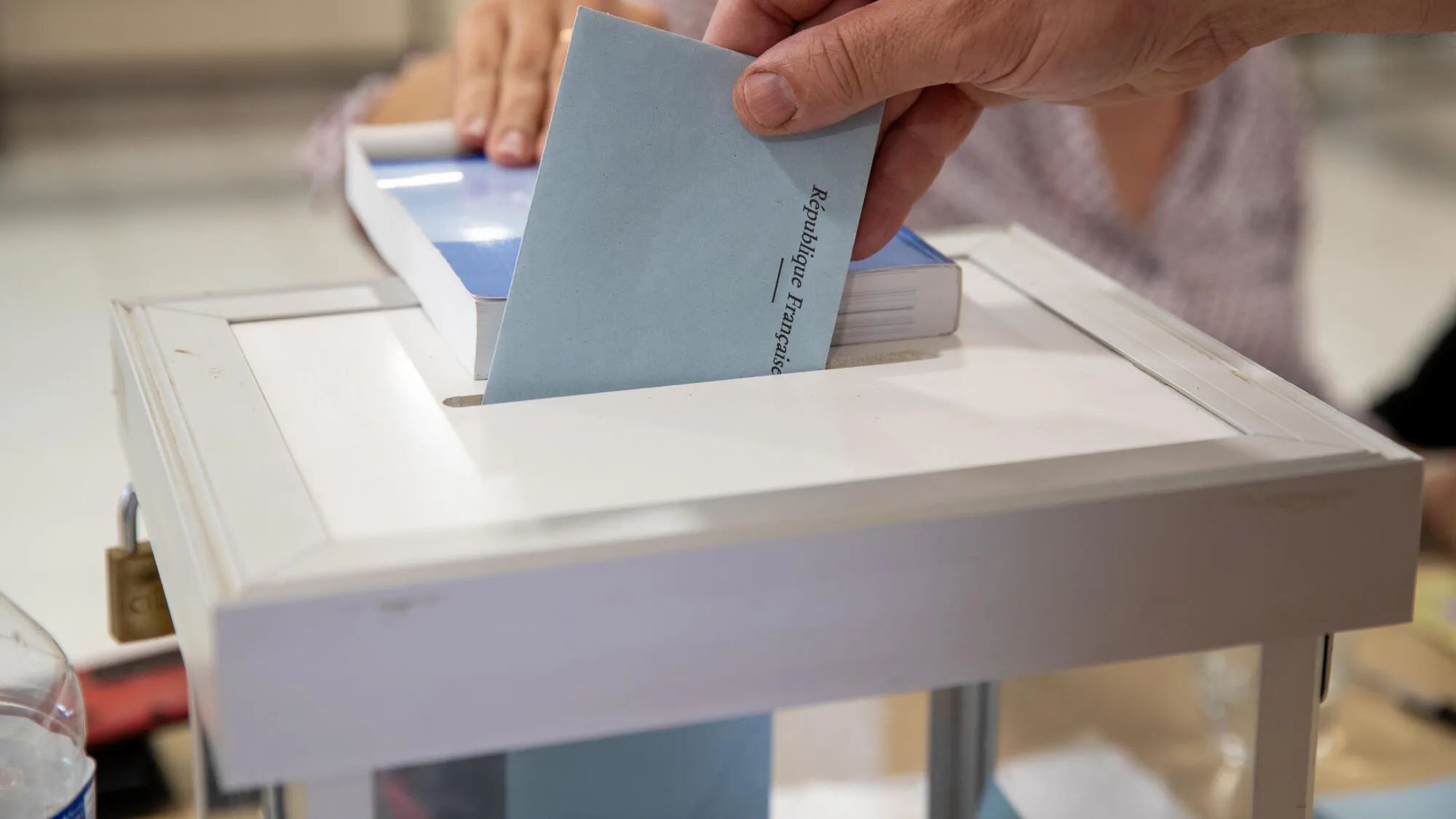
Having your candidate chosen directly by voters, on paper, is difficult to make more democratic. And seven months before the presidential election, the idea of the primary is making headway again in several camps. On the left, it is already established: seven personalities from the Socialist Party and Place publique – Raphaël Glucksmann, Olivier Faure, Ségolène Royal, Jérôme Guedj, Emmanuel Maurel, Philippe Brun and Fabien Verdier – will face each other from October 9, 2026. On the right, David Lisnard, mayor of Les Républicains de Cannes, is ardently pushing to impose the same scenario. Without succeeding, for the moment, in convincing his camp.
Emmanuel, 53, a civil servant in an organization dependent on the Ministry of the Interior, says he is certain to participate. A man of the left, he does not want to vote for Jean-Luc Mélenchon next spring, “too radical”, and says he is “dismayed by the results of Emmanuel Macron’s two mandates on public services”. Tempted by a vote in favor of Ségolène Royal, he saw in the primaries “an opening to the French, a way of not confining oneself to a group of political parties”.
This is precisely the original promise of the primaries. “That of the PS in 2011, the first of its kind in France, was designed as a broadening of the electoral base, so that it is no longer the political office of a party which chooses a candidate. It’s a popular enlistment, a democratization and, often, a long discussion on the programs,” explains political scientist Étienne Ollion, research director at the CNRS.
This open ballot allowed François Hollande to wear the party’s colors in the 2012 presidential election, then to be elected president. But to date this is the only Elysian victory for a candidate who passed through the primary box.
Push-back entry ticket
Faced with this questionable effectiveness, some French people, even very politicized ones, admit to being doubtful. Guillaume, 52, a commercial executive in Villejuif (Val-deMarne) and long-time Renaissance activist, is not very enthusiastic about the idea of such a vote for the central bloc. The hypothesis is also not current.
If Gabriel Attal declared “not excluding anything, including the possibility of resorting to a primary”, Édouard Philippe categorically rejects it. “Choosing between two candidates, Attal and Philippe, it’s not a primary anyway,” believes Guillaume, who also mentions rumors of a possible candidacy of former Prime Minister Jean Castex.
In the presidential camp, many are especially waiting to know if Emmanuel Macron will take a position on his succession. Will he prefer Édouard Philippe, who called, in October 2025, for his resignation, or Gabriel Attal, who affirmed, the day before Édouard Philippe’s exit, that he “no longer understood the President’s decisions”? “As long as he hasn’t spoken out, it’s all a bit of a circus,” says Guillaume.
Before formulating a more profound objection: “The main criticism I make of the primaries is that they simply select a candidate while forgetting to get the French to adhere in the broadest possible way to their program and their ideas. »
And the primary must still really succeed in broadening the circle of voters. The PS set the amount of the entry ticket at 15 euros – 10 euros for the unemployed and students –, much more than the 2 euros demanded during the 2017 primary.
A pushback effect which could reserve the vote for the most politicized and make it a “semi-open” primary, according to the expression of political scientist Bruno Cauvrai, researcher at Cevipof, the political research center at Sciences Po.
“Sign of devitalization”
Another disadvantage: far from bringing together a camp, a primary can also fracture it. “Candidates attack each other publicly and this often leaves its mark. They have difficulty subsequently rallying their defeated competitors,” continues Bruno Cautres. In 2017, Manuel Valls, despite his commitment to lining up behind the designated candidate, finally rallied to Emmanuel Macron rather than Benoît Hamon, despite winning the socialist primary. The primary pushes candidates to first seduce their own camp. Benoît Hamon had thus led a campaign clearly anchored on the left to win, a strategy symmetrical to that of François Fillon, at the same time, on the right. Both will then fail to reach the second round of the presidential election.
“A great idea on paper, the primaries in reality turn out to be a sign of a devitalization of democracy, of a weakening of the parties who feel obliged to resort to this process to compensate for their shortcomings. Their implementation poses a lot of problems,” concludes Bruno Cauvrai.