
the Landes poultry sector facing low-cost imported chicken
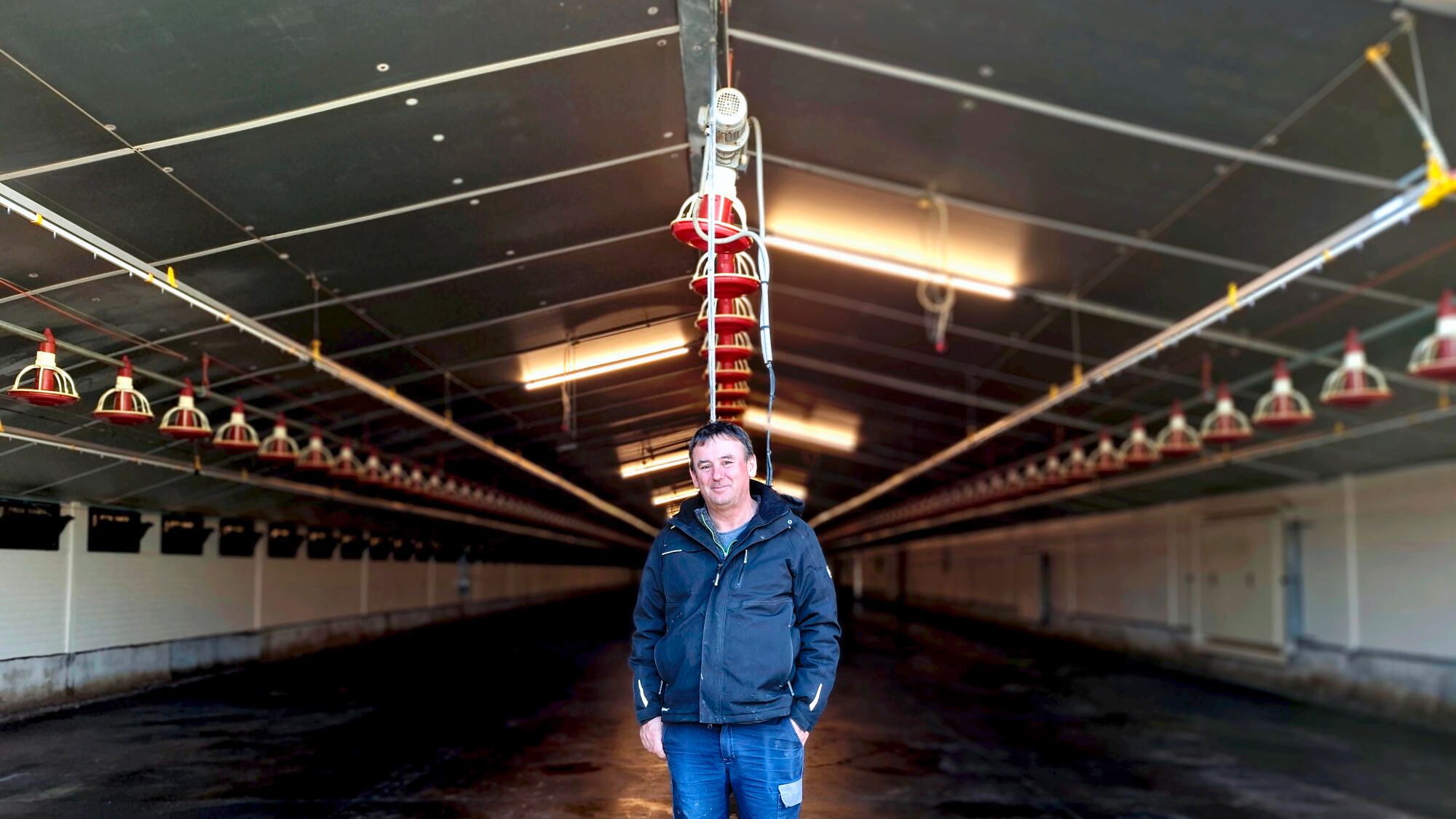
On the hillsides of Chalosse, in the Landes, at the beginning of December, guinea fowl and ducks are sunbathing before joining the festive tables. At the bend of a small road lined with old farms, two long buildings of 1100 m2 stand out in the landscape. “My father built them in the 1980s, he was a precursor of industrial chicken here,” Franck Duparc smiles.
The latter took over from his father and this model suits him well. “My income is increasing, and I have free time during the crawl spaces to be respected between each batch,” he explains after having disinfected the slabs of the henhouses. Outside, rice husks wait to be spread on them as bedding for the 59,000 chicks to come in the coming days. “We are here to do what the consumer buys, and not what they say they want to buy,” he pleads in defense of intensive breeding, which he is one of the few to practice in the Landes. Here, almost all the breeders work for quality labels, including the emblematic chicken which roams freely (without fences) around mobile cabins. The first Rouge label was also born there sixty years ago.
But a change is underway in the department. Because the French have never eaten so much chicken: + 4.5% per year on average since 2013, according to the National Interprofessional Broiler Poultry Association (Anvol). However, it is mainly imported meats, cheaper and widely used in fast food, snacks or prepared meals, which are responding to this growth. Result: more than one chicken in two is already imported from Poland, Belgium, the Netherlands, Ukraine or Thailand…
“Express” chicken
In 2019, a subsidiary of the powerful Landes cooperative Maïsadour counterattacked by creating the “Poulet d’ici” brand, for which Franck Duparc works. Fed only with soya and cereals from the South-West, the animals are raised in buildings for thirty-five days, compared to eighty-one days on average for their cousins raised in freedom or outdoors. A chicken sold almost twice as cheaply as a Red label, and whose sales increased by 8% this year, according to the cooperative group. Building on this success, the latter announced this spring that it wanted to help the range develop, by financially supporting the creation of fifteen buildings of 1,350 m2 by 2029 to produce 3 million additional poultry each year in New Aquitaine and Occitanie.
Will this strategy be sufficient to counter Mercosur? The free trade agreement with South America must indeed soon be voted on by a qualified majority by the member states of the European Union (EU). It would allow the entry into the EU of 180,000 t of chicken fillets each year exempt from customs duties. And also compliance with social, health and environmental standards in force in the EU (read also p. 8) . “We cannot impose rules on us and import chicken that does not respect any of them, it will kill the industry,” worries Franck Duparc.
In Brazil, they can have over a million chickens on a farm. They give them growth promoters that I gave up thirty years ago. » There is great fear that these new imports will drive down prices in the entire poultry sector. “This additional influx can turn consumers away from quality labels,” fears Lionel Castetbon, a free-range chicken breeder in Hagetmau. A loss of 1 to 2% of market share can happen quickly and hurt a lot.”
The local vein
Faced with the realization that it will be impossible to fight on equal terms, particularly against Brazil, the challenge is first to circumscribe the battlefield, by focusing on regional proximity. “We do not claim to counter Mercosur, we just want to limit chicken imports into the South-West,” explains Bernard Tauzia, vice-president of Maïsadour. We have built entire sectors, from eggs to packaging, which create jobs locally. And with our soy, we have a 100% local protein. These are real commercial assets.” Collective catering, announced the cooperative group, will be approached in a more active manner.
The other lever to defend yourself: put pressure on public authorities to better inform consumers. “In salads, sandwiches and other prepared dishes which are increasingly consumed, people do not know where the chicken comes from,” regrets Bernard Tauzia. Anvol is therefore calling for a generalization of origin labeling, in all places of sale and consumption. After the mad cow crisis, restaurants were forced to display the origin of the beef. After Mercosur, will chickens be entitled to the same treatment?