tensions, clans and legacies in rural communities
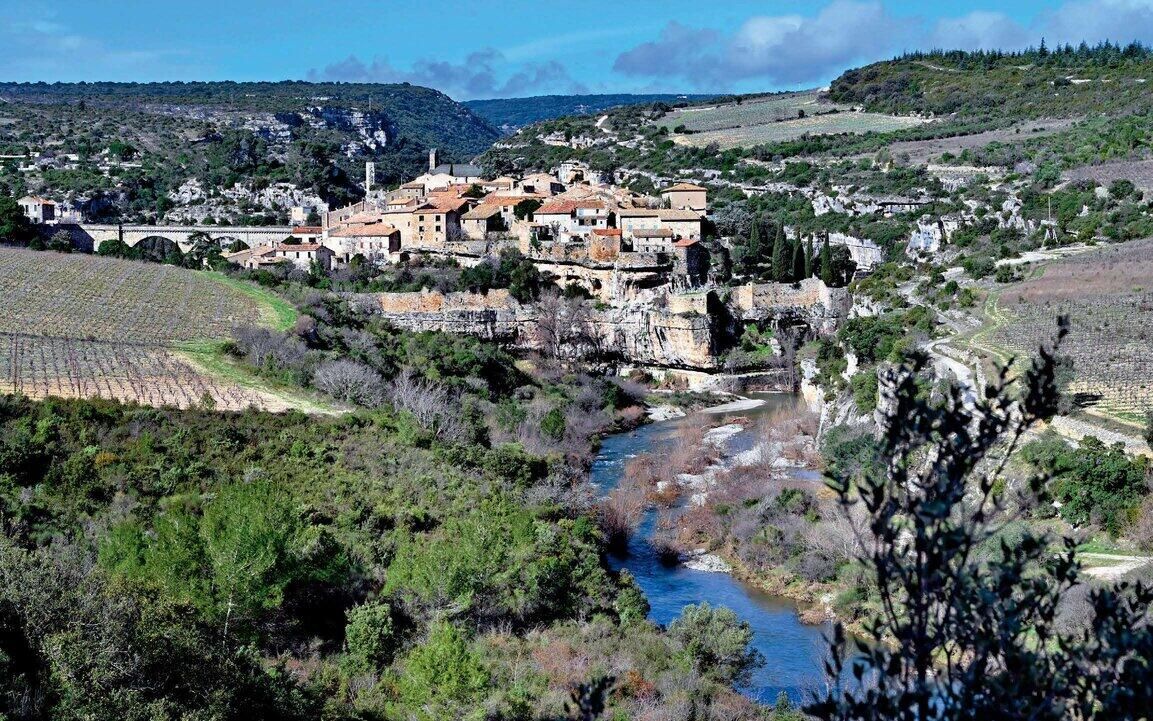
The locals nickname it “The Rock”, like an island lost in the middle of the ocean. To access the town of Minerve, in Hérault, you must park your car in an area located ten minutes away on foot. Built on a limestone spur, the medieval village is nestled in gorges cut by two emerald-colored rivers.
A landscape that attracts nearly 300,000 tourists each year, filling restaurants and artisanal shops in the summer. Didier Vordy, a retired wine grower, has reigned there for eighteen years and will give up his seat as mayor in a few weeks, following the municipal elections on March 15 and 22.
“Old, very old quarrels are rekindled”
The town is small, 98 inhabitants, but three lists compete. Each being made up of at least six people, they constitute 20% of the population. As in many villages, everyone knows each other. A proximity that unites, but complicates commitment. “Old quarrels, sometimes very old ones, are revived by politics; they are part of the memory of the villages, summarizes Didier Vordy. Some are fighting over land, others haven’t spoken to neighbors for twenty years because their dog bit the little girl…”
Conflicts within the municipal council also fuel enmities. “I had a difficult last mandate,” confides the councilor. In local politics, you shouldn’t be afraid to argue!” It is in this atmosphere that the Minervois prepared their lists. As the elections approached, it was necessary to battle to form teams before February 26, the deadline for declaring your first round list to the prefecture.
In rural areas, politics is not only a matter of programs but of families. “We don’t get involved randomly,” says a resident. Some threaten their children with disinheritance if they join a candidate.” Out of a desire to respect the elders, the fractures remain. Like these two families from Minerva, at odds since the great-grandmother slapped the great-grandfather. Or these rival neighbors, because one obtained the development of a local road and the other did not.
A family affair
Didier Vordy, who is not running, has chosen his camp: he supports the list of Fabienne Suwala, resident of Montpellier. In the town, many remained silent. They do not understand why the councilor knighted this city dweller who only lives in the village part of the year. Shouldn’t he, logically, have supported his first deputy, the winegrower Frédéric Peyras, son of a Minervois farmer?
“Didier Vordy is a difficult man,” confides a resident. He has big plans for Minerva and wanted to include members of his family on the list. Frédéric Peyras was too big-mouthed, he didn’t want all that, so he slammed the door and formed his own.” For her part, Fabienne Suwala placed Thibault Vordy, the mayor’s son, as first deputy on her list. In the village, the decision fuels rumors and sarcasm. The team brings together bankers and winegrowers, “who would finance each other”. There is nothing to support these assumptions, but in a town of less than 100 inhabitants, each alliance is immediately scrutinized.
Between modernization and attachment to the roots
Concretely, it is above all a clash of cultures which opposes the two heads of the list. Fabienne Suwala is a political scientist and sociologist. At the head of a regional development consultancy, she knows the workings of local authorities by heart and has a good address book. His program is precise. She wishes to continue Didier Vordy’s project to create an amphitheater surrounded by trees with a pétanque court and shows. She wants to encourage families to settle down, by implementing a good land policy, and revitalize local life.
Because Minerve may offer an extraordinary landscape, it does not escape the ordinary problems of rurality. Here, the wineries close, the children can be counted on the fingers of one hand and many businesses only open in the spring. Gone are the days when the village elders gathered their “cenacle” every day under the olive trees while the wine growers’ children returned from the local school. In this village where some families have known each other for generations, Fabienne Suwala has an Achilles heel. She is “the tourist”, according to the joke that neo-rural residents are “foreigners” to the village. “These remarks are a game,” she says. I have been going back and forth to Minerve for thirty years. I am in love with Minervois, I have walked every path.”
A third way in the face of political divisions
Frédéric Peyras is cut from another wood. He is a simple and direct man, unconcerned with worldly affairs, who relishes the solitude of his wine estate guarded by his Doberman and his patou. “I don’t have a neighbor 800 meters away and that suits me just fine,” he jokes. But this son of Minervois peasants, candidate without label, is also known for his ideas close to the National Rally. In the Hérault countryside, a priori, this is not a problem. Five of the department’s nine deputies elected in 2024 are RN or allies. But among the elected officials of Minerve, this political orientation does not pass.
So, some chose to join a third list, led by Henri Rognon, an artisan woodturner, renowned for the roundness of his character. They see in this Carcassonnais who has lived in Minerve for only five years a man capable of overcoming local divisions. His list is made up of those who want neither the ambitions of Fabienne Suwala nor the thunderous frankness of Frédéric Peyras.
End of mixing and parity
In addition to these divergences, several very concrete challenges weigh on municipalities with fewer than 1,000 inhabitants this year. First, the end of mixing, which allowed voters to settle their scores by checking or crossing out names on different lists in the ballots. This time, no choice, residents will have to vote for an entire list. Then, parity, now obligatory on the lists. This new imperative can turn into a headache in the countryside, where there are fewer women in town halls than men, often very busy with community and family life.
This is the difficulty that Véronique Armengaud, mayor of Espérausses, in Tarn, encountered. To access this small town of 146 people at an altitude of 600 meters, you have to take a road which goes deep into the Montagne Noire massif, winds under beech forests and criss-crosses limestone plateaus covered with scrubland. Winter is harsh in Espérausses and some people keep their shutters closed, sheltered from the wind. Others only return to populate the place during summer. In this area where the average income is modest, families left after the closure of the delicatessens and forestry companies that kept the economy going.
In the heights of the village, several buildings sit majestically. The temple comes from the reformist past of Espérausses, among the first Protestant centers in France. The castle survived the Wars of Religion, when a Catholic captain burned down the houses in the 17th century. Finally, the town hall – an old school – surprises newcomers with its severe and imposing appearance. Mayor since 2020, Véronique Armengaud, retired from National Education, was the first woman to obtain the keys. To put together a balanced list, she had to knock on doors and organize information meetings. Women still tended to believe that politics was a man’s business.
“At the beginning, it didn’t mean anything to me, I already had a lot to do with my village association,” confides Claire Cauquil, retiree. But Véronique warned us. When a municipality does not have a list, the prefecture can dissolve it and merge it with another. It gave me a shock.” At the time, Claire did not yet know that another person was patiently putting together a second list: Jean-Jacques Barthès, the uncle of Véronique Armengaud, mayor of Espérausses from 2008 to 2020. During his mandates, this retired SNCF executive sat on the municipal council alongside his niece. But she could not stand his authoritarian management of the town and his sometimes demeaning remarks. At the slightest decision to be made, the two characters collided virulently. Véronique Armengaud then presented her candidacy in 2020 and Jean-Jacques Barthès had given up on competing with her.
Sometimes very heated rivalries
Six years later, the former councilor changed his mind and, since then, tension has been growing. “We haven’t spoken to each other for a long time,” snaps the mayor. One day, I asked him to cut down the branches that were obstructing tractor traffic near his property, and he sent me away. Now he shows up again. I don’t even know why.” Several residents mention with a smile the “more than discreet” presence of Jean-Jacques Barthès in the community life of the village. He brushes aside what he calls “campaign palaver”.
At 82, he is running again because several residents have asked him to do so. During his niece’s term, the city council experienced tension and sometimes violent conflict. Véronique Armengaud got angry with six elected officials and did not reinstate them in her list for the 2026 elections. Municipal decisions have left their mark, several residents recognize, without the versions always agreeing. His uncle therefore did not hesitate to draft a few members of the council to constitute his own. But he has also recruited neo-rural and local residents, who know him well and trust him.
In Espérausses as elsewhere, these personal rivalries mix with the financial and administrative challenges that elected officials will have to face. After endless discussions, the government adopted the 2026 budget at the beginning of February and asked communities to participate in the recovery of finances to the tune of 4.6 billion euros. Deprived of part of their endowments, future elected officials will have to roll up their sleeves. And agree to relegate quarrels and resentments to continue, despite everything, to keep the village alive.
33%
33% of the population lives in a rural commune.
Source: INSEE, 2021.