5 poems commented by Thomas Schlesser
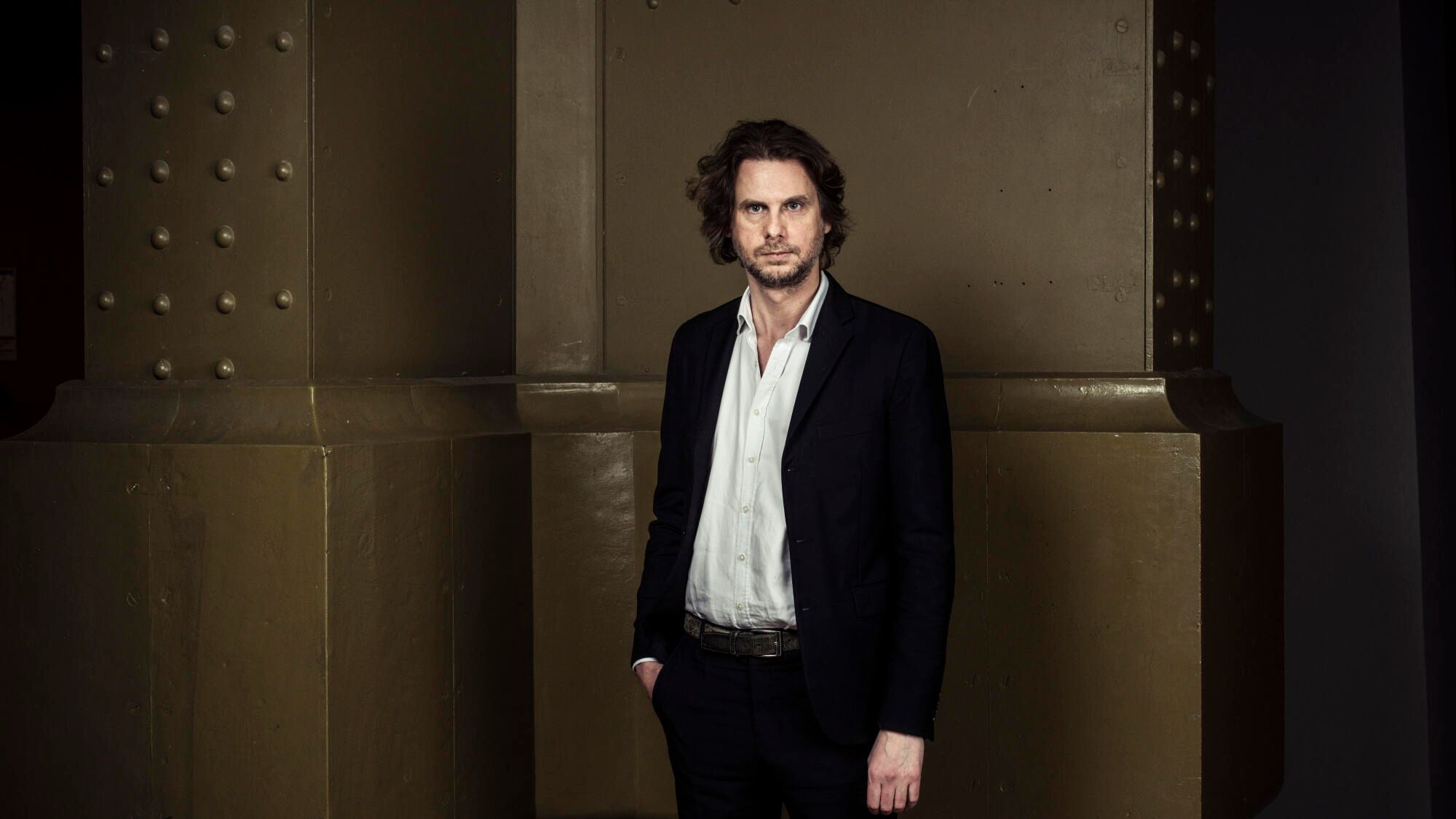
“Poetry is an elegy – it expresses our complaints – it is also a reservoir of happiness, a vital energy! » enthuses Thomas Schlesser. Two years after the global success of Mona’s Eyes (2024), in which a grandfather introduces his granddaughter to painting, the writer and art historian returns in The gardener’s cat to his first love: poetry.
“When I was a teenager, she kept me connected to life. I was a bad student, like Prévert’s dunce. But, like him, I transformed unhappiness into happiness. And today, I want to reconcile people with poetry,” continues the man who knows hundreds of texts by heart. “No, they don’t just concern insiders,” he emphasizes. Through their musicality something emerges that can be understood by everyone. Poetry is politics, resistance, freedom! »
The gardener’s cat tells of the friendship between Louis, a taciturn and hypersensitive gardener, who takes care of a sick little cat, and Thalie, a retired and supercharged French teacher, living in a former silkworm farm. A storm having damaged the nature around her Provençal home, Thalie offers a pact to the introvert Louis: he will repair her garden while she repairs her speech. Thus, Louis takes care of the plants, and Thalie introduces him to poets. And the author takes the opportunity to quote and illuminate some magnificent verses.
“Great similarities exist between the poet and the gardener,” he emphasizes: germination, cyclical rebirth…” More choral than Mona’s eyesthis enchanted fable is brought to life by a gallery of supporting roles: Thalie’s architect husband, a terrifying neighbor, an altruistic veterinarian and a healing spaniel. In this Provence, the childhood territory of Thomas Schlesser, as nature is reborn, Louis makes the words of the poets his own. And to read poems to plants aloud: “Speaking to the living to strengthen its fabric is like saying a prayer,” confides the beauty broker.
For nothing sinks or delights in ashes;
And who knows how to see the earth produce fruit,
Failure does not move him even though he has lost everything.René Char (1907-1988), extract from “Redonnez-leurs”, in “Fureur et mystique”.
Thomas Schlesser: “René Char teaches us to continue living when everything around us fails. »
When you are a cat you are not a dog.
We don’t lick ugly ugly people
Because their pockets are full of sugar
We do not burn with love for our neighbor
(when you are a cat, you are not a dog).Jacques Roubaud (1932-2024), extract from “Poème du chat”, in “Everyone’s Animals”.
Thomas Schlesser: “It’s funny, familiar, very simple, intended to be understood by everyone! »
However narrow the path,
that they judge me, that they blame me,
I am the master of my destiny,
I am the captain of my soul.William Ernest Henley (1849-1903), from “Invictus”.
Thomas Schlesser: “Nelson Mandela had verses by this English poet in his cell. When you have that in mind, you can tackle anything! »
Beautiful friend, so it is with us:
Neither you without me, nor me without you.“Marie de France” (1160-1210), extract from “The Lai of the Honeysuckle”.
Thomas Schlesser: “Many poets were poetesses: Sapho, Louise Labbé… The lais are small stories in verse written in the Middle Ages. Known for wrapping around a trunk, the honeysuckle becomes the metaphor for passionate love. Make these verses your own and tell them to the one you love! »
She is found.
What ? – Eternity.
It’s the gone sea
With the sun.Arthur Rimbaud (1854-1891), extract from “L’été”, in “Derniers vers”.
Thomas Schlesser: “One of the greatest definitions of happiness! How lucky to have Rimbaud! We are very sensitive to poetry in adolescence, because it capsizes us, upsets us. It’s the time of first loves, where we oscillate between the desire to live and to die. »