
In South Lebanon, Christians under Israeli bombs
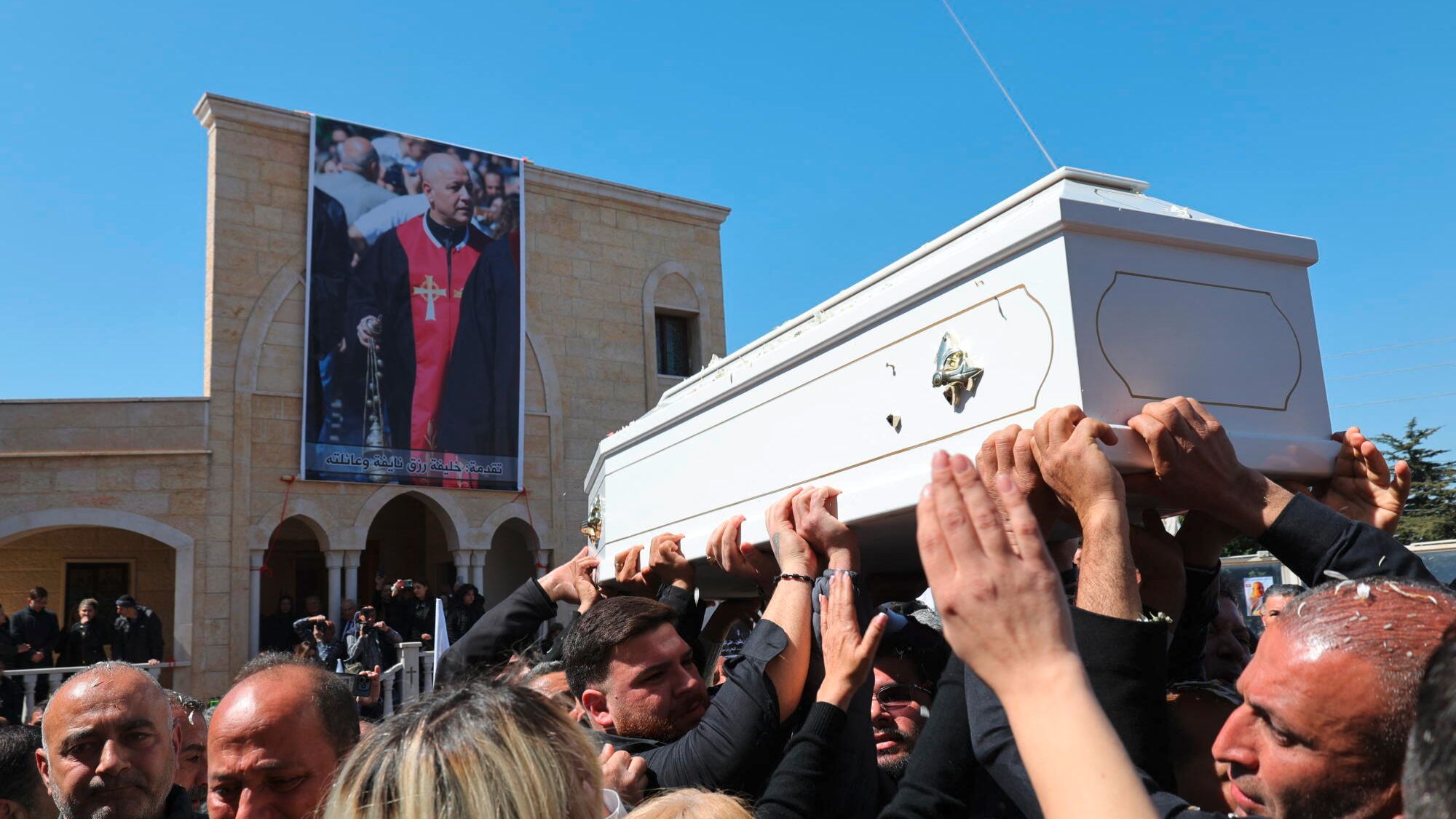
The tears are added to the crash of the bombs. On March 11, the inhabitants of Qlayaa, a Christian village a few kilometers from the Israeli border, buried their priest. Father Pierre El-Raï died two days earlier. That day, a parishioner’s house was targeted by shell fire.
The priest rushes to the scene to help the injured. A few minutes later, another explosion. Father Pierre was affected, as were five residents. The emergency services did not have time to take him to the hospital. He dies on the way. The others survived.
At his funeral, his white coffin dances in the air under the spray of flowers. A gesture of peaceful resistance, while the Israeli air force draws long white lines in the sky, busy shelling the surrounding villages.
Father Pierre had refused to leave his parish despite calls from Israel to evacuate. His courage moved beyond the Lebanese, Pope Leo XIV having prayed that “his shed blood would be a seed of peace for beloved Lebanon”.
The south of Lebanon is gradually emptying of its inhabitants. For half a century, the region’s inhabitants have lived between forced exile and painful returns. Lebanese civil war from 1975 to 1990, Israeli occupation until 2000, recurring tensions: each generation has experienced flight.
Since the start of the war against Iran on February 28 and its extension to Lebanon at the beginning of March, more than 800,000 people have already been displaced in the country of Cedar. Officially, the Israeli army claims to only target the positions of Hezbollah, its sworn enemy, with repeated rocket attacks.
But in this border area where Christian villages and strongholds of the Shiite movement coexist, the bombings also affect civilians. The IDF has sent ground troops and intends to establish a buffer zone in southern Lebanon, emptied of any presence deemed hostile.
A military logic that many refuse, because leaving would amount to definitively abandoning the Christian presence in this region. The death of Father Pierre did not change the minds of the 800 inhabitants of Qlayaa. “We will stay until death if necessary,” heard Sister Raymonda, present at the funeral.
Alone in the world
The region now resembles an ocean of desolation, where small Christian towns dotted with destroyed houses and burned olive trees become islets. You have to travel kilometers to stock up on supplies, drinking water no longer arrives and residents return to the well.
The Lebanese army is almost absent from the landscape. Christians find themselves alone in the world, inhabited only by the presence of God. “Jesus and Mary walked here, it’s like our Holy Land,” says Father Michel Kambar, from the commune of Hajjeh.
Despite the pleas of his family, he continues every day to ring the church bells, the only reassuring sound for the faithful, and meditates in Maghdouché, the cave where Mary waited for Jesus for one night, five minutes from his home.
Targeted by drones
If they do not take part in the conflict, these Christians find themselves caught in the fighting. The village of Alma El-Chaab faces the Israeli kibbutz. When Mgr Maroun Ghafari received the order to leave in the middle of the night, he gathered all the faithful. The hundred or so residents did not give in to the threats.
Children, men, women, the sick and the elderly hid in the basement of the church. Beware of those who dare to come out. On March 7, a police officer on patrol in his car was nearly killed by an Israeli drone while ensuring that no Hezbollah soldiers were infiltrating the village.
Three days later, Sami Ghafari, the priest’s brother and a septuagenarian who cares about his vegetable garden, had the misfortune of going out to water his vegetables in the garden of his birthplace. This time, the drone did not miss its target and shot it down. In Alma El-Chaab, we do not believe it was an accident.
“They want the Christians to go away, so they are starting to kill us…” denounces the Maronite chorbishop. The tragedy acted as a shock. The residents finally left their village on March 10, escorted by peacekeepers from the United Nations Interim Force in Lebanon (UNIFIL). Without, however, losing hope of one day returning home.
About sixty kilometers away, the inhabitants of Qlayaa are still holding on, despite the dangers. In the middle of the night, a Hezbollah missile, which apparently went the wrong way, exploded the walls and windows of a house. Except the bedroom where parents and children slept. In the streets, people whisper that the priest Pierre El-Raï is already watching over them, up there, from the sky.


