
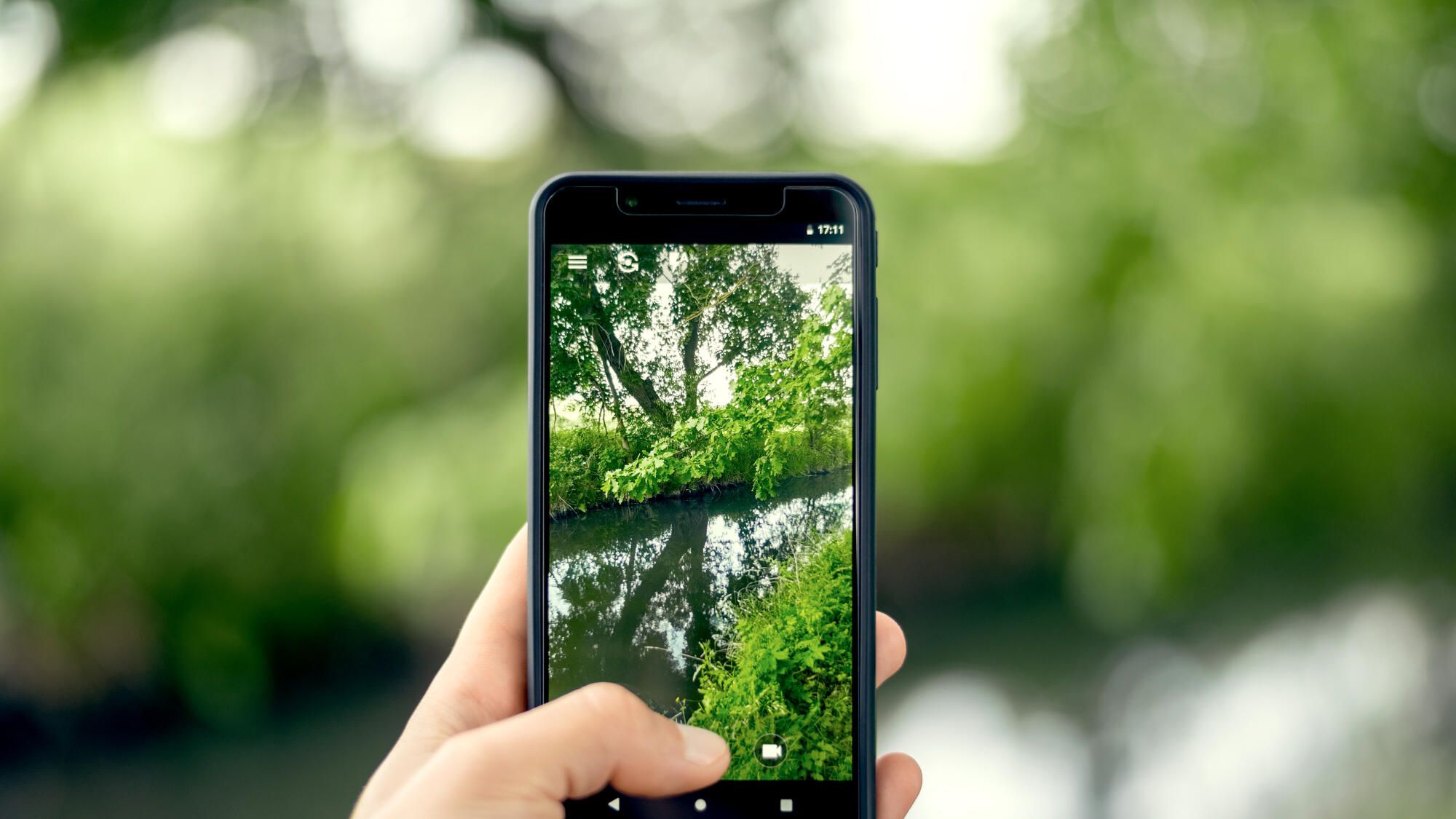
Using your smartphone while hiking: a good idea?
Digital tools have become essential companions for pilgrims: they simplify organization, facilitate orientation and improve security. However, they must remain aids, and not replace our ability to find our way and think for ourselves! Here are some tips, which each pilgrim will adapt according to their needs and choices.
Prepare before departure
Specialized websites
Of Many websites have been created by the associations responsible for the paths. There you will find information on itineraries, stages, elevation differences, accommodation and recommended periods. Examples of associative sites for each path:
For the paths of Saint-Jacques, many sites are offered. For example, those of the jacquaires associations by region or department. On the national level, we can consult those of the French Society of Friends of Saint-Jacques-de-Compostelle, the French Federation of Associations of the Roads of Saint-Jacques-de-Compostelle and the Agency of the Roads of Compostelle.
Please note: on certain association sites, you must be a member to download itineraries or accommodation lists (example: Chemins d’Assise).
Most commercial sites which offer, for example, hiking equipment or practical guides, also include pages of advice. For example, those of the publishers of Miam Miam Dodo and the Lepère guides, or even of the Postal Mail.
THE website of the French Hiking Federation full of ideas and advice.
Finally, the Paths section of our weekly reserves a space for pilgrimage routes: appointments, itineraries, practical advice, testimonies.
Forums and social networks
Before leaving, you can complete the meetings and preparation sessions in the different associations by consulting forums, blogs and social networks: sharing experiences, collecting practical advice, feedback on the paths taken or on certain stages. On social networks (Facebook, Insta, etc.), you can also interact with other pilgrims.
Applications
To plan your steps and calculate walking time, you can use a free general application. For example: Visorando, Mapy.com, OpenRunner, Komoot, etc.
Two tips:
- Download the app and try it before departure as we do for shoes and backpack.
- Check that it works offline.
These apps allow you to view GPX tracks (which you have previously downloaded, or created if you are more experienced).
What is a gpx file ? It is a lightweight computer file, which includes the geolocation coordinates of the successive points of the track. Some forums or sites mentioned above offer one or more GPX tracks for download.
In these applications, there are sometimes paid options (for example, to obtain the IGN base map, or to have more precise guidance).
Before departure, you can also download other apps that you will use on the way, in order to familiarize yourself with them. For example, a weather app (Météo France for France, etc.).
Use technologies on the paths
5 good reasons to use your cell phone while hiking
Along the way, here are the major functions that you can ask for from your smartphone:
- Don’t get lost.
- Housing and food.
- Travel safely.
- Communicate.
- Meditate and pray.
2. Accommodation and logistics
Here are some possible uses of the smartphone, regarding logistics:
- Storage of accommodation lists provided by associations or prepared before departure (however, we recommend having a printed copy).
- Applications listing lodges, inns and refuges (free apps mentioned above, or commercial apps like Buen Camino for the Way of Saint James).
- Reading QR Codes which often contain valuable information.
- Social networks (FB pages of local associations, exchanges in PM).
- Online reservation or direct contact with accommodation providers.
- Real-time information on accommodation availability (on certain apps).
- Geolocated location and opening hours of shops and services (Google Map, etc.).
- General sites or apps in the event of unavailability of accommodation for pilgrims (Airbnb, Booking, etc.), couchsurfing sites or apps, etc.
- Reservation of transport for the return.
3. Safety and health
Here are some possible uses of the smartphone, with regard to safety and health:
- Recording your “health record” in the “Health” app, which is often installed by default on the smartphone.
- Contact emergency numbers (find out beforehand about the numbers to contact, particularly abroad): firefighters, gendarmerie, police, etc.
- Location tracking apps (example: when you are lost, or want to share your location with a host).
- Quick access to pharmacies.
- Information on the weather (essential for mountain stages).
4. Communication
Here are some possible uses of the smartphone, regarding communication:
- SMS, WhatsApp: to send messages and share your location (but pay attention to the plan: Whatsapp is only free if you are connected to a Wi-Fi network).
- Maintaining a blog (for example on Polarsteps, which allows your contacts to follow your route on a map) and communicating on social networks.
- Translator, useful abroad or to communicate with foreigners in France (eg: Google or DeepL).
- Dictaphone, for those who wish to record their progress report along the way, with the aim of sharing it afterwards (in the form of a book, conference, etc.).
- Photos… to communicate, share and remember!
5. Spirituality
Here are some possible uses of the smartphone, regarding spirituality:
Smartphone: the advantages and disadvantages on the trails
The advantages
- Save time.
- Better security.
- Quick access to information.
- Ease of organization.
- Allows you to reduce the weight of paper documents.
The disadvantages
- Battery dependency (so bring a backup battery).
- Random network (so download the traces and base maps before leaving).
- Vulnerability of personal data.
- Risk of over-connection (social networks, constant notifications).
- Less room for the unexpected and spontaneous encounters.
- Technological dependence, contrary to the spirit of simplicity.
In conclusion, we can retain the recommendation of Éric de Lagarde, one of the two workshop leaders: “The smartphone on the trails is really useful and practical, but the good applications are those that we have tested before leaving and that we know how to use. »
However, some will prefer to go with topographical maps or practical guides, and stay disconnected (unpluggedas the English say!) to better enjoy the benefits of the path. Others, finally, will select a few smartphone options and/or applications that seem necessary to them.
“Life on the road would be more difficult without our cell phone, but how good it is to forget it in the bottom of the bag from time to time! », Comments, for his part, José Renoul, the other facilitator of the workshop. As the saying goes, “to each his own”!
4 practical tips and tricks before taking your smartphone hiking
- Do not leave the GPS activated all day if your smartphone is old (the battery then discharges more quickly), or in areas with poor coverage (mountains, desert, forest, valley floor, etc.).
- Bring an external battery, which can be useful when bivouac.
- Disable unnecessary notifications and applications (which use battery, but above all “available brain time”!).
- Check the characteristics of your package abroad (in Switzerland in particular).