how many students per class do we learn best?
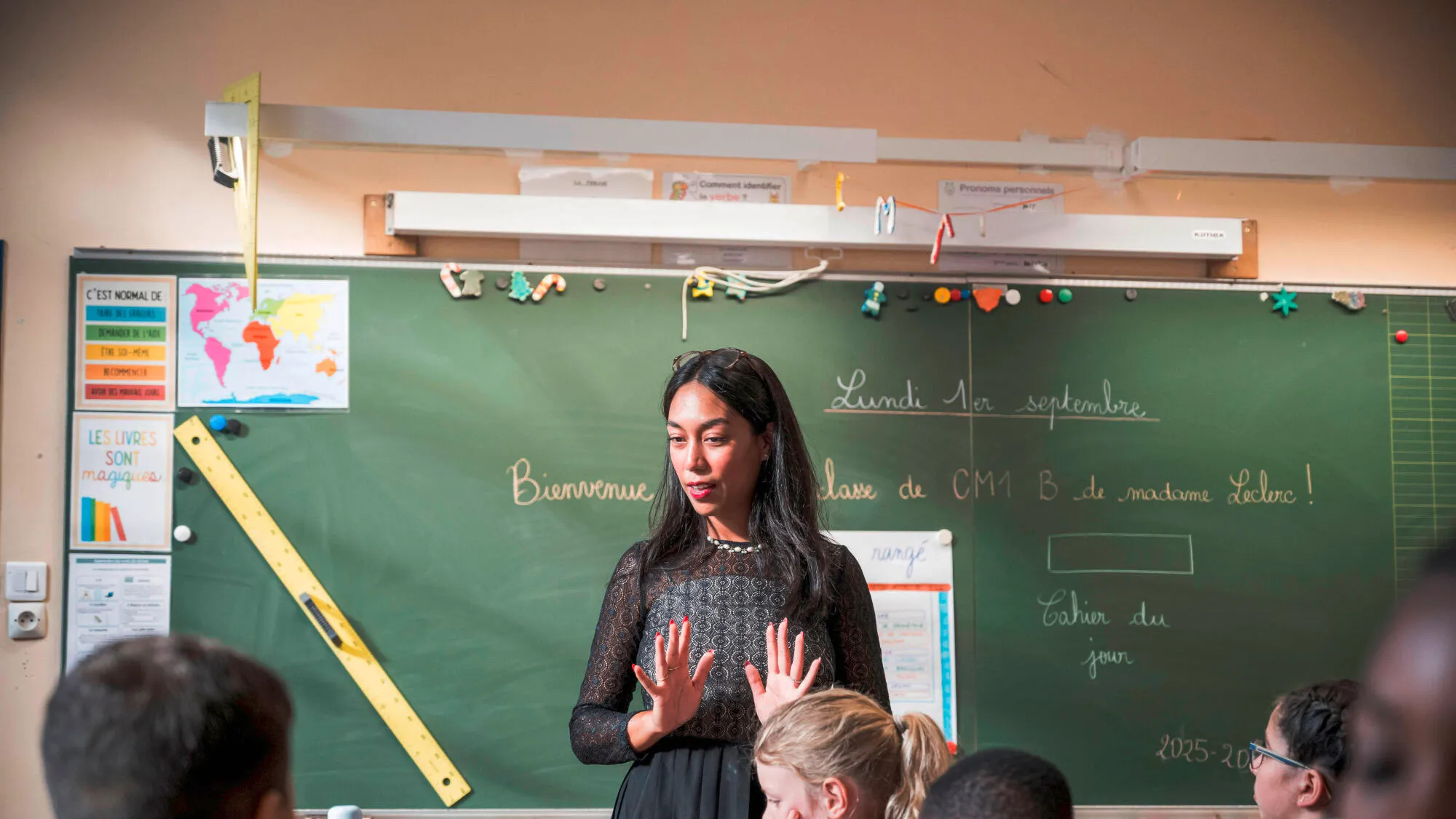
It’s a well-known refrain from National Education: in class, the fewer you are, the better you learn. Studies on the subject have abounded since the end of the 1990s. “Each fewer student in a class is a slight increase in results,” confirms Laurent Lima, researcher in educational sciences at the University of Grenoble Alpes. It thus calls for splitting classes, around 12 students maximum, from the start of kindergarten, as was done from 2017 for small classes (kindergarten, CP, CE1) in “priority education networks”, in working-class neighborhoods and disadvantaged suburbs. The threshold should not drop too low: “Below 10 students, teachers notice that class dynamics suffer,” notes Laurent Lima.
To date, France has an average of 22 students per primary class. On April 13, the Minister of National Education Édouard Geffray confirmed new “necessary” class closures in the coming years, after having already announced in January the elimination of 4,000 positions at the start of the 2026 school year, against a backdrop of constrained public finances. The unions denounce a missed opportunity to reduce classes and promote learning.
Around 12 students therefore seems to be the right balance, without necessarily solving all the academic difficulties on its own. “Reducing numbers is not magic,” says Corinne Heckmann, education analyst at the OECD, who conducts the famous Pisa survey on the performance of education systems every three years. France has slightly larger classes than average, but this only explains part of its results: England does better with 26 students per class, four more than us. “The doubling measure is effective when it occurs at the start of schooling. The higher you go in classes, the less beneficial it is” develops Laurent Lima. This threshold is especially effective when it occurs early in schooling, in particular for students in priority education. “Generalizing it at all levels and in all environments would not have guaranteed effectiveness,” summarizes Laurent Lima.
The right squad, at the right age
The effects are even more marked in disadvantaged areas, often less stimulated at home. “But without adapted pedagogy, duplication is not enough” continues Corinne Heckmann. The analyst notes, for example, that France is slow to generalize work in small groups, although its effectiveness is recognized, and is easier with a smaller number of students. Likewise, French educational culture favors collective work and the sharing of good practices between teachers less than the Nordic countries.
Laurence’s school, in Bagneux (Hauts-de-Seine), transformed the test: “In the split classes, the teachers were able to adapt to each student and develop projects different from what is usually done,” notes this teacher specializing in Rased (specialized support network for students in difficulty), retired for two years. Early targeting, adapted teaching… From her thirty years of experience, Laurence draws a third lever: parents. “Involving them, helping them encourage their child, allows students to understand why they go to school. »