7 reasons to go to the 10th Peace Pilgrimage
Souvigny: when you once visit this town, in the heart of Bourbonnais, you don’t forget it! Is it the memory of the holy Cluniac abbots Mayeul (910-994) and Odilon (962-1048) which permeates the priory church, and radiates throughout the commune? Or the memory of the Dukes of Bourbon, who chose this sanctuary as the necropolis of their dynasty, thus giving it a particular majesty? Still, this “Grand Romanesque Sanctuary of Auvergne”, eldest daughter of Cluny proclaimed last year “Grand Cluniac Site”, is a place of high resonance.
And very current! An internationally recognized place of transmission, it has applied to be included on the UNESCO world heritage list, under the “European network of Cluniac sites”. “The Cluniac network, created in the 10th and 11th centuries, fully responds to this orientation,” comments Marc Fleuret, president of the European Federation of Cluniac Sites (FESC). Souvigny and the other Cluniac sites in Allier perfectly illustrate the history of these monks who shaped the European territory and promoted peace, the cardinal point of our candidacy.”
1. Draw inspiration from saints recognized as peacemakers
Peace: it is therefore this common thread that has woven the history of Souvigny over the last millennium. “Because Saint Mayeul and Saint Odilon, 4th and 5th abbots of Cluny, were themselves peacemakers in civil society,” recalls Father Pierre Marminat, priest-rector of the sanctuary. Saint Mayeul notably worked for peace between the great leaders (the Pope, the King of France and the Emperor of the Holy Roman Empire). He tirelessly reminded us that it is unworthy for Christians to fight. As for Saint Odilo, he insisted on the fact that it was necessary to establish peace on Earth, as it reigns in Heaven. And he propagated the “Peace of God”: a truce which forbade fighting from Thursday to Monday and during the great liturgical periods of Advent and Lent. Peace for the living as well as for the deceased: he also established the “day of the deceased”, the day after All Saints’ Day.
2. Walk in the footsteps of a thousand-year-old pilgrimage
In the Middle Ages, Souvigny, where the relics of these two saints are venerated, was one of the major places of pilgrimage renowned for its miracles, like those of Saint Martin of Tours and Saint Julien de Brioude. It welcomed both kings and popes, and humble pilgrims who sometimes came from across the borders.
The year 2016 marked the rebirth of this great medieval pilgrimage, under the leadership of Mgr Laurent Percerou, then bishop of Moulins. To support this action, he also created an “Art, culture and faith” center: “three components which must dialogue, especially in our time,” comments Father Pierre Marminat.
He entrusted its coordination to Christiane Keller, author of numerous books, and who directed the Spiritual guide of Souvigny. The following year, in 2017, the priory church of Saint-Pierre-et-Saint-Paul was proclaimed a “Sanctuary of Peace”. And in 2018, Souvigny was officially recognized as a “Sanctuary City of France”.
3. Live a current and committed theme around peace for the 10th anniversary
It is with great enthusiasm that the diocese of Moulins, through the initiative of its bishop Mgr Marc Beaumont, and with the partnership of the FESC, have combined their spiritual and cultural commitments to develop, with the actors of this sanctuary, a program worthy of this anniversary.
After having, over the last nine years, presented the message of Saints Mayeul and Odilon in different facets (“Dare to peace!”, “At the roots of peace”, “Churches of the East put to the test of peace”, “Hope, path to peace”, etc.), the theme chosen for 2026 is: “Peaceful progress: changing hearts to build peace!” »
4. Enjoy a rich and inspiring cultural program
Visits to the church and the priory will be offered, as well as an exhibition on Cluniac Europe and a presentation of the famous F.-H. organ. Clicquot. Three conferences will deal with “Clunisian pacifism in a feudal environment” (Marcelin Babey, historian), “peace education to change hearts” (Bérengère Savelieff, Pax Christi International) and “Clunisian heritage for peace” (Marc Fleuret, president of the FESC).
To celebrate this anniversary with music, on the evening of Saturday May 2, the Res Temporis ensemble, from Sion (Switzerland), will take us “On the roads of Cluny”, with texts by Marie Héritier and a rich repertoire from the 4th to the 13th century: Carmina Burana, Cantigas of Santa Maria, Codex Calixtinus, Hildegard of Bingenetc. The priory church will then resonate with ancient instruments represented on the Romanesque capitals, in the Gothic illuminations and paintings (Gothic harp, flute, organetto, fiddle, oud, percussion and carillon).
5. Participate in walks accessible to all
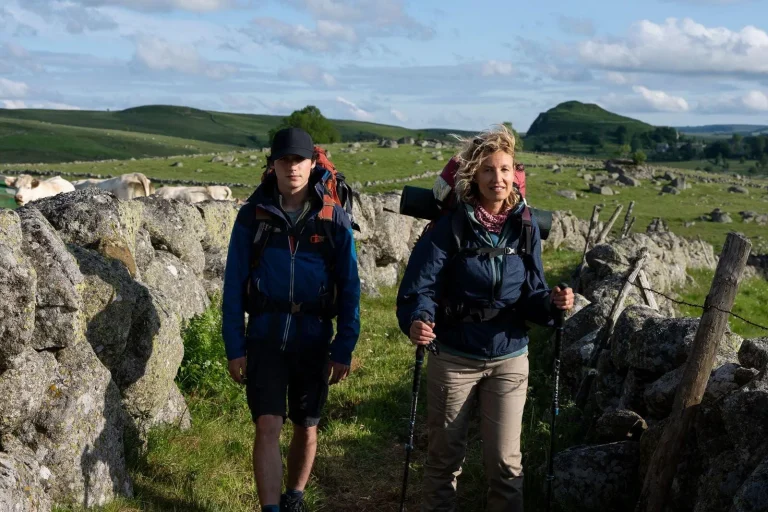
“And no pilgrimage without steps!” », warns Christiane Keller. From Friday May 1, two walks for experienced hikers will leave from two Bourbonnais towns: Montluçon (70 km) and Vichy (60 km); and Saturday morning from Saint-Pourçain (30 km).
On Sunday May 3 in the morning, four walks will also be organized, adapted to everyone’s possibilities: starting from Moulins for the big walk (15 km), from Saint-Menoux for the meditated walk (9 km), from Coulandon for the youth route (8 km); and around Souvigny for walking with families (5.5 km).
Finally, something new for this anniversary: the arrival, Sunday May 3 in the morning, of the walk organized by the association Les Amis de Saint Jacques en Bourbonnais, which progressed in stages, each month, departing from the Saint-Mayeul chapel in Saint-Bonnet-de-Tronçais.
6. Experience unique spiritual highlights
“It is utopian to proclaim peace in the world if we do not work to cultivate it in our own hearts,” explains Father Marminat. It is therefore with this precise intention that the pilgrims will experience the spiritual highlights.
On Saturday May 2, in the priory, solemn vespers will be sung by a choir of men, around the antiphonary of Souvigny (1779); and on Sunday, the children’s choir “Les Voix lactées” will uplift the souls of pilgrims with their beautiful program, while children (from 6 years old) and adolescents will be expected in the park for “Cluny Kids” workshops or sports games.
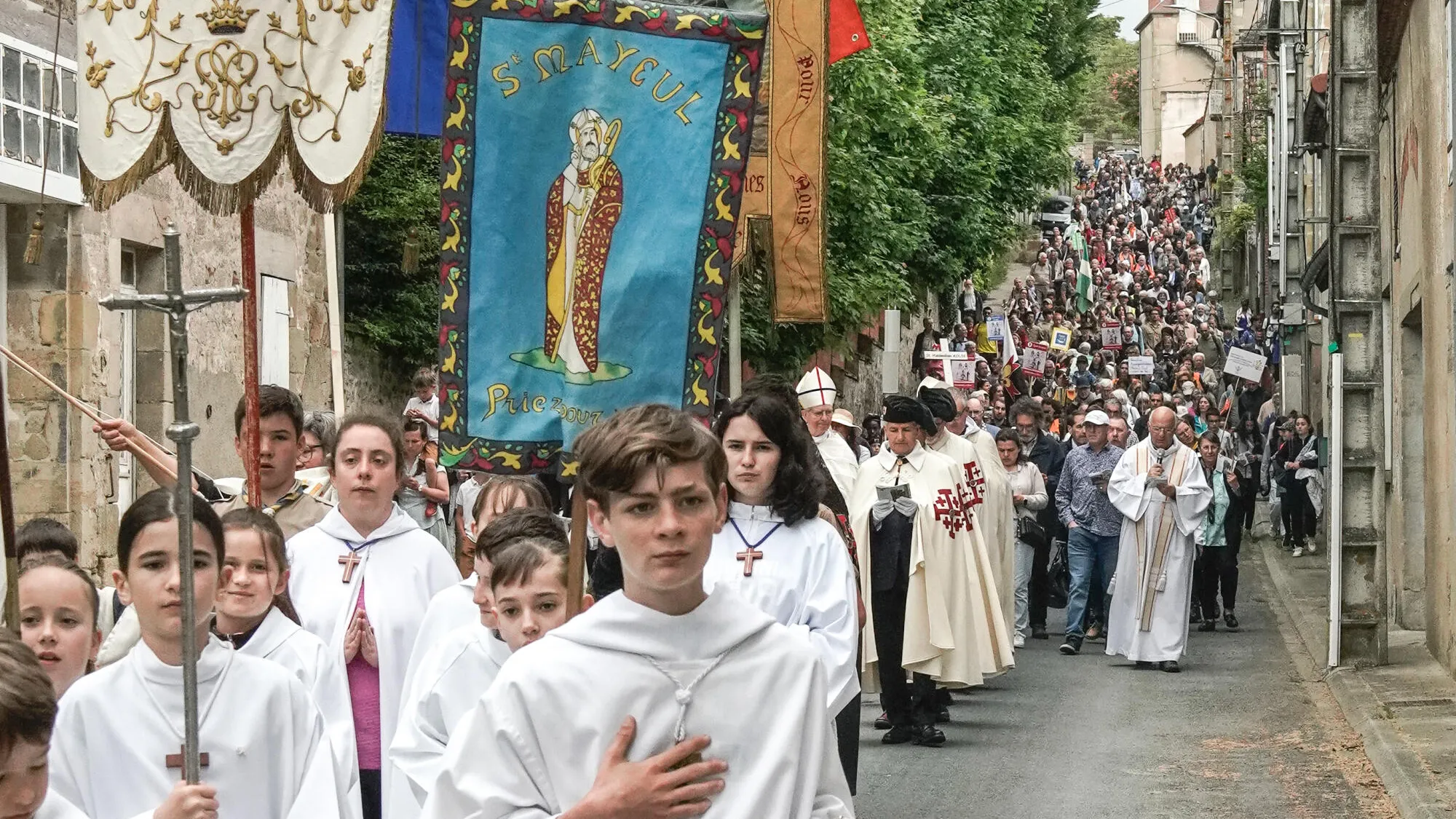
These highlights will culminate with the procession of relics, which will crisscross the town on Sunday morning, arriving at the priory. The closing mass will be concelebrated on Sunday, May 3 afternoon, by around forty priests and bishops, under the presidency of Mgr. Laurent Percerou.
“This year,” rejoices Christiane Keller, “the Youth Ministry is offering a “Youth Vigil” in the priory park, then a luminous procession towards the priory followed by a nocturnal adoration of the Blessed Sacrament. »
7. An invitation for everyone
Nearly 2,000 pilgrims, including several bishops and delegates from Cluniac sites in France and Europe (Spain, Portugal, Italy, Poland, etc.), are expected in Souvigny to blow out the ten candles of this pilgrimage. They will unite with Pope Leo XIV who, in view of international geopolitical circumstances and in line with his predecessors, makes peace one of his priorities.
“Let us believe again in love, moderation and good politics. Let us train and commit ourselves, each responding to their own vocation. Everyone has their place in the mosaic of peace! », he proclaimed on April 11, 2026, during the prayer vigil for peace.
Thus, on May 2 and 3, 2026, in Souvigny, each pilgrim will be invited to pray for peace in the world, but also to question how they can contribute to it. Because peace, the Pope again reminds us, is built patiently, “word by word, gesture by gesture”. A compelling message to meditate on, in this Easter season which encourages us to revisit our faith in the light of the risen Christ. And to be, in our everyday lives, peacemakers!
To find out more
- Such. : 04 70 43 60 51 (reception of the Souvigny parish: 10 a.m. – 12 p.m.).
- E-mail: [email protected]
- Site of the Souvigny sanctuary.