
Can we really do without oil?
Since the beginning of April 2026, progress between Iran and the United States around the reopening of the Strait of Hormuz, as part of a ceasefire concluded with Israel, has brought back hopes of a breath of fresh air. A breath of fresh air for a world economy under pressure, but also for consumers, particularly French, who were hoping for a drop in oil prices.
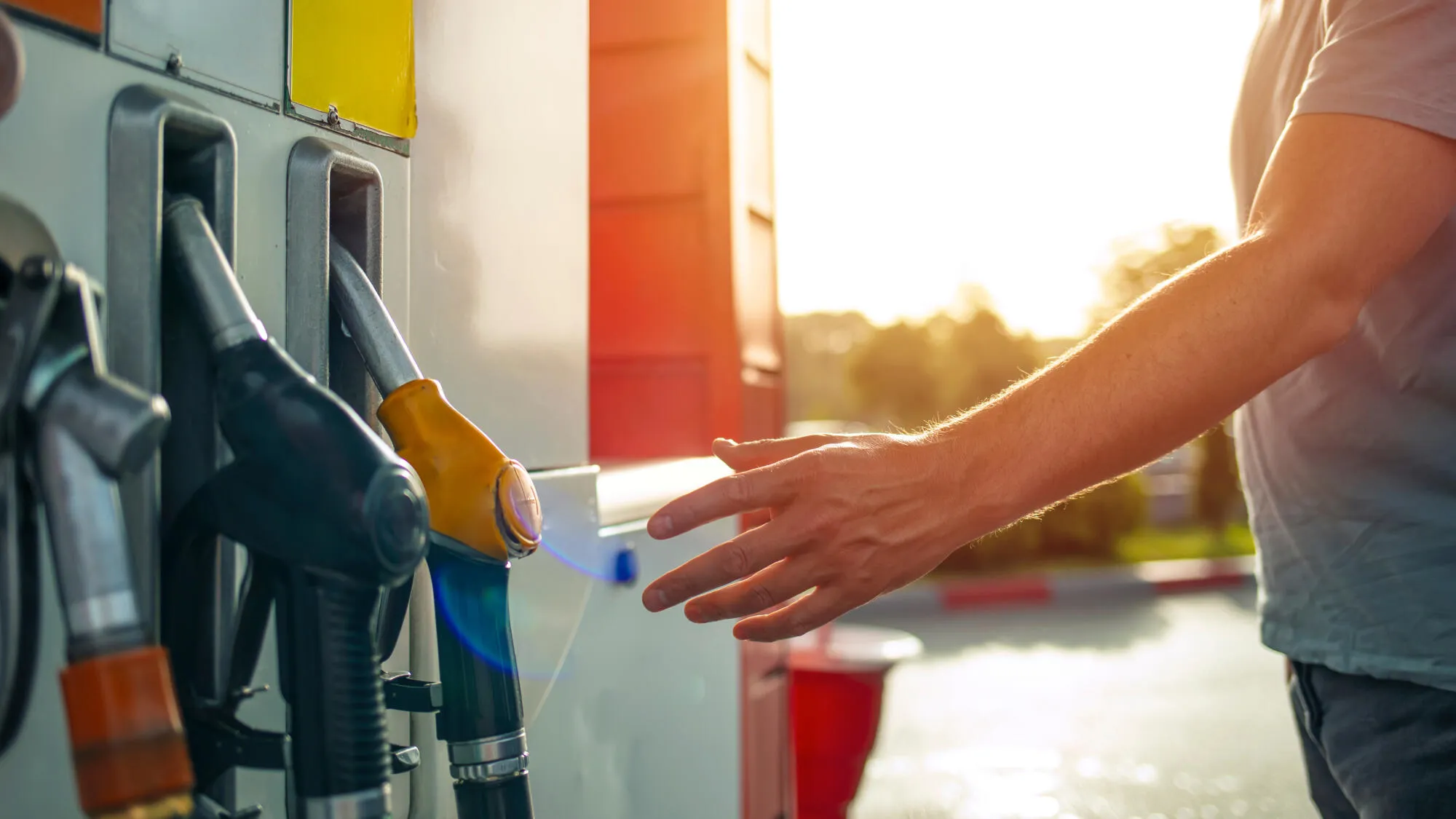
However, this hope was dashed by the Iranian about-face on April 18, 2026, closing the sea route pending the lifting of the blockade of its ports, plunging the world into confusion. And the longer the crisis drags on, the more it weakens us. Prices at the pump are already well over two euros. But, if everything seems to be at stake when refueling, oil is in reality everywhere, and reminds us of something obvious that we sometimes ignore: we are addicted to hydrocarbons.
An addiction shaped over a century and a half, which tells the story of the shift of the world – and, with it, that of France – at the end of the war, towards a society of mass consumption, made of small comforts and great progress: the washing machine, the heat of the oven in winter, the car on the national 7 to go on vacation. The memory of these gestures and everyday objects traces the emergence of the Western way of life since the Trente Glorieuses. A fresco inseparable from oil.
Discovered in 1859 by a former American railroad worker, Edwin L. Drake, in the heart of Pennsylvania, “black oil” soon became the major player in our economy. Above all, because this viscous mass powers our entire transport network: cars, trucks, tractors, some of the trains, boats, and planes.
But oil is above all at the origin of another revolution. In the 1960s, petrochemicals discovered that by heating oil to very high temperatures, certain molecules are transformed into a solid material: plastic. Quick to produce, inexpensive, infinitely modular, it appeals to manufacturers and consumers. “And the world will quickly no longer be able to do without it,” summarizes Francis Perrin, sector specialist at the Institute of International and Strategic Relations (Iris).
But it is undoubtedly through the story of an ordinary day that we best measure our dependence on oil. Let’s imagine 24 mundane hours, full of habits. And let’s consider a person with insomnia, routine, getting ready before coming to work. At dawn, she gets up, makes a coffee from the machine, grabs the opaque bag of cornflakes, uses the toaster, opens the refrigerator, eats a quarter of an apple and wraps the rest in plastic wrap. A habit like that of millions of French people, and so many gestures which lead back to the omnipresence of plastic, and therefore of oil.
Strainer, blender and computer
“In fact, almost all the objects in our kitchens and bathrooms were manufactured in factories fueled by oil,” insists Nathalie Gontard, plastic specialist. Strainer, blender, storage boxes, chairs, mattresses, record player… From the 1970s, consumption accelerated. Plastic is the only material that can keep up with the production pace of a society that has moved into the era of mass consumption. Naturally, it replaces the wood, paper, cardboard, aluminum and copper used until then. Then, computers, laptops, coffee pods will follow. All made of plastic.
Sunscreen and paracetamol
Today, it is essential to our lifestyles. In medicine, it equips our treatment rooms: MRI, scanners, blood pressure devices, thermometers. In cooking, it is found in utensils and packaging. In the military field, certain equipment, such as combat drones, also contain it. One figure is dizzying: we produced more than 430 million tonnes of plastic in 2024, “and this could rise to 1.2 billion by 2060”, relates Francis Perrin. When it is not present in the form of plastic, oil is found in that of another petrochemical derivative: naphtha, used in tar, lighters, lubricants or chewing gum.
Faced with the dizziness of this dependence, what if we go get some fresh air, do a little sport? Let’s put on a tracksuit. Let’s pull our socks up onto our calves. And let’s go walking, running, swimming… Here too, a glance at the label on our clothes is enough to understand that it is impossible to avoid oil. Swimsuits and other handball shorts are most often made of technical fibers (polyester, polyamide), the whole family of “poly” materials which make the fabrics flexible, stretchy and washable repeatedly. Another petroleum derivative.
After exercise comes skin care. “Here again, we cannot escape oil,” replies Laurence Coiffard, professor of cosmetology at the University of Nantes. Moisturizing creams, like sunscreens, contain two derivatives: paraffin and petroleum jelly. » Substances with controlled use, sometimes even used in dermatology to treat severe conditions, and whose use extends to painkillers, such as paracetamol, also composed of hydrocarbon derivatives. Oil, when you hold us!
The sun is setting. The day slowly fades in the car rearview mirror. Through the window, fields and valleys pass by. Agriculture, too, is dependent on oil, especially with the rise of globalization. Trade liberalization intensifies competition. Pushed to produce more, farms are mechanizing and using pesticides and fertilizers, other petrochemical products on a massive scale.. While this development has made food more abundant and accessible, it has also weakened consumer confidence.
Global supply chain
Globalization has not only increased trade: it has linked economies through complex logistics chains. Oil is the invisible base, essential to the functioning of the whole. Let’s take a smartphone: it is designed in California, assembled in China, transported by container ship to the port of Rotterdam, in the Netherlands, then transported by truck to warehouses, before being delivered to cities in France. “No territory, even the most refractory, can do without oil”, underlines Francis Perrin .
This ultra-sophisticated production chain is at the mercy of geopolitical crises. The war in Iran is a notable example. For the French, the repercussions were immediate. The surge in gasoline prices has weakened households and small and medium-sized businesses and, more broadly, poses a threat of shortages. Hence a now unavoidable question: how to loosen the grip of oil?
The government is putting forward a response: a vast plan to electrify the economy, focusing in particular on the widespread use of electric cars. But salvation will also come through a deeper transformation: how, individually, can we escape from these daily actions that bind us to oil? In the age of fast fashion, for example, where a simple click is enough to put trucks on the roads, and cargo ships on the seas, to deliver a simple package for two euros, shouldn’t we learn to consume differently? Here, too, is another possible story.