A caregiver, she supports families in old age and illness
In Bagneux, in this Parisian suburb of Hauts-de-Seine, Lila almost has the impression of returning to her native Kabylia. In his residence with 14 concrete buildings, there are countless tenants from this mountainous region in Algeria.
But only a small number of them can boast of having azure blue eyes like Lila. With her freshness, her smile and her floral pants, this 42-year-old mother immediately reminds us of spring.
A care assistant, Lila works for the company Alenvi which supports vulnerable people at home by deploying several agencies in Ile-de-France. In her list of beneficiaries, the employee mainly includes relatively well-off families, who have the financial means to call on her several times a week.
Like this Kabyle lady that Lila has known for two and a half years. Her name is Farida, she is 59 years old, and for several years she has suffered from Parkinson’s disease.
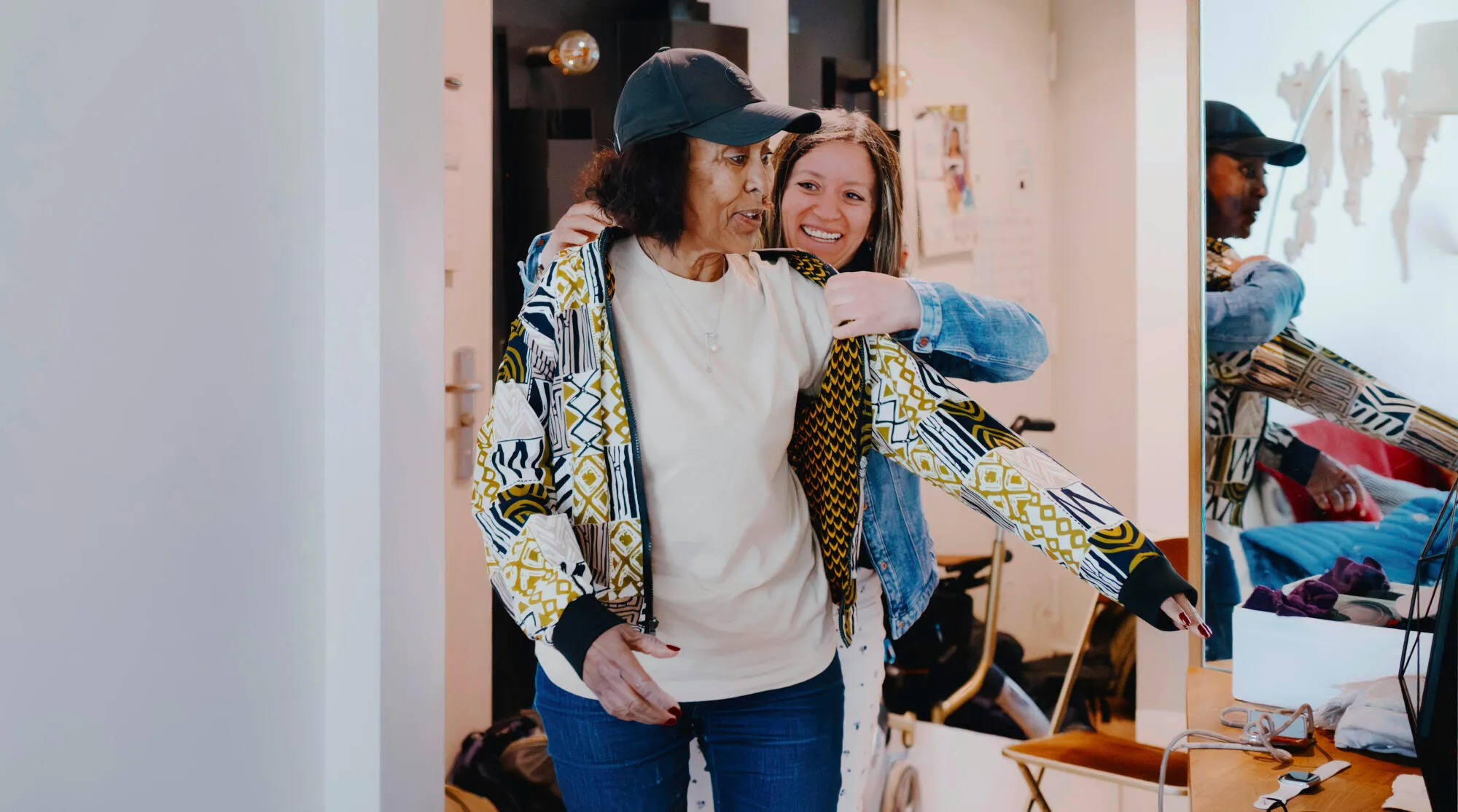
Always wearing an elegant turban, her gaze sometimes a little lost, Farida now asks herself every day, in her native language, if her head is in place, her mouth too and if she is allowed to eat chicken or couscous. “Of course, you don’t need my permission to eat chicken,” laughs Lila as she unties the lady’s turban and braid.
An attentive presence
Today she considers her a member of her family. Her neurodegenerative disorder causes uncontrolled tremors and can sometimes plunge her into a thick mental fog. So, Lila goes to her beneficiary’s house every day, to get her up, help her wash and take her to get some fresh air. In the green alleys of Bagneux, Farida sometimes hums with her crystalline voice songs addressed to her mother, who lives far from her, in Algeria.
The clock is ticking but Lila doesn’t want to hurry. “I prefer to stay a little longer than planned rather than rush my beneficiaries,” she confides. I am very sensitive and I get very attached to them! Is this a quality or a defect? I don’t know. But it’s me! »
Formerly a medical secretary in Algeria, Lila married “back home” before joining her husband in France for work. She did not have the appropriate diploma when she became an auxiliary but her life experience was enough, before a succession of training courses within the Alenvi company.
“I accompanied several people in my family in old age and illness,” she says, her eyes welling up with tears. My uncle died of cancer. I was with him, on vacation in Algeria and by telephone, until his death. »
A very constrained budget
Lila first worked for an agency that was unscrupulous about the working conditions of its staff before joining her current company. She was paid eight euros an hour and could not adapt her schedule to her daily constraints.
She was also strictly forbidden from obtaining her colleagues’ numbers. A common strategy in certain groups, which prevents employees from uniting to obtain better employment conditions. His current company, Alenvi, offers him a much more serene environment. The founders sought to further structure the profession and offer an ethical framework to their employees, most of whom are on permanent 35-hour contracts.
For two and a half years, the mother has finally been able to manage her schedule by organizing independently with her colleagues. At home, she has a son who is barely five years old. The household budget is a bit ric-rac: if her husband pays the rent, Lila manages current expenses each month with a minimum wage salary.
This is much more than in her previous company, especially since she receives bonuses every quarter and the remuneration can change. But the cost of living in the Paris suburbs is not cheap, nor are plane tickets to Kabylia and Lila monitors every swing in her bank account.
Around 11 a.m., the carer takes the bus and goes to Sceaux, a pretty town in Hauts-de-Seine. Another beneficiary of North African origin, Khadija, a dapper 78-year-old Moroccan, is waiting for him to go to the physiotherapist.
Of rare elegance, the lady tells Lila the memories of her childhood in Morocco and jokes mischievously about Muslim first names. “Khadija” means “dawn” and like dawn, she stands proudly, chooses her clothes carefully before leaving her apartment. She hesitates a little: wasn’t she supposed to go to the gym this morning?
Khadija has no speech problems or particular physical constraints, but she has cognitive problems that can cause confusion in her mind. “Basically, she doesn’t expect me to make sure of all her appointments,” observes Lila. Above all, she appreciates my presence, the fact that I am near her. Between us, we call each other “mahbouna”. In Arabic, it means “my darling”. »