
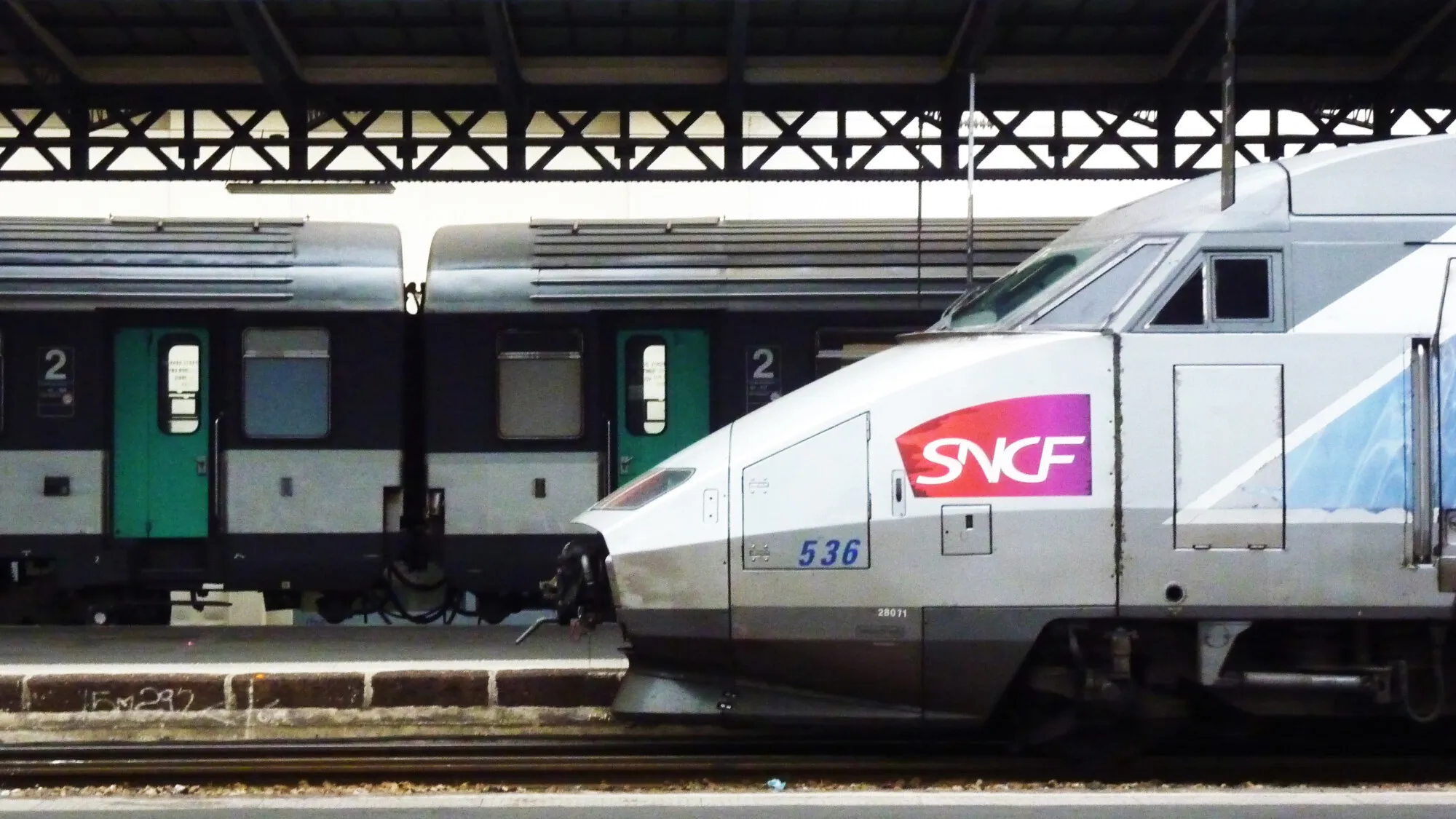
These empty trains which are full
A resident of Moulins (Allier), Julien Vannier knows the regional train line between Tours (Indre-et-Loire) and Lyon by heart. With its quiet strength, the Regional Express Transport (TER) of the SNCF network passes through stations with improbable names and rolls towards the town of origin of the forty-year-old, in the Rhône, where his family is waiting for him. But the trip doesn’t always go as planned. “It happens that the train is full, several days or even a week in advance on the SNCF digital platform,” sighs Julien. For transport, the TER, supposed to operate without reservation, is a shame! » Because yes, it is often impossible to buy a ticket to board the small lines of the public rail network, one or two weeks before departure. And yet, transport user associations note, on board, a occupancy rate which sometimes does not exceed 60%. How can we explain this unusual paradox?
Since the Covid-19 pandemic, the train has been wildly successful. Its attendance jumped by 14% between 2019 and 2024, according to the Transport Regulatory Authority. Faced with the influx, the SNCF does not, in reality, want to take any security risks in its trains or be overwhelmed by complaints from French people disappointed with the comfort offered. It is therefore increasingly closing its ticket office as a precaution when the situation seems to require it. This is the case for the May bridge period which promises to be particularly complicated. Thousands of vacationers thirsty for nature are likely, for example, to bring a bulky bicycle. However, they only travel occasionally on the lines.
Rail network engineers are struggling to assess the crowds. They rely on more or less hand-crafted computer anticipation models depending on transport offers, cross-referencing ticket forecasts with occupancy history. In fact, the system is unreliable, and some trains leave half empty. “The system is unsuitable because it leads to a drop in revenue and can encourage the French to switch to the car,” judges Pierre Pomarel, member of the National Federation of Transport User Associations. It would be better to give the French the freedom to book and board, or not, a packed train. In Île-de-France, people are entering the RER en masse. »
But this claim runs into a problem of oars. Today, the SNCF has little rolling stock. “The State did not see the success of the train coming and did not invest enough in the construction of trains,” analyzes Patricia Pérennes, economist specializing in transport. Supposed to have a lifespan of forty years, our trains have now passed their expiry date. This makes anticipating crowds more complex, particularly in the Intercity areas. Their equipment may date from the 1970s and some of their cars are defective.
TERs to be modernized
“In recent years, the State and the SNCF have placed orders to catch up and modernize a large part of the Intercités by 2027,” reassures Patricia Pérennes. But the TERs should be less spoiled because it is the regions which manage and finance public transport. With costs soaring, they have difficulty purchasing additional equipment.
So, sometimes you have to use trickery to get your seat. A collective of Auvergne train users was created to exchange good deals. Julien Vannier, its spokesperson, recommends that those who cannot book online go to a regional distributor at the station. Unlike self-service kiosks, they are not connected to the Internet and automatically provide a ticket. The affair has grown to such an extent that concierge services, like Train complet, have been created to track down seats for you! There remains an immutable principle: the first to arrive at the counter will be, according to the popular adage, the first served.