
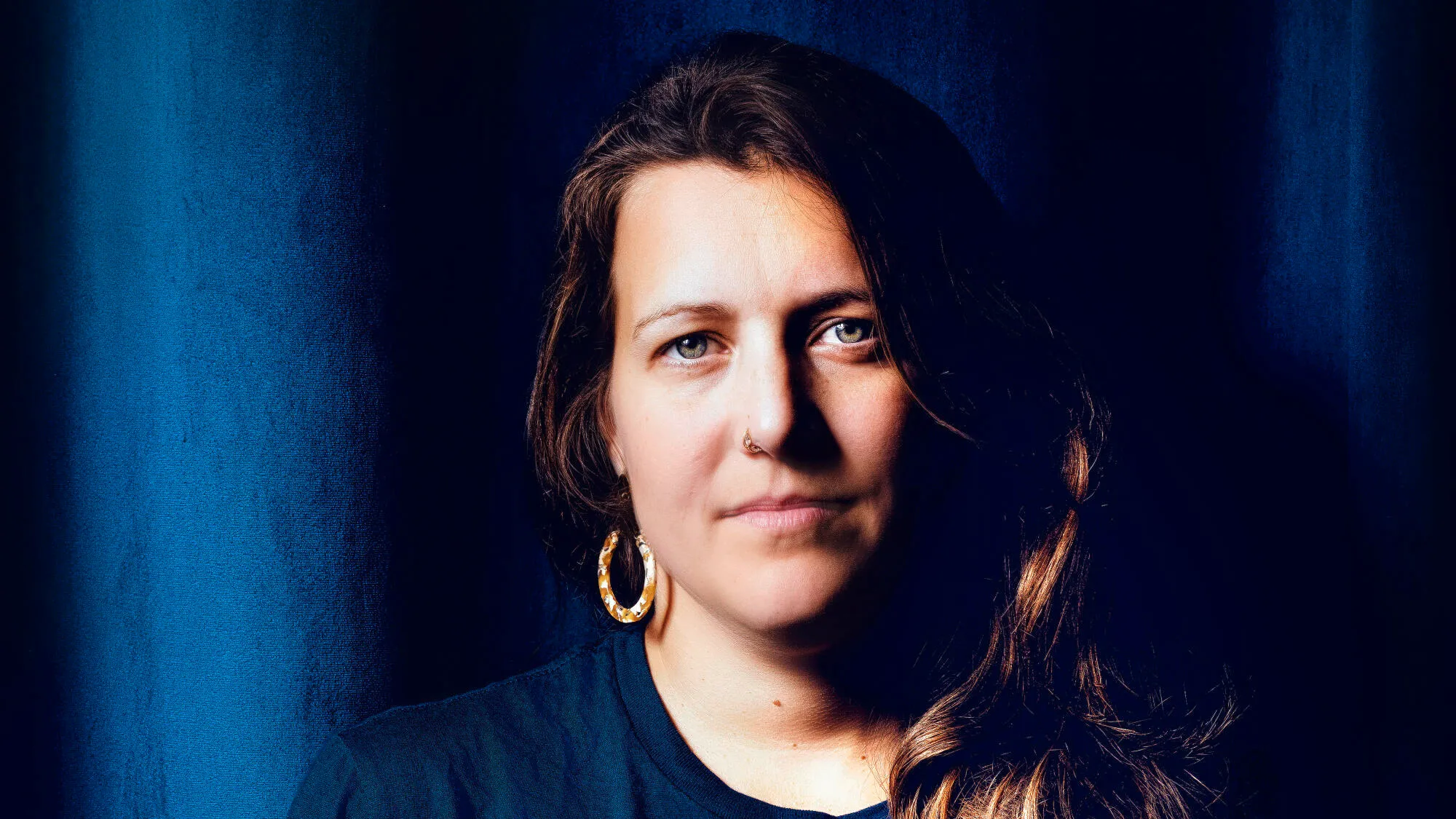
For sociologist Alizée Delpierre, “there are still slaves in France”
A complaint for “human trafficking” against the home meal delivery platforms Deliveroo and Uber Eats is currently being investigated at the Paris judicial court. Does this surprise you?
No not at all. These companies are open doors to poor working conditions, or even overexploitation for tens of thousands of delivery workers*. I am curious to see what this criminal complaint – which includes offenses for “trafficking in human beings” – will yield.
Because my research shows that it is not easy to convict those who gave orders. In 2018, there was a resounding affair in Champagne. During the harvest, it was discovered that 200 people worked from sunrise to sunset, without pay, without water or food and were staying in particularly unsanitary accommodation.
However, in 2022, the Reims Court of Appeal only convicted the managers of one of the subcontracting companies for “trafficking in human beings” and not the major champagne houses. However, the latter should have been at least alerted by the extremely low labor costs.
For your book, written in the first person singular, you met victims. Can you tell us about a situation emblematic of this overexploitation by work?
I would talk about the story of Ousmane**. When I met him, he told me: “When you see my face, well, we all look alike, eh! » And as I looked at him questioningly, he added: “I look like a black guy, not like a boss for here. »
Listening to his story, however, he could have become a boss. Born in a village near Abidjan, in Ivory Coast, to a farmer father and a jewelry and fabric merchant mother, he obtained a baccalaureate and began working on construction sites and in businesses, including a cousin’s grocery store.
But it was destroyed in a fire. For Ousmane, it was the beginning of a real descent into hell: job loss, family conflicts, etc., which pushed him to try his luck in France, where he found himself, without papers, working in a small construction company for more than sixteen hours a day with controlled access to food, makeshift accommodation and almost non-existent pay.
Victim of several work accidents, he never went to the hospital or the doctor, fearing the threat of being forced to leave French territory (OQTF). Until the day a colleague told him: “Ousmane, in fact, you are being exploited. »
When this man told me this, he relived the situation. He kept telling me: “I didn’t sleep all night, I said to myself: ‘I’m being exploited, I’m being exploited, I’m being exploited…’” Shortly after, he dared to flee and was lucky enough to be in contact with the Committee Against Modern Slavery (CCEM). Because yes, there are still slaves in France today.
“97% of victims are of foreign origin and without a residence permit. »
Have you observed typical profiles of exploited people?
My research work was carried out based on 905 files compiled over thirty years by the CCEM and nearly 80 interviews conducted with victims, exploiters, professionals who fight against trafficking (lawyers, judges, labor inspectors, association employees), as well as observations at the criminal court and industrial tribunals.
97% of victims are of foreign origin and almost all without a residence permit. They come mainly from sub-Saharan Africa (47%), then North Africa and the Middle East (24%), a fifth from Asia (19%) and a twentieth from Latin America and the Caribbean (4%).
The Ministry of the Interior puts the proportion of French people at 18%, but this also includes people who are the subject of sex trafficking. The risk of being deported structures the daily life of these men and women who are often deprived of their passports by the super-exploiters.
Generally speaking, just like many people of foreign origin working in France, the sectors of activity concerned are: domestic work, construction, agriculture, local commerce or hotels and restaurants. Because, in the context of globalization, labor savings cannot be reduced to transnational relocations. They also concern a number of workers in these sectors in France, originating from countries in the South, who are underpaid or even overexploited.
And on the side of the exploiters?
Among those who take advantage of the situation, we find people who occupy various positions within the upper classes, but also the working classes. Moreover, in the CCEM archives, the categories “employee-worker”, “artisan-trader” or “unemployed-housekeeper” are among the most represented.
In many of these cases, the exploiters run small businesses and businesses, or abuse women and children as domestic servants. Some are from the same country as the victims and sometimes members of their families.
Official data puts the figure at 7,285 victims, including sex trafficking or exploitation through begging***…
We can only count people who have left overexploitation. So, by definition, all those who are still victims remain invisible. So, since I published this book, I have heard about many new cases.
Like this woman vice-prosecutor in Bordeaux, specializing in trafficking cases in the agricultural sector of this region, who recently spoke of people exploited for fifteen years to whom the profiteers, throughout these years, only offered wine to hydrate themselves…
The difficulty in quantifying is also due to the lack of resources: fewer and fewer labor inspectors, lack of police forces mobilized to fight these forms of slavery, etc.
In 2013, the year in which the definition of human trafficking was clarified in the Penal Code, the French State created the Interministerial Mission for the protection of women against violence and the fight against trafficking in human beings (Miprof). For several years, France, under pressure from the Council of Europe, has made efforts, but these remain largely insufficient.
“To flee is to find yourself on the street without any help, without food or shelter. »
You point out how astonishing it is that these people are not fleeing. How to explain it?
Overexploitation is characterized by unlimited work, no or low financial compensation, symbolic or real violence and, indeed, the theoretical possibility of fleeing.
However, to put it bluntly: these modern slaves are chaining themselves. This explains why many judges have long not wanted to qualify this overexploitation as “human trafficking”, this term referring to slavery for which there is an absence of freedom to flee.
Furthermore, many of these situations being intra-family, they often consider that the victims would be free to say “no”. However, on the contrary, the constraint can be even stronger. And then leaving means finding yourself on the street without any help, without food or shelter, or under the threat of OQTF.
Most victims are actually paralyzed. However, in France, when you file a complaint for trafficking, you theoretically have the right to obtain a temporary residence permit. “In theory”, because the Ministry of the Interior tends, unfortunately, to become more and more suspicious of those who say they are victims of “human trafficking”. And then, you still have to know… It is particularly the job of an association like the Committee against Modern Slavery to reach them and inform them.
*Delivery workers would work more than 60 hours per week for less than 1,500 euros per month, and nearly 65% would have no residence permit (Médecins du monde study carried out with more than 1,000 delivery workers in Paris and Bordeaux, March 31, 2025).
**The first name has been changed.
***Source: Miprof, October 2026.
All the lexicon to understand
Synonymous with slavery, overexploitation covers the undue extension of working hours, the absence or low remuneration, physical or psychological violence and limited access to water, food and hygiene.
According to the terms of article 225-4-1 of the Penal Code, “ human trafficking is the act of recruiting a person, transporting them, transferring them, harboring them or welcoming them for the purposes of exploitation.”
The biography of Alizée Delpierre
- 1992. Birth in Val-d’Oise.
- 2012. For her research work, she begins to be hired by very rich families.
- 2020. Defends his sociology thesis.
- 2022. Publication of Serve the rich. Servants in the homes of the great fortunes (Ed. La Découverte).
- 2023. Researcher at CNRS. The Committee against Modern Slavery (CCEM) offers him access to thirty years of archives.


