
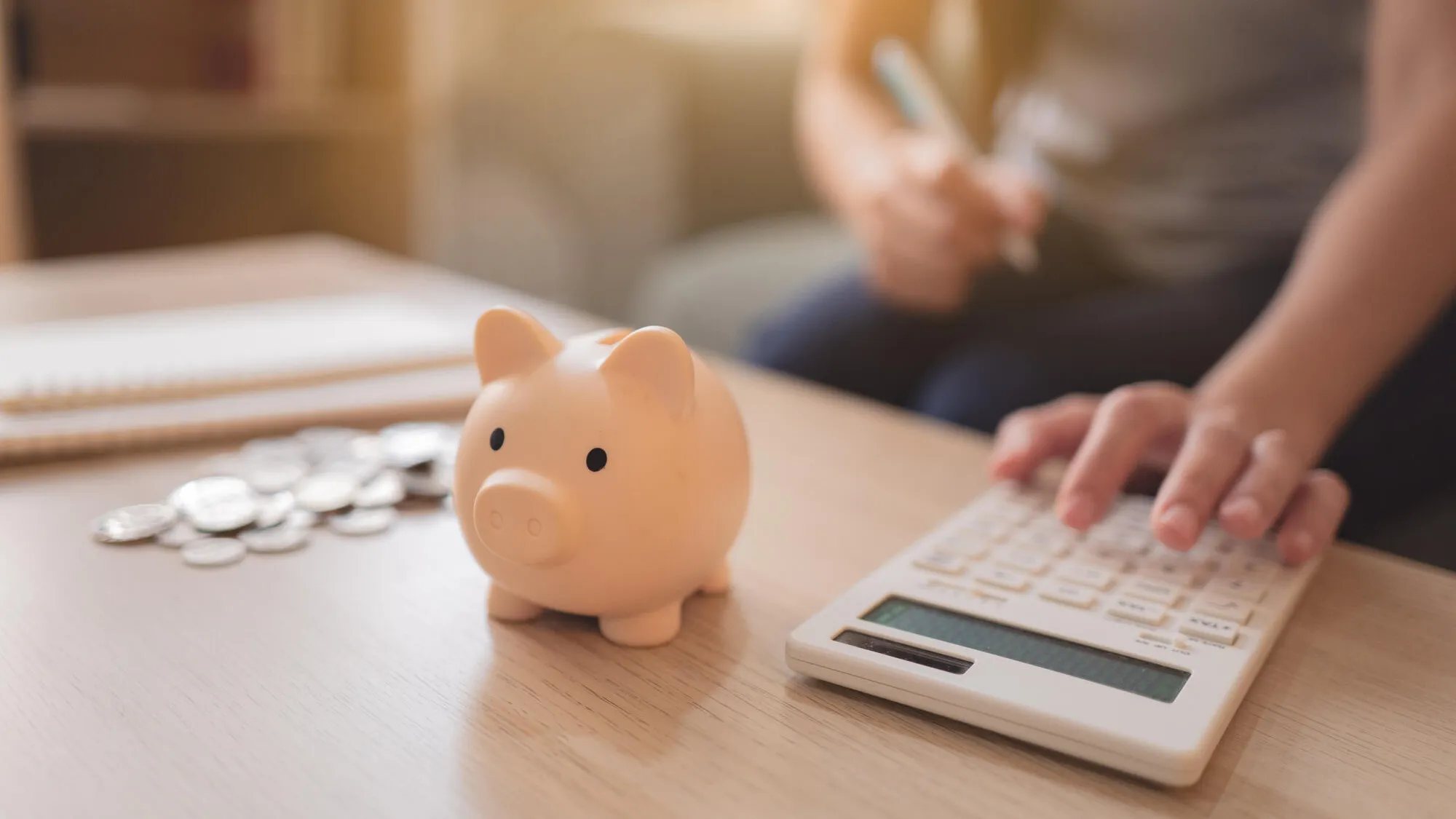
Political programs: who holds the calculator?
Billions, billions… Oh! the beautiful billions. The presidential election campaign is launched and candidates are already appearing on television one after the other to promise savings and spending. The rebellious Jean-Luc Mélenchon assures that he will invest 200 billion euros in the ecological transition. The leader of the National Rally, Marine Le Pen, plans to make 140 billion euros in savings, particularly on immigration and the European Union. Gabriel Attal, member of the central bloc, promises better with 150 billion… But how do the campaign teams manage to produce these shocking figures? As the French budgetary situation worsens and interest rates climb, and the adoption of the 2027 Finance Law in Parliament remains uncertain, never has a presidential election so forced the contenders to prove the solidity of their calculations.
The answer lies behind the scenes of the campaign staffs. Some were kind enough to open their doors to us. Meet at 30 avenue d’Iéna, in Paris. A few hundred meters from the Arc de Triomphe, this opulent artery of the 16th arrondissement is home to stone buildings, embassies, private mansions, but also the Horizons premises. Édouard Philippe’s party took up residence there five years ago. Under the warm October sun, the meetings follow one another, with a clear instruction imposed on all activists and employees: the files must converge on the same floor, that of the “encryptors”.
Discreet and strategic cell
The name designates the civil servants and economists who have been working for several months on the former Prime Minister’s program. It is both the most discreet and the most strategic cell in the campaign. Around the table, everyone comes from the senior civil service. And their commitment must remain discreet… “We arrive late in the evening after our jobs and we work on our weekends,” admits Hervé, a member of the senior administration, who coordinates the party cell in addition to his professional activity. Behind his tortoiseshell frame, his azure eyes are ringed: “It’s true that we haven’t seen much light for a few weeks…”
These shadow recruits constitute a strategic asset for all political parties. From the far right to the radical left, attracting the best technicians in the state is essential in a campaign. With thirty years spent in the mysteries of the Socialist Party, Jean-Luc Mélenchon knows this. He knows the importance of these “technocrats”, as they are sometimes harshly referred to and whom he himself heckles in certain speeches. The rebellious nevertheless counts, as revealed The Express, on the “Phrygians” – his underground network of 80 public executives, comparable to that of Édouard Philippe, who supplies his program with figures and calculations.
For her part, long hostile to the high administration, Marine Le Pen also relies on the “Horaces”, a circle at her service. “We avoid expressing it too strongly, in particular because it is not sales, but their economic skills are very useful,” discreetly slips a frontist elected official. Notably because they are among the only ones who know how to operate the large calculating machines called economic models.
These mathematical tools, unknown to the general public, are vast economic equations that “globally, all parties use”, confirms Éric Berr, economist who participated in the development of the program of the New Popular Front in 2024 and joined Jean-Luc Mélenchon’s campaign. Designed by State services, these complex formulas are freely accessible to the public, and their principle of use is generally the same from one model to another: a measure is provided – increase in the minimum wage, reduction in VAT, industrial recovery plan – and a series of hypotheses: evolution of unemployment, growth, expected tax revenue, etc. The windmill model. Estimates appear.
Each model has its specificities. Developed by INSEE, Destinie allows, for example, to simulate the evolution of pensions based on demographics. By reproducing in a simplified manner the functioning of the French economy, Mésange (Developed by INSEE and the Treasury Department, Editor’s note.)for its part, is mainly used to predict the long-term effects of a project. “In both, we enter figures from the work of INSEE, the Banque de France or the Court of Auditors,” explains economist Éric Berr. This helps us establish an economic trajectory that meets our political objectives. »
Make your own models
“Throughout the campaign, we will juggle from one tool to another to be as precise as possible,” continues Hervé, head of the Horizons costing unit. As he gets into the concrete details of this work, his eyes come alive… For several months, he has focused mainly on making his own models. “It’s done almost everywhere, whatever the political sensibility,” he admits. But at Horizons, he assures, the choice was made to push the exercise further. Even if it means spending time there. “Nearly three months of work,” he says, when his team, dissatisfied with “the existing tools,” decided to create its own calculator to examine the pension reform desired by Édouard Philippe, who wishes to shift the legal retirement age to 65 years.
A work considerably accelerated by recent advances in AI. “Before, we had to copy all the lines from our spreadsheets by hand,” recalls the senior official, working for Horizons. From now on, with well-written instructions, she does all the repetitive tasks, and without human need, for us. A valuable time saver that allows you to review a wider range of data. »
Within other political stables, AI is used more upstream. “Especially when you have to find a lost figure in the middle of the 400 pages of a report,” confides Michel Cavargini, director of David Lisnard’s project. After leaving LR, the mayor of Cannes (Alpes-Maritimes) launched an independent candidacy, resolutely focused on innovation. Its movement, New Energy, has logically developed its own interface, powered by AI, in order to ensure its economic monitoring and update its estimates according to the situation. “The economic reality of October, with Iran, the United States or interest rates, will not be the same as in March 2027…” explains Michel Cavargini.
The obsession with the round number
Politics is a matter of numbers… and symbols. Marine Tondelier (Les Écologues) proposes to increase the minimum wage to 2,000 euros gross. Raphaël Glucksmann (Place publique) wants a European defense fund of 100 billion euros. In the parties, we call this “political printing”: finding the figure which marks opinion and distinguishes one program from another. A communication strategy that extends to budgetary objectives: Bruno Retailleau (LR) intends to reduce the deficit below 3% of GDP, before 2029. The scores, on Sunday April 18, will be counted with a few decimal places behind the decimal point.
Stack the measures… or not
From there to abandoning everything to a completely autonomous machine? “Not at all,” replies the strategist. “A candidate must always remain in control of his program. » Because any economic simulation “depends on the hypotheses with which you start, and the machine cannot change them”. A liberal will thus start from a scenario “with less state intervention and more savings”. On the left, the reasoning will be reversed: “We will rely on the idea that increasing wages and spending supports consumption, investment and therefore activity,” assumes Éric Berr. Two ideologies. Two ways, ultimately, of running the same machine.
There remains a final, more pernicious difficulty for the teams responsible for keeping the candidates’ budgets on course: resisting the excitement of a campaign. A war that breaks out at the gates of Europe, the price of gasoline that soars, a scandal in nursing homes, a news item that sets society ablaze, etc. The 2022 presidential election showed how the electoral marathon could deviate from the route imagined a few months earlier.
Frédéric Lemoine, former coordinator of Valérie Pécresse’s program (Les Républicains) in 2022, remembers it. Now freed from national responsibilities, he speaks frankly about this fight against the temptation to pile up measures. Particularly during the unavoidable trips to trade fairs: “It is perfectly legitimate for nurses or farmers to call on you to ask for additional help in the face of the rise in fuel prices, for example. Often, their representatives tell you: “We calculated, it only costs 300 million.” And you are tempted to integrate it into the program, even though your budget framework is complete and your promises are already printed. »
Another test for accounts already tied up: the rallies. By winning the right-wing primary in 2021, Valérie Pécresse, president of the Île-de-France region, had the delicate experience. The day after her victory, her former competitors Éric Ciotti and Xavier Bertrand lined up behind her. “And they didn’t think exactly the same thing,” Frédéric Lemoine euphemizes. The two tenors push in opposite directions. To rally their voters, a question arises: at the risk of blowing up the figures, should we take up the key measures of their programs? This dilemma could impose itself from January on whoever, Bruno Retailleau, Gabriel Attal or Édouard Philippe, will represent the central bloc and the right. On the left, while the socialist primary nominated Raphaël Glucksmann, the candidates remain more scattered than ever. And in the event of a union, the puzzle will not be played out only on the level of ideas: it will be necessary to harmonize the methods and redo the calculations of each current. An obstacle, often ignored, but very real when creating certain alliances, even the most natural ones.
D-6 months
Le Pèlerin is launching a series of original surveys ahead of the presidential election to better understand what will happen in 2027.


