
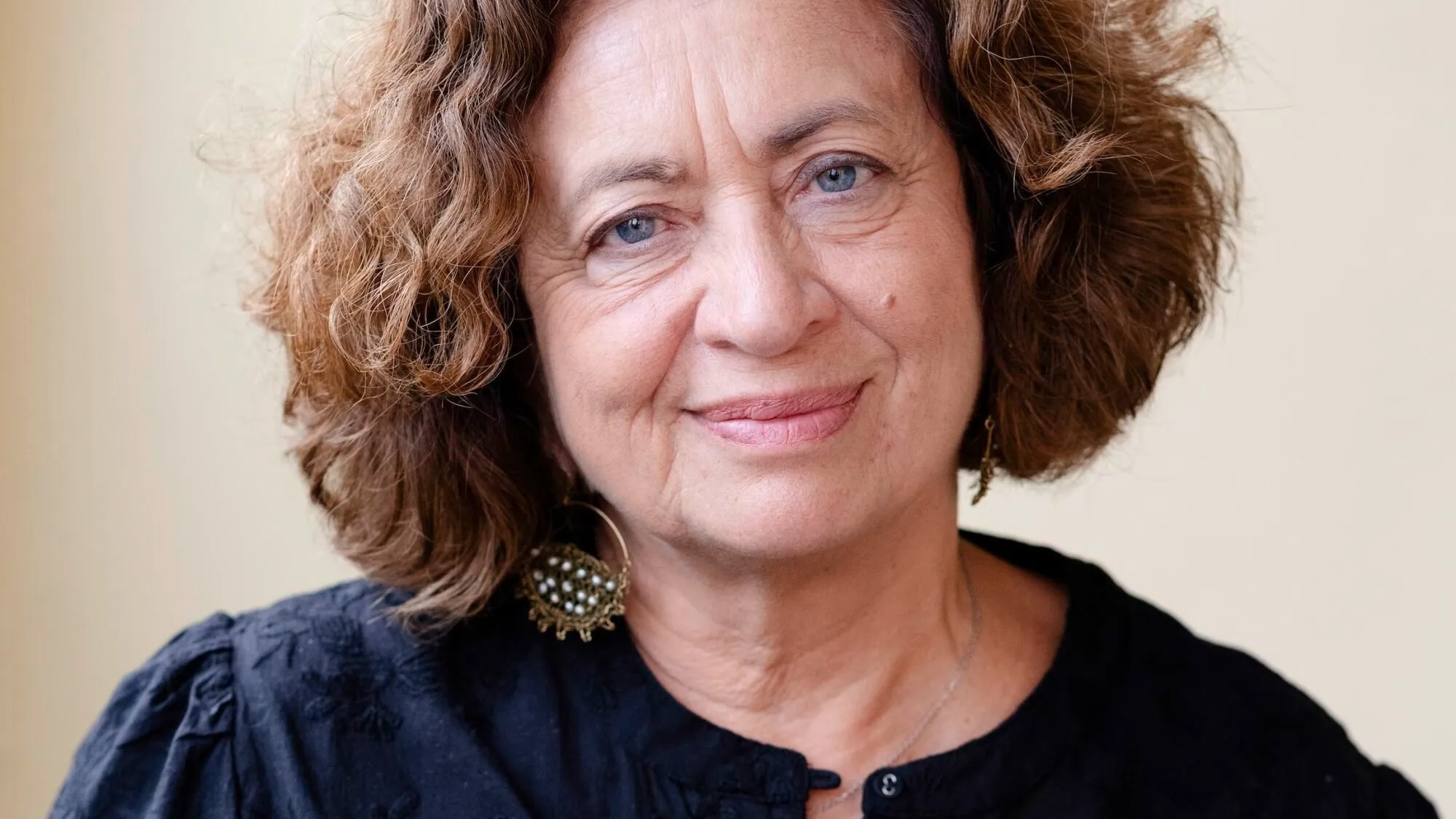
“Violence affects women’s health”
The Maison des femmes de Saint-Denis (Seine-Saint-Denis), which you imagined, founded and directed, is celebrating its tenth anniversary. What was your intuition behind this innovative place?
Between a gynecologist and her patients, who see each other regularly, an intimacy develops. Over time, a consultation resembles a coffee meeting with friends, where we catch up on news… And the women open up. We enter the heart of families. Little by little, I realized that many of them were experiencing, or had experienced, traumatic events which haunted them, which explained pain, difficulties, sterility; and how violence affects health. During my training, no one alerted me to this. While digging into the subject, I discovered studies. Then, I understood that there was a healthcare offering to be invented, and that all doctors should know the traumatic history of their patients to treat them better. This is a public health issue.
You have created a unique place which brings together four units: sexual health and voluntary termination of pregnancy (abortion), sexual mutilation, domestic violence and, since 2022, rape. For what ?
This offer arises from my observations. Excision, for which I had already created a reconstruction and repair service at the Saint-Denis maternity ward, was an interesting starting point for addressing this violence. Because a circumcised woman lives in a world where she is not much. If we have decided to mutilate her in this way, then we can choose to marry her, to hit her, to rape her… I had also identified deep difficulties in their relationship in my patients requesting an abortion. As for sexual violence, it was obvious given the number of victims encountered in consultation. On the other hand, domestic violence was rarely noticed at the time.
33 Women’s Houses, united in the Restart collective, exist in France and are spreading abroad. How do you explain it?
We arrived at the right time. Feminist circles mobilized, but society generally rejected questions of violence against women. Then, with #MeToo, refusing this reality became impossible. More and more people found our approach relevant. That the initiative came from caregivers, and not activists, undoubtedly worked in our favor.
Have you thought about practicing in Lebanon, your native land, or creating a home there?
There, liberal medicine dominates, I would not have been comfortable. I always worked in hospitals, and I loved it. But acting for Lebanon, yes! I left it during the war, in 1977, at the age of 18, I left behind people in difficulty, ruins… I have always felt a feeling of debt. Opening a women’s center would be a great way to pay it off. But every time I pushed a door, the situation there got worse. I’m biding my time.
In ten years, in France, what has changed in the fight against violence against women?
All ! In 2019, the Grenelle on domestic violence led to unprecedented advances: the temporary immediate protection order, the anti-reconciliation bracelet, greater attention towards attackers. We now better understand the importance of their eviction from the marital home and of re-educating them. Dealing with the perpetrators is as important as dealing with the victims, because this fight rests on two legs, prevention and care. Other initiatives are developing, such as restorative justice. Let’s give him a chance, because not all the answers can be judicial. Debates in companies can also raise awareness. I have heard employees realize: “There are attackers in the team!” » Finally, we realized that there was a lack of police officers and judges capable of handling these cases.
What are the priorities for tomorrow?
First, speed up the judicial processing. Investigating the prosecution and the defense takes time, but we should be able to do better, without falling into secondary victimization, that is to say without the justice system inflicting additional suffering on the victims. Then, train all caregivers, as well as police officers and magistrates, in welcoming and monitoring these women. Finally, protect children. Let’s stop cutting corners in this area, whether it’s teachers’ salaries, extracurricular recruitment, child welfare, free care for abused minors, etc.
Have children always been part of your concerns?
Girls in the first place, because a gynecologist has a very young patient base, received during consultations on sexual health. Among perpetrators and victims alike, violence, often sexual, is present from childhood. An early trauma that is poorly managed will last a lifetime. We must therefore intervene as quickly as possible.
Is this why, after the Mon palier shelter, for female victims aged 18 to 25, you are going to inaugurate the Rise care center dedicated to children in January?
I wanted to act to quickly identify these small victims of sexual violence and provide them with the most urgent psychological care. I met a psychologist, Laurence Joseph, who was interested in this project. A new adventure is coming.
“A step forward would be to stop blaming women for the declining birth rate. »
Is this your fight for the next ten years?
Not ten! I won’t hold out. I simply want to set up the place, recruit the teams, launch the care pathways and workshops then hand over.
Where does your joyful rage to live and fight come from?
Besides my luck in having good health, needing little sleep, and being interested in many things, this undoubtedly comes to me from Lebanon, the country of resourcefulness. There has been an unstable situation there for decades, which pushes people to rely on themselves. The war, experienced from the age of 6, also taught me that I could die at any moment. That said, I forget neither the warmth of the Lebanon of my childhood, a young country, full of hope, open to France and the United States, nor my beautiful years at the French high school in Beirut.
Since June, you have chaired the G7 Gender Equality Advisory Council (GEAC). What have you been working on?
Our role was to make recommendations on demographic challenges with regard to gender inequalities. I was surprised to see that developing countries are also below the generation renewal threshold, with the exception of certain countries in sub-Saharan Africa and Orthodox communities in Israel. The birth rate is widespread, it is a subtle, multifactorial phenomenon. Many countries have already tried to curb it, but there is no miracle solution.
What does your report propose?
We have made twelve sets of recommendations. We also refute certain preconceived ideas that could lead to a catastrophic step backwards. For example, with access to the world of work, women no longer want to have children. A step forward would be to stop blaming women for the decline in the birth rate.
You grew up with three brothers. Did this make you aware of equality between girls and boys?
My birth was not a tragedy because there were already two boys. I even brought variety into the family. However, my parents, although not particularly keen on traditions, monitored and constrained me much more than my brothers. This double standard really weighed on me and I could never accept it.
According to UN Women, complete equality will be achieved within three hundred years. Are you more optimistic?
We should be able to speed up the process! However, I am dismayed and helpless in the face of the rise of masculinism in the land of Enlightenment. It’s as if young men needed something to reassure them. But what has always dazzled me in France is the right to think freely.
His bio in a few dates
July 1959
Born in Hammana (Lebanon).
1977
Studies medicine in Paris.
1988
Head of clinic at Saint-Vincent-de-Paul hospital (Paris).
2011
Creation of a reconstruction and repair service for sexual mutilation in the maternity ward of the Delafontaine hospital in Saint-Denis.
2016
Opening of the Saint-Denis Women’s House.
2021
Creation of the Maisons des femmes Restart collective. Opening the foyer My landing.
2024
Violette Perrotte takes over the management of the collective, Ghada Hatem-Gantzer remains president.


