Between family confidence and increased vigilance
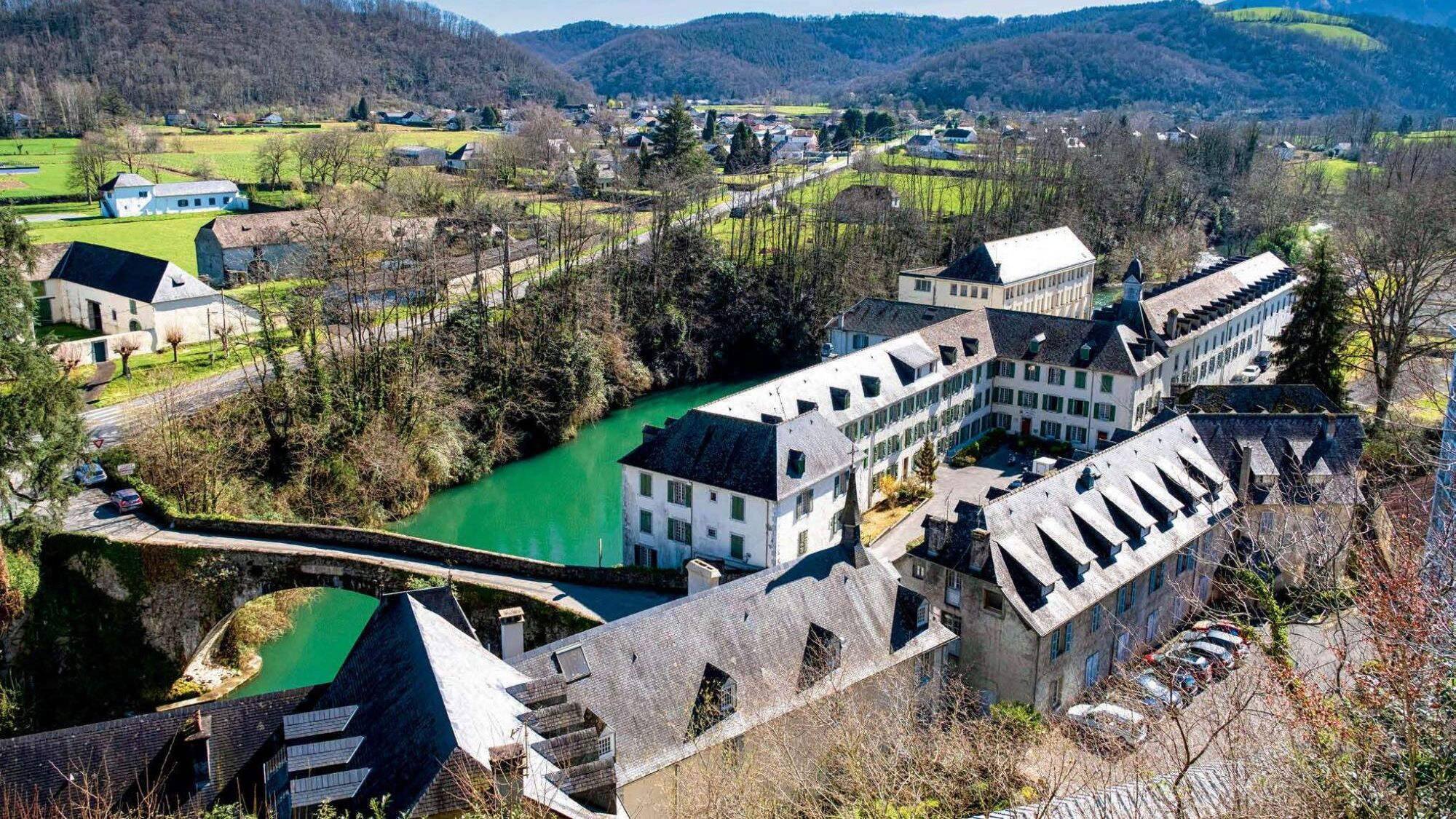
The name smells good the Pyrenees and the sweetness of the pilgrimages. But Bétharram, renamed “the beautiful branch” in 2009, now evokes, for many, a heavy past: that of a Catholic boarding school where sexual and physical violence was committed between the 1950s and 2010.
The revelations, hidden by the local press for almost two decades, took a national and political turn in 2025 with the appointment of François Bayrou as Prime Minister. The Béarnais, elected from the region, who has educated three of his six children in the establishment, was accused of being aware of the facts and of having ignored them. The latter deeply marked the spirits, leading to the creation of a parliamentary commission of inquiry into violence in schools. For families registering their child in a Catholic boarding school, this school year therefore has a particular color.
Laurent did not forget anything about his stupor to discover the case. “What happened to Betharram scares me a little,” he admits. A few years ago, given their son’s difficulties in getting used to classic school life, Laurent and his wife made the choice to enroll him in a Catholic boarding school. “If it had to be done, not sure that we would do it again,” he admits.
Especially since Betharram is not the only one to have been targeted in recent months by revelations of abuse of different natures, ranging from brutal behaviors to rape. The Saint-Stanislas College-Lycée in Nantes (Loire-Atlantique), the Notre-Dame-du-Sacré-Coeur institution of Dax (Landes), the Saint-Pierre college in Relecq-Kerhuon (Finistère), the Saint-Dominique Institution of Neuilly-sur-Seine (Hauts-de-Seine) … “These actions have deeply shocked and disturbed, testifies Hélène LAUBIGNAT, National President of the Association of Parents of Free Education students (APEL). We discovered realities that we could not imagine. ”
A mature educational project
For the time being, however, the boarding staff commission of the Private Private Education Syndicate (CFTC) does not note a disaffection movement in these establishments. “We have not noticed any decrease in staff, nor lifts from worried parents,” says one of its members, Isabelle Petit. In most homes, scandals did not question the choice of pension, often anchored in a family tradition. “My eldest son wanted to register in the boarding school of his high school because his scout friends were there. I who was younger school in this pension, I was very happy that he wanted to go, ”says Catherine*.
The boarding school is generally part of an educational project long matured. The Catholic identity of the establishment and the possibility of making the child’s spiritual life grow there attract, as well as the requirement of the school level. These internships with assertive values are sometimes refuge establishments for families. “It was simpler for my children to make friends there than in the public: there, the other students are as practicing, scouts,” says Catherine, for whom boarding school was a way to access the private sector. Sometimes, it is the very content of public education that is implicated: “The family schedule makes class interventions on abortion”, annoys a mother, a teacher in the public.
Parents insist on putting abuse business in context. “They are often old,” are many of those questioned by The pilgrim . They keep a critical distance, believe that media attention is largely centered on the Catholic institution, which they live as an injustice. “The media forced the church to change, which was necessary,” admits Béatrice*. But the latter is very accused, when these problems do not only concern Catholic internships. ” Some assume to stay away from the scandals: “I preserve myself from this negative and destructive atmosphere where we only show what is wrong,” recognizes a student’s mother.
More attentive families
Marked by painful years of repeated scandals, families do not ignore the magnitude of evil, first discovered among abusers’ priests and in religious communities. While retaining vital confidence in the Church, they adopt reflexes that the previous generation did not know. “I often say to my children: even if he is someone from the church, he can do nonsense and it must be said,” says Béatrice. Each family talks about it in its own way, without necessarily judging necessary to appoint abuses and sexual violence, so as not to shock children or throw shadow on what they experience in the church.
For Adrien*, director of a Catholic establishment in the north of France, the time changed. “Speech is much freer today,” he greet, and children are more easily raw. ” This is also the meaning of “speaks, we believe you. Speak, we protect you ”, a campaign launched by Apel. But, for the association, the a posteriori transparency, common sense and advice are not necessarily enough. It therefore offers training for parents. “The idea is to learn to better observe, to identify the weak signals of violence, and, if necessary, to know who to contact,” explains Hélène LAUBIGNAT, stressing that adults, whatever they are, have a “criminal responsibility” to report abuses of which they would be informed.
Play transparency
Dialogue with establishments reassures. The revelation of abuse committed in an establishment can even strengthen the confidence of parents – provided that the school plays the game of transparency. “When former supervisors were arrested last February, the director opened the doors and was available for our questions,” said Olivier*, whose son has been educated in Betharram for a few years. A mother of students enrolled in residential residents held by charity households, where ancient abuses have been revealed, is on the same line: “The homes have communicated a lot,” she greets.
This training seems all the more necessary since it does not yet seem to be fully developed at the level of the establishments. “We have our vigilance as an adult and manager, but no specific training has been set up,” says Stéphane, music teacher. Catholic education seems to be aware of its shortcomings and promises better preparation of staff for surveillance and reporting of abuses, in addition to an “audit” of all boarding schools in the 2025-2026 school year. Remain deeper questions. “I asked myself a lot of questions this summer,” says Béatrice. How, from a place where there is harm, can it come out so many good fruits? ”
* At the request of the interested parties, the first names were changed.
Boarding school, “conducive place” to attacks
According to the report of the Parliamentary Commission of Inquiry into Violence in Schools, “the boarding school plays a facilitator for attackers, in particular with regard to sexual violence”.
Hearing, both Jean-Marc Sauvé, president of the CIASE, and Antoine GARAPON, President of the Recognition and Repair Commission (CRR, set up to compensate the victims of abuse committed by religious), described the boarding school as a place “conducive to abuses”. In Catholic establishments, these violence would notably be facilitated by “unscrewing, denaturations, perversions”, a “mixture of temporal authority and spiritual authority” and an “instrumentalization of their sacred position by several attackers”.