
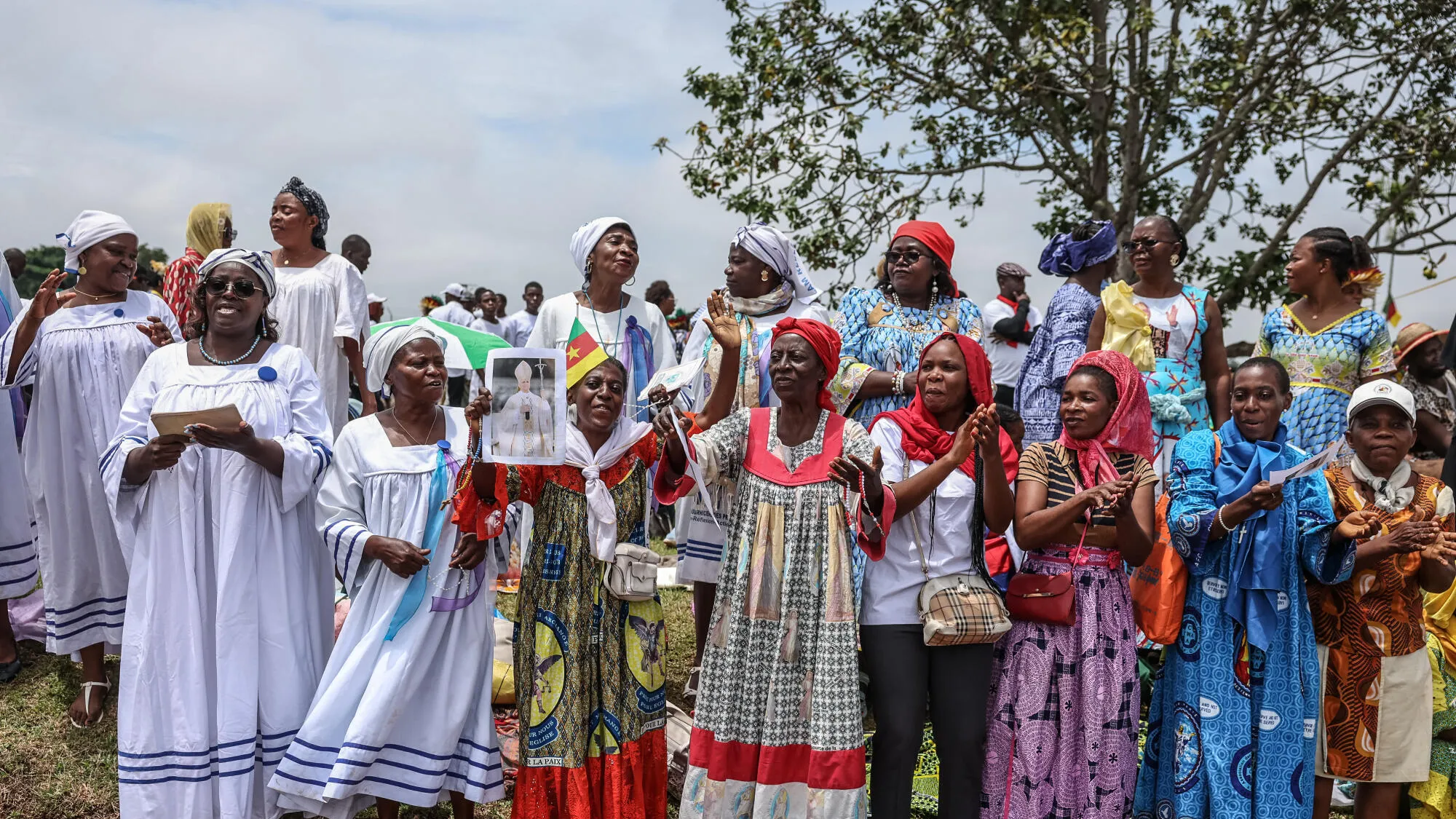
Divorces, polygamy, overwhelming amount of dowry… The challenges of family pastoral care in Cameroon
We are celebrating 10 years ofAmoris LaetitiaPope Francis’ exhortation on the family. Did this text have a particular resonance in Cameroon?
Long before this text, pastoral care of the family has always been a requirement at the heart of the concerns of bishops. It could not be otherwise in Africa, where the family is the ecclesial unit par excellence. To the point that for many years, the expression “Church, Family of God” was brandished all the time throughout the African Catholic Church.
We have not heard it for several years, with some Christians considering it as a lazy catch-all used to avoid tackling the real questions that African families face in their daily lives.
Preparing for marriage or the place reserved for the divorced, for example?
Preparing for marriage is an activity that is found prominently in all dioceses. It is the priests who are responsible for this, but more often, couples whose lives are harmonious. Since parishes do not keep specific statistics, we cannot know what is happening in households that have been prepared for marriage. We also do not know whether divorces are less frequent there than among non-believing secular couples.
Divorced people are still considered marginalized today, in the sense that they distance themselves, by the very fact of their divorce, from the Church. Their situation is so complex that parishes still do not know how to approach their cases. This situation becomes even more difficult when a divorced person wants to remarry. To my knowledge, only the diocese of Douala has put in place a specific approach to help them regain their place in the church.
How are polygamous unions considered?
Polygamy is the Achilles heel of family pastoral care in Africa. Polygamists are outcasts; their access to the various sacraments is formally prohibited. Men of the Church are uncomfortable with these cases which are not so marginal: many Christians, often influenced by their ancestral traditions or subject to family pressure, have contracted several marriages with different legitimate wives. Unless they stipulated during their first union that they would marry under the regime of monogamy. In this case, the wives who follow the first are considered concubines. A term that few people use, preferring that of second, third or fourth wife.
It is not impossible that Leo XIV would address the question of polygamy, whether in Bamenda, Douala or Yaoundé. If Jesus returned today, would he not say to the divorced and remarried, to the young couples living together, and to the polygamists who prefer to live on the margins of the church: “Come, you blessed of my Father, receive as your inheritance the Kingdom which has been prepared for you since the beginning of the world” (Mt, 25)?
Customary marriages represent another problem…
Some dioceses are approaching the subject courageously. The one in Yaoundé works with married couples according to traditional rites for Christian regularization of their union. The question of dowry – exorbitant – is an obstacle for many young people who want to start a family. Very often, they form a relationship freely, have children and return to regularize their situation several years later. Some even organize their civil and religious marriage when the children have become adults. Others continue to attend Church and participate in the various ceremonies without embarrassment.
What initiatives do you remember in particular?
It is not easy to take stock of everything that is being done but it appears very clearly that the family, its spiritual as well as economic development, remains a constant concern of the bishops of Cameroon.
The dioceses of Maroua-Mokolo and Garoua, in the north of the country, organize specialized support for couples of displaced people. Indeed, entire villages have left Nigeria’s border areas under pressure from Boko Haram to reach Cameroon. But also for couples with modest incomes, or even living permanently below the poverty line.
Education for Life and Love (EVA) is an educational program found in secondary schools in several dioceses: Yaoundé, Douala, Ngaoundéré, Buea, etc. It is about teaching and educating about responsible sexuality, about better respect for human dignity, about giving boys the reasons to respect their comrades, their sisters and later their wives. When it comes to sexuality, parishes are often faced with the issue of pornography but they do not know how to talk about it.


