
Historians and amateur genealogists dust off the archives
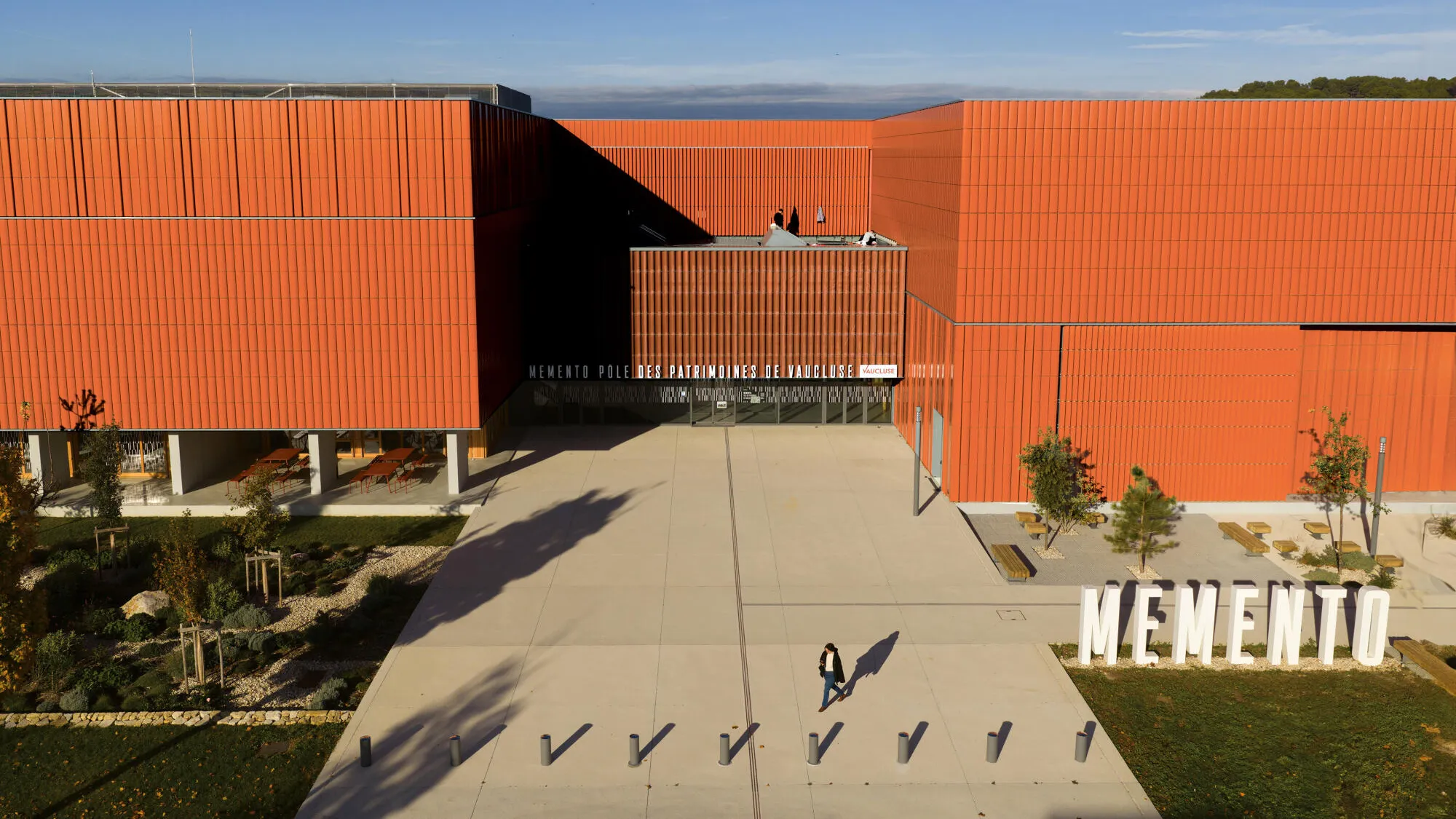
On May 28, 2026, a small cultural revolution will take place in the southern suburbs of Avignon. On this day Memento will be inaugurated. The imposing concrete cube, covered in red terracotta, now houses the Vaucluse archives. Twenty-eight linear kilometers of documents which left the venerable palace of the Popes, in the heart of the city.
“We have no nostalgia,” says Christine Martella, head of the service, “because we discover, at Memento, a building equipped with all the modern equipment necessary to ensure the conservation and transmission of the memory of the populations who lived on our territory. » The public still needs to follow… “It’s a real challenge: the world of archives is difficult to penetrate for those whose profession it is not,” recognizes the archivist who is primarily banking on the accessibility of the new place, with its practical parking and its welcoming hall.
However, she should not worry too much: on a national level, statistics from the Archives of France indicate that, since 2020, the number of readers coming to consult documents on site has been increasing regularly: nearly 86,000 people were welcomed in 2024 in departmental services, approaching the level before Covid-19. Around 40% of these users are neither obliged to do so by their role as notary or researcher nor by administrative necessity: they read the archives in their free time, for the pleasure of research.
Amateur sleuths
This is the case of Maryse Bouy. In 2017, this retired childcare nurse discovered in her attic, in La Guerche-sur-l’Aubois (Cher), two workbooks from the former owner of the place who had created the department’s first electrical production plant there.
Intrigued, Maryse searched for traces of her concession in the municipal archives, then went to the departmental archives to compare “her” factory with competing workshops… The amateur historian that she had become has honed her method: “As I read, I draw up a list of documents in which I must verify this or that information. Then I ask by email to have them prepared for me. But now, many of them are on the Internet, which saves me a trip. »
“We process 3,200 annual requests by email and we observe a proportion of 140 online visits for a visit to the reading room,” confirms Manon Fouchaux, head of the public service in Nanterre, at the Hauts-de-Seine archives. Same development in the archives of Rennes (Ille-et-Vilaine), where, as in most French municipalities, “the civil status registers are now digitized, which prevents them from being damaged and has emptied our reading room of the large group of genealogists,” says Claire Gatti, director of the municipal archives.
Nevertheless, a new link of interactivity is emerging with this category of users: “We call on them to index the funds as we put them online,” explains Manon Fouchaux. They are therefore invited, each time they come across a new proper name, to report it in a window designed for this purpose. Ultimately, when this collaborative effort is sufficiently advanced, we will be able to find with one click all the documents where the same surname is cited, which will facilitate the research of future historians.
“There is so much joy in accumulating infinite details on thousands of anonymous people who have disappeared for a long time. »
Arlette Farge Historian
An essential safeguard
New types of documents are emerging from the shadows. Claire Gatti observes that certain genealogists, “to give flesh” to the people they discover, return to consult. Bernard Declerk, a friend of Maryse, falls into this category: “I started by drawing up my family tree in the year 2000. Then I joined a local industrial heritage association, Aubois de Terres et de Feux. In this context, I reconstructed the lineages of the owners of 23 tile factories in my canton. And today, I go to the departmental archives every Tuesday morning to systematically locate the names of these industrialists in the notarial deeds of the 19th century, in order to find out more about their lives and their activity. »
The retired computer scientist takes “300 to 400 photos per session”, which he quietly deciphers on his computer once he returns home. A great saving of time compared to the days of photocopying or taking notes, and which encourages these local scholars to publish articles and works. In Rennes, municipal archivists are also responsible for supporting associations that wish to carry out historical investigations into their neighborhood.
Because the challenge, more than ever, for these institutions, is to make their role understood to the public: in the world of doctored information and uncertain sources, archives are the place “of proof, of truth,” insists Claire Gatti. Since we keep the originals of the documents linked to all legal, family and property life…” So, they open their doors to all possible audiences through an increasingly intense policy of cultural activities.
As evidenced by this, in Nanterre, a class which has just admired 16th century works belonging to a library bequeathed to the archives. Impressed by the age of these first printed materials, the high school students then visited the exhibition “From collection to communication”, which explains the work of archivists. In Rennes, Claire Gatti would like to involve artists for the benefit of family audiences. In Avignon, in May, the opening exhibition will present “Our treasures”: parchments and objects preserved in the region, either in the archives or in the archeology service, also housed at the Memento. Because the two departmental services will now collaborate within a “heritage center”. Another development for the archives!


