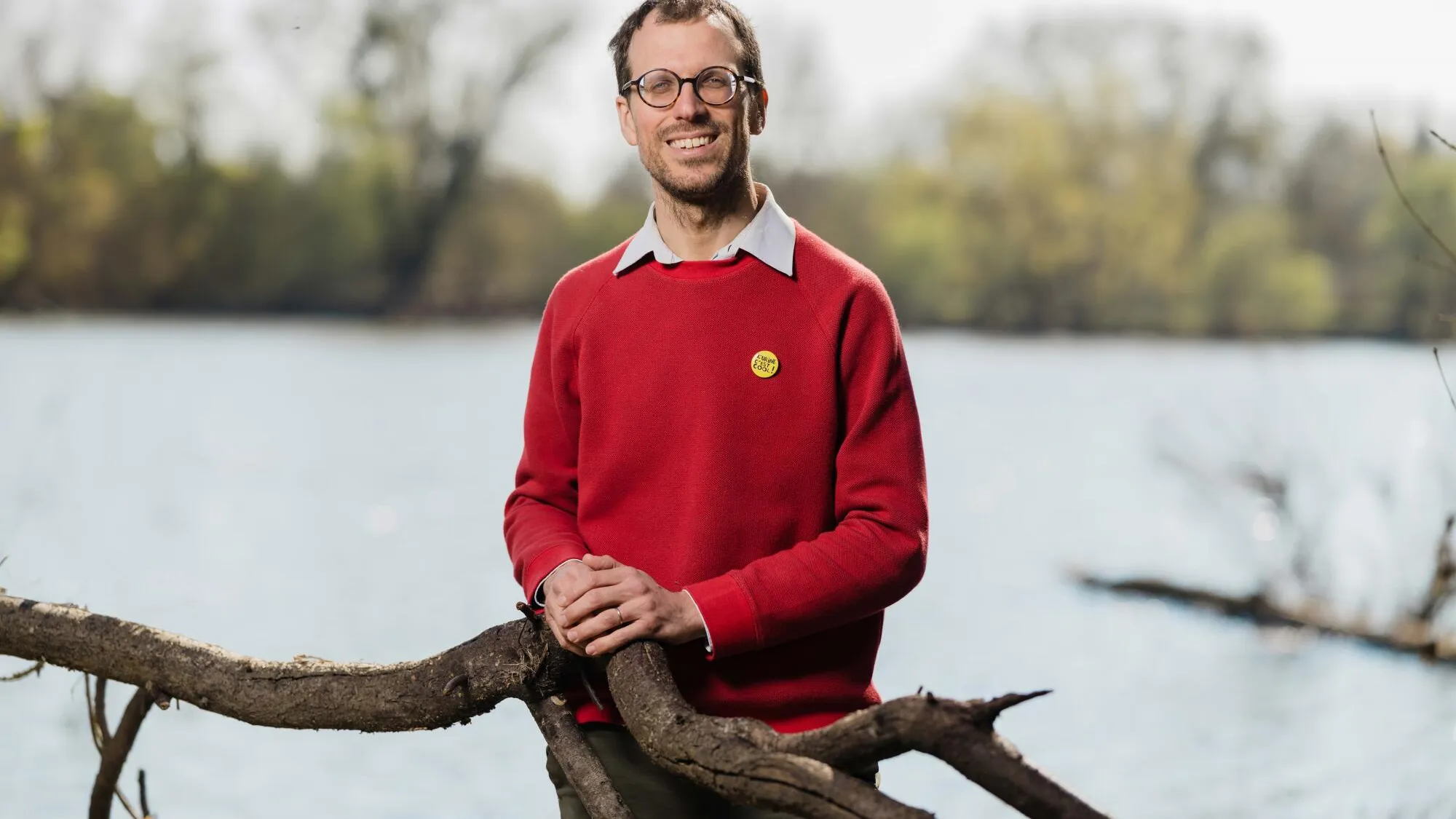
Fabien Esculier, the toilet scientist
It’s not a penchant that we proudly display at social events, but Fabien Esculier embraces it with humor: he is passionate about sanitation networks, urine and feces. For more than ten years, this civil engineering engineer has shown the importance of our excretions in the food system. He has even just published a work that breaks the taboo: Another story of excrement (Ed. Actes Sud, 304 p.; €21.).
Should we take him for an original, a mad scientist? In fact, science proves him right. Our urine and stools are a great fertilizer for farmland because they contain what our bodies have digested in nutrients. Fabien’s grandmother knew this, she who asked her grandchildren to go “piss on the rhubarb” in her vegetable garden in Quebec.
“My family reminded me of this anecdote when I started researching the subject,” he smiles. In 2004, the future researcher was a student at Polytechnique. Within major schools, sanitation enthusiasts swear by treatment in wastewater treatment plants. In France, wastewater from our toilets has been collected, purified then released into the natural environment since the beginning of the 20th century. “I understood that it was an aberration,” maintains Fabien Esculier. We spend billions of euros and liters of water to destroy our excrement. Instead of considering them as waste, we could reuse them, making them nutrients for our soils. »
All-chemical substitute
The problem appears in all its pestilence. Today, French agricultural production relies heavily on synthetic nitrogen fertilizers, made from natural gas from Russia or the Gulf countries. But the war between the United States and Iran and the closure of the Strait of Hormuz for several weeks stopped some trade. The multiplication of global geopolitical upheavals now makes European agriculture fear a fertilizer shortage.
A punk at heart under his engineer’s glasses, Fabien Esculier is driven by an immense hope: to replace chemical fertilizers with natural ones and transform our food model. This would require designing a new collective system: separating our excretions from wastewater networks and collecting them via dry urinals and compost.
The researcher is now leading a vast program. Several French environmental agencies support initiatives such as the pipiculturist, an agricultural tool that spreads human urine on market gardens. But for Fabien Esculier, these are only baby steps. We could cover a third of France’s fertilizer needs if we recycled all the nitrogen contained in human excretions. “At the beginning, I was often thought to be crazy,” laughs the researcher. But faced with the scale of the environmental and energy crisis, mentalities are changing. » To flush, or not to flush, that could soon become the question.