
In Bulgaria, the euro comes into force, the population hesitates
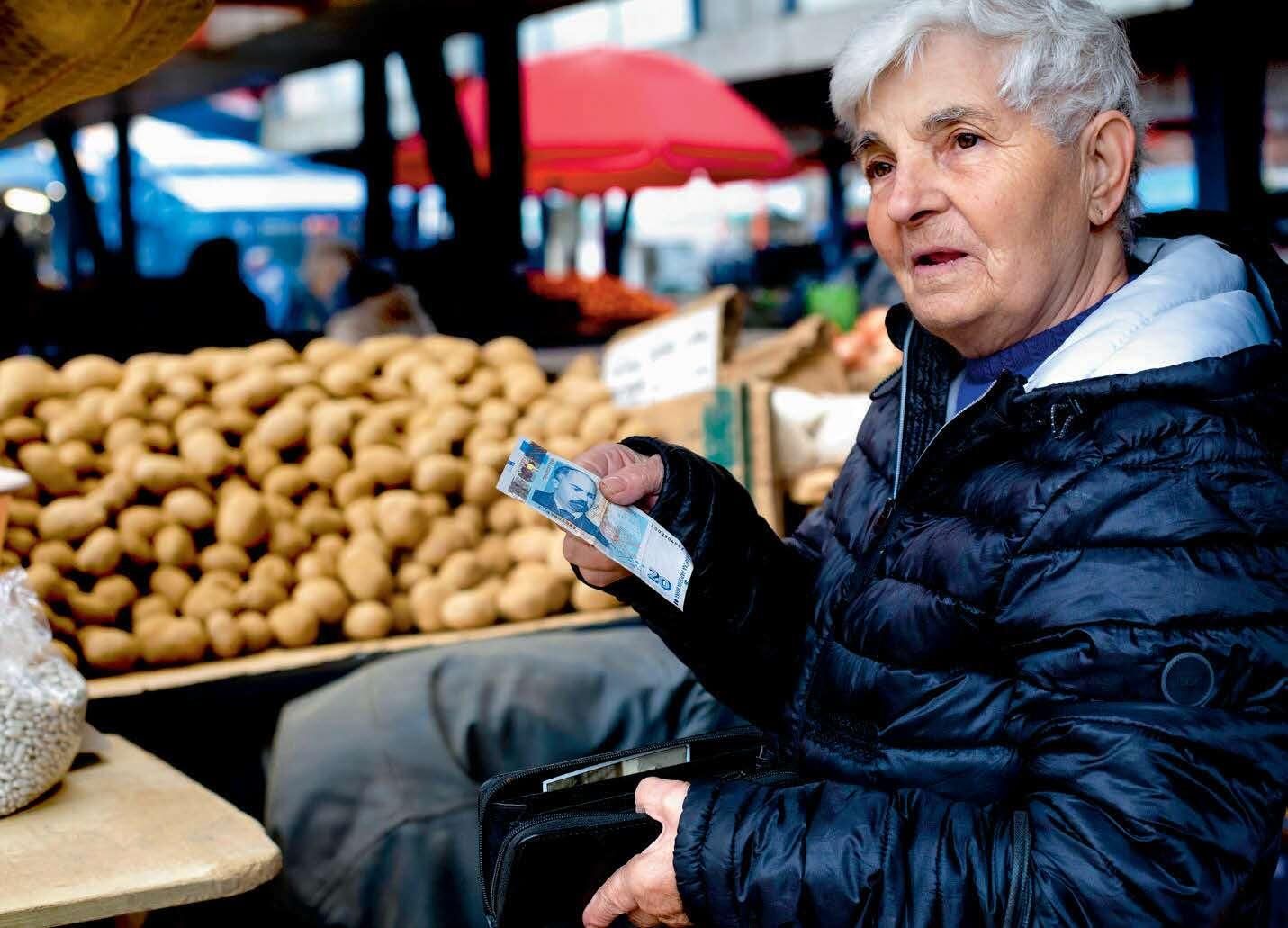
A little perplexed, but with a smile on her face, Ruska Koleva actively searches for the change in her wallet. Ivan Ivanov, the market gardener from whom she has just bought potatoes, comes to her aid and sorts the coins: here leva, there euros. In this Sofia market, as in the rest of Bulgaria, the time has come for adaptation: on January 1, 2026, the country joined the euro zone, abandoning the historic currency, the lev, in force since 1881. The country now shares the same currency as twenty other countries on the continent.
6.55957. For the French, the number is evocative: it is the rate set in 1999 between the franc and the euro, the second replacing the first three years later, on January 1, 2002. At that time when mobile phones were only used to make calls and text messages, calculators did not leave pockets and handbags.
Fear of inflation
While filling another customer’s shopping bag with vegetables, Ivan Ivanov displays a doubtful pout. “Under communism, life was easier, less stressful,” the fifty-year-old wants to believe. Everything was regulated, everyone had a job. » Once her bag is full, Virdzinija Pavlova joins the conversation. For this sixty-year-old who lives on a monthly pension of 330 euros, there is no doubt that the European Union (EU) and its currency are only sources of problems. “The EU wants to destroy our local producers, by destroying their land to plant wind turbines, solar panels and recycling centers for garbage coming from other countries,” she snarls.
These personal certainties are accompanied by economic fears. “The government lied, we are not ready!” Virdzinija grumbles again. Inflation is high and it is not going to stop any time soon. » As in France in 2002, the adoption of the single currency brings fear of an increase in the cost of living. A look at the prices displayed also shows that some traders have already rounded prices to the nearest euro or half-euro – especially since the exchange rate of 1.953 lev for one euro allows for room for rounding.
“The lev had already been pegged to the euro for a long time, so the transition to it cannot be responsible for inflation,” retorts Iskren Mitev. But it is true that some take advantage of this to push prices up. »
Economist, candidate of a pro-European party in the last elections for the Strasbourg parliament, Iskren Mitev is for his part clearly satisfied with the transition to the euro. “It’s a great success, now we have a seat at the table of governors of the European Central Bank. A lot of opportunities and investments will come,” he explains.
As for the threats that weigh on producers, he invites us to take a broader look. According to him, the problems facing Bulgarian farmers, for example, are the same as elsewhere in Europe: they must remain competitive in the face of global competition. However, one question remains: is the Bulgarian economy solid enough for a currency as strong as the euro? In political crisis and still undermined by corruption, the country is experiencing a moment of fragility.
A stone’s throw from the market where Ivan Ivanov sells his vegetable produce, Vitosha Boulevard tells the story of a completely different Bulgaria. On this dynamic artery, international brands – including the essential McDonald’s – replace the stalls of greengrocers, grandmothers give way to a younger population. With a high gaze and a determined step, Toma knows the euro well. At 28, he has already lived in countries that took the plunge two decades ago.
“It’s a logical change and one that we committed to when joining the European Union in 2007,” recalls the young man. Now we are truly part of the club. »The one who was born after the collapse of the communist bloc speaks in a completely different way from that of the vegetable seller. “When we look at where we were thirty years ago… Now, salaries are higher, the standard of living has increased, there are more opportunities. »
Bulwark against Russian pressure
Sitting a few steps away on a bench, Dara is in the middle of a selfie session with a friend. The arrival of the new currency is also a reassuring factor for her in the troubled international context. “It’s a shield against Russia’s pressure tactics. The war can stay far from us…” she says. For Iskren Mitev, the Europhile economist, this argument alone is enough. “Russia and the United States of Donald Trump seek to destabilize the European Union and the single monetary zone. The more united we are, the stronger we will be. »
Naturally adopted by the street but raising fears on the Sofia market, the euro is not yet unanimous in Bulgaria. But Ivan the greengrocer and Virdzinija his client will have to get used to it: on January 31, the lev will no longer be valid and coins and notes will become souvenirs for collectors.
6
6 countries of the European Union remain outside the euro zone: Denmark, Hungary, Poland, Romania, the Czech Republic and Sweden.


