in Le Havre, Édouard Philippe plays his place in the presidential election
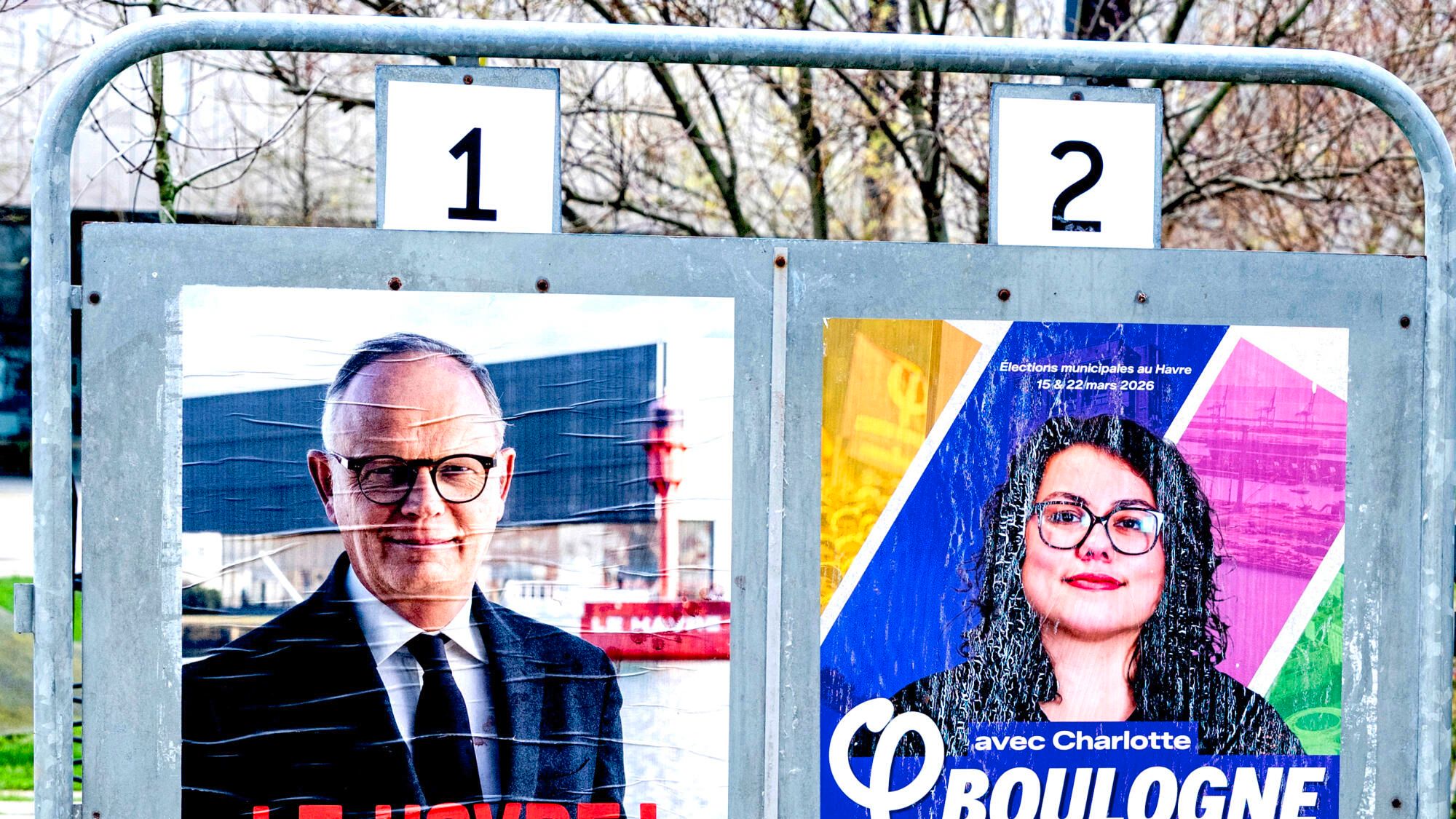
He can finally breathe. Édouard Philippe, mayor of Le Havre (Horizons), came first in the first round of the municipal elections, with 43.76% of the votes cast. Ten points ahead of the left’s assembly list, excluding LFI, led by Jean-Paul Lecoq (33.25%), his main opponent.
However, the last days before the first round had turned into bad weather: an Opinionway poll placed the former head of government in a tight spot in the first round, before being beaten in the second, slowed down by the progression of the RN-UDR vote carried by the candidate Franck Keller.
If Édouard Philippe ultimately keeps the helm, the RN-UDR candidate also qualifies for the second round with 15.3%. A first for the former communist city, which moved to the right in 1995.
But Édouard Philippe enters the second round in a favorable position. “We are going back into the countryside,” he soberly commented on the evening of March 15. On the terraces of the city center, comments on the countryside are going well.
A few meters away, the white concrete of the Volcano – this impressive brutalist cultural center built in the 1980s by architect Oscar Niemeyer – contrasts with the gray of the surrounding buildings. Sitting down over a beer, Pascal and Frédéric see the mayor again walking the streets with his activists.
The two fifty-year-olds, one a principal, the other an employee at the Ministry of Culture, voted for Édouard Philippe in 2020, and are renewing their support for him this year. “With him, Le Havre has been transformed and now enjoys a strong influence. He has energized the city center and implemented a real cultural policy,” greets Frédéric, who has lived in Le Havre since 2009.
Demolition of an old prison replaced by a sports and cultural center, development of the square in front of the famous Saint-Joseph church, greening, arrival of the tramway… Little by little, the city center rebuilt by the architect Auguste Perret after the Second World War shed its image of reinforced concrete.
Baptiste*, a 26-year-old executive, grew up nearby. “Édouard Philippe is a good mayor, who has beautified the city.” The young man supported Franck Keller (RN-UDR) in the first round to demonstrate his disagreement with the record of Édouard Philippe as Prime Minister, but will vote for him next Sunday “to avoid the return of the communists at all costs”.
City of contrasts
The dynamic and wealthy city center, as well as the wealthy neighborhoods of the upper city, largely supported the outgoing mayor. But the electoral photography remains contrasting. The more than 40% collected by the center right during this first round is opposed by the almost 50% accumulated by the communists and the RN, mainly in working-class neighborhoods, where abstention remains high.
If the score of the left remains comparable to 2020, that of the RN has doubled. “The phenomenon is national,” says political scientist Christophe Boutin, “but in Upper Normandy, the Communist Party has seen its militant base wither and the working world move towards the RN.”
Along the quay of the Island, the smells of the tide and iodine fill the air of the fish market. Behind her stall, back turned to the arch of containers installed for the 500th anniversary of the city in 2017, Anne-Marie sells off her last whelks of the morning.
The 62-year-old fishmonger, who has always been from Le Havre, has been voting for the Party of the Flame for several years. “Of course the city shines outside, but we no longer have doctors, no pensions, no resources,” she criticizes.
A few kilometers away, residents of the popular Neiges district confirm the trend. Adjoining the port, the workers’ town is colorful with impressive dock cranes and stacks of sheet metal containers. Mohamed experienced the era of the Le Havre workshops and construction sites, closed in 1999. “Here, we are forgotten, all the businesses have closed,” he regrets. He does not vote in municipal elections, but will support the RN in 2027.
Élysée ambitions
Because 2027 remains Édouard Philippe’s true horizon. Since September 3, 2024, he has been a candidate for the presidential election. To the point of having linked his Elysee ambitions to his success in his city: “If I fail to convince the people of Le Havre, I would not be in a good position to hope to convince the French,” he declared in December 2025.
Often presented as the most credible candidate against the RN, Édouard Philippe must first lock down Le Havre town hall, which he could however leave in a year.
A perspective that his opponents regularly denounce, but which does not trouble his supporters. “Seeing him reach the highest positions would certainly be beneficial for the city,” defends Pascal. The campaign is ending, but in Le Havre, the political horizon is barely opening.
* The first name has been changed.
To know about the qualifiers in the second round
Union of the center
43.76%
Union on the left
33.25%
Union with the far right
15.30%
Source: Ministry of the Interior.