
Mayors show their anger
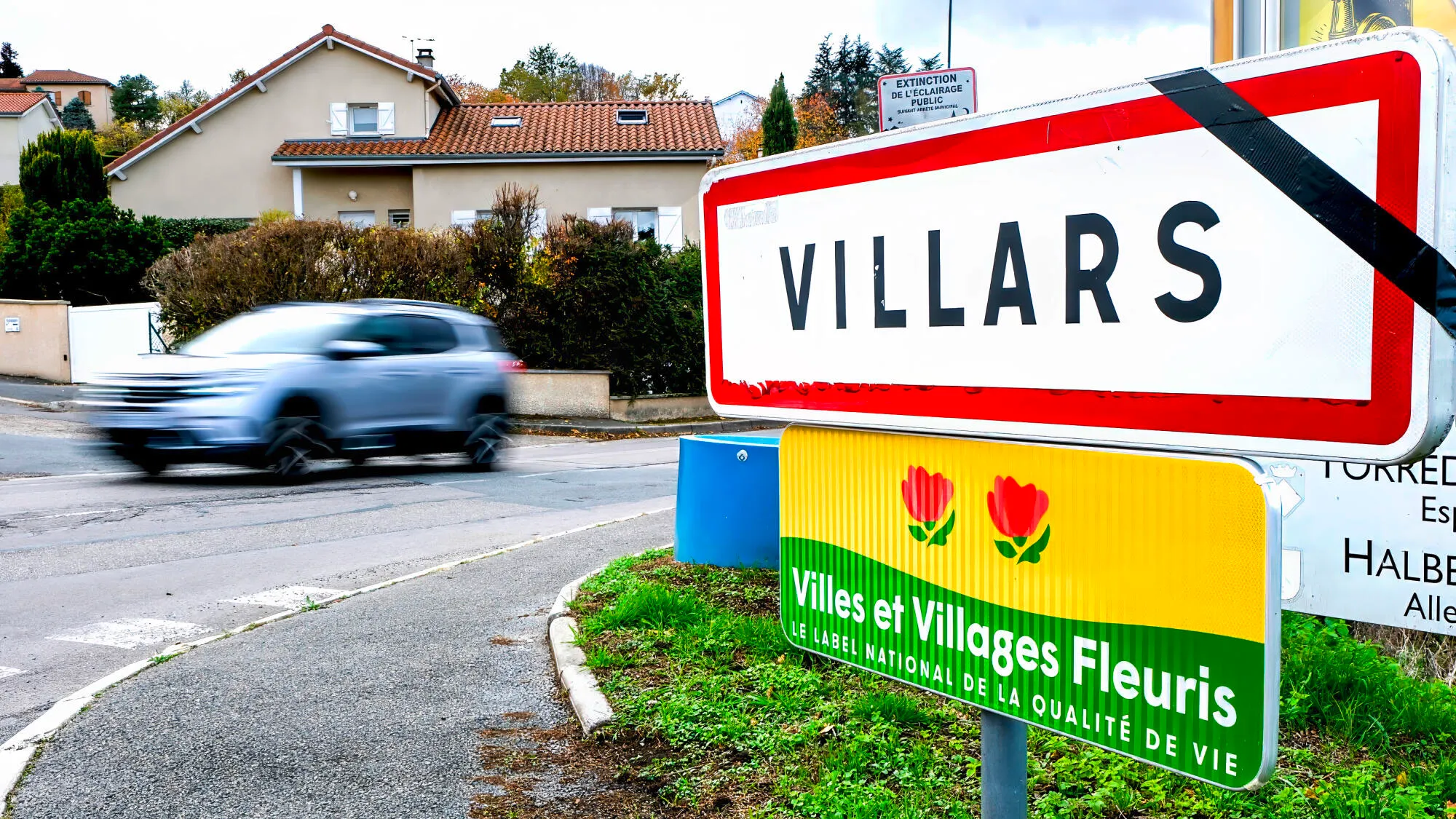
“Ah, it’s like the angry farmers turning the road signs upside down!” » While walking with his two dogs, Marc has just understood this strange sign of mourning displayed by the white rectangle surrounded by red announcing “Villars”, a town in the Loire where this retired crane operator settled a month ago.
At the entrance to the commercial zone, in the street which separates the pastures from the houses, or even on the Riotord, the watercourse which crosses Villars: since the beginning of the week, all the entrance signs to the town are now adorned with a black border, a sign of the mayor’s opposition to the 2027 finance bill currently being debated in Parliament. A movement launched by the Association of Mayors of France (AMF) in October, and followed by different municipalities in Normandy, Gironde, and Occitanie.
Because if the text was rejected on November 4 by the deputies, local elected officials remain mobilized. In their sights, the contribution of 5.4 billion euros requested by the government from municipalities and intermunicipalities. A sum which would considerably reduce their budget, with significant consequences on the lives of those administered. This explanation given, Marc immediately approves the initiative: “The government swallows the dough, and then asks us to make efforts? They are crazy! » he gets carried away.
Two dreaded measures
If the chosen formulas differ, the tone is the same on the side of Jordan Da Silva, the various right-wing mayor of this former mining town of 7,600 inhabitants. “This is the first time that I have asked the elected representatives of the national representation to vote against a finance law,” explains the former business leader. The AMF has made available to city councilors a simulator allowing them to calculate the effects on their budget of two feared measures: a new levy on town hall resources and the reduction in state aid for investments by local authorities.
Result for Villars: 381,110 euros less over the year, causing disposable income after receipts and operating expenses to fall to around 150,000 euros. Concretely, “we will have to give up projects such as the creation of a public park or the recruitment of a new municipal police officer,” explains the mayor. And it is not the “particular context, with a huge deficit and never-before-seen interest rates” put forward by the Ministry of Finance which will appease his anger.
“The municipalities are required to balance their budgets. To respect it, we make choices. Last year, I closed a nursery school because there were fewer students and we lacked resources. I don’t see the State doing the same and reducing its lifestyle. »
Less investments
Especially since the sacrifice asked of the municipalities is not new. “Since 2025, the State has been calling on communities to participate in the country’s financial recovery. But this year, the effort is a notch above,” underlines Thomas Rougier, secretary general of the Observatory of Finance and Local Public Management. While recalling that the central administrative services of the State are also concerned, the expert recognizes that “the municipalities have the feeling of having to carry the tax relief measures decided by the State, such as the elimination of the housing tax which was to be compensated by a transfer of VAT, compensation which will decrease. »
However, a loss of budget also means a drop in investments, public orders and therefore local activity. “The municipal and intercommunal level is nevertheless essential to bring the associative world, cultural and sporting projects to life. He is in direct contact with the populations, to hear their protests, but also to support their creativity. »
In Villars, opposite Espace Beaunier, a new district where 250 housing units are under construction, a vacant lot has been waiting for two years for work on the park to begin. “In 2026, we have made zero local investments,” sighs the mayor. A few meters away, Françoise, 60, leaves the center where she works as a seamstress. Villardaire for twenty years, she would regret the cancellation of the hiring of an additional municipal police officer. “That would reassure me, I hear more and more about burglaries,” she confides. Laurent and Christelle, two of the city’s four agents, would appreciate patrolling together. “The State must ask itself questions, security will become a luxury,” laments Laurent.
In Parliament, discussions on the text will continue at least until December 9. Jordan Da Silva contacted the deputy and senators from his constituency: those who responded assured him of their support. Will this be enough? In the meantime, the black ribbon remains in place.