repression leaves the diaspora without news
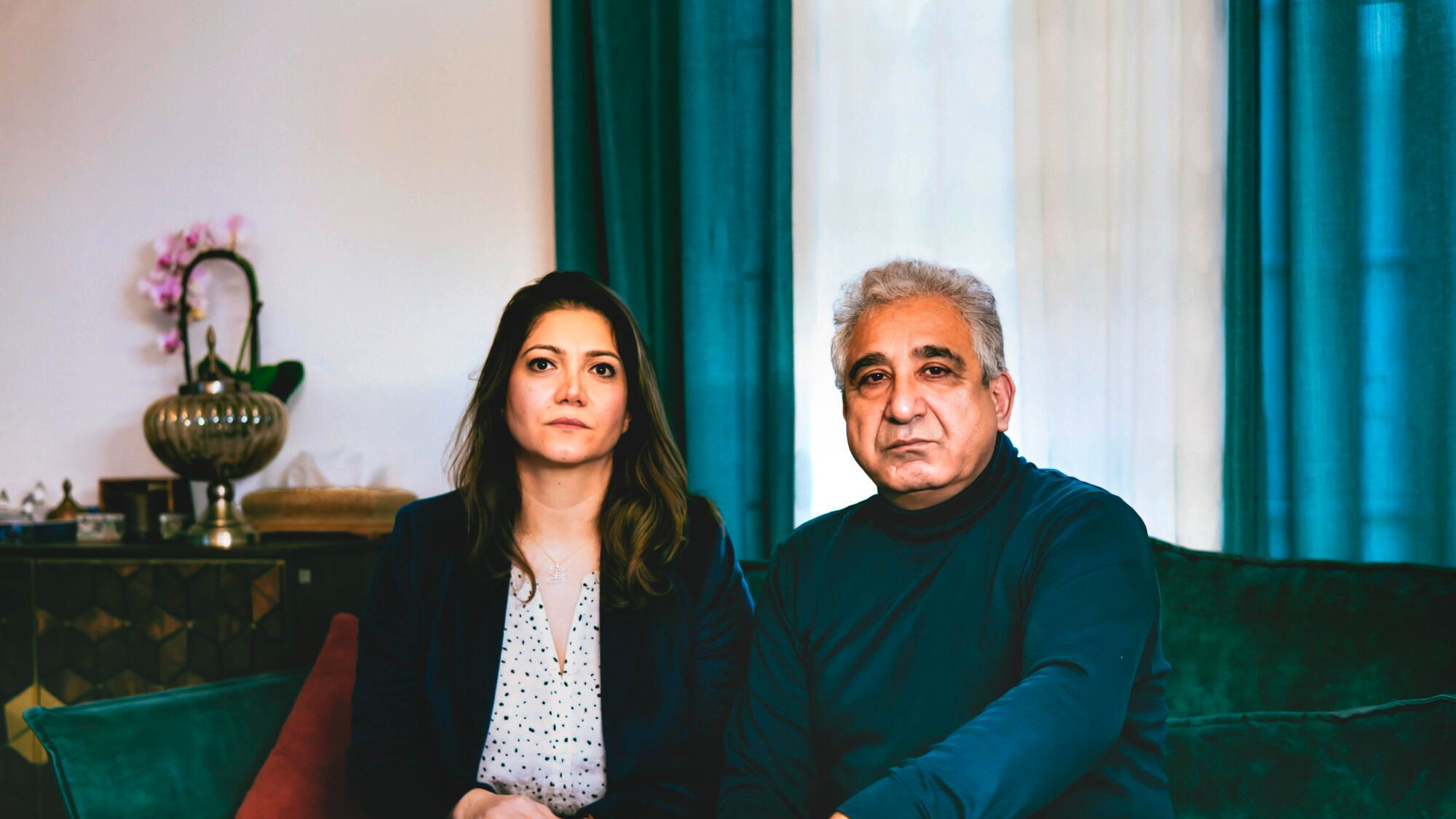
Videos like this are coming out in dribs and drabs. In their home in the Ile-de-France region, Azadeh Alamian and her husband Hassan Habibi watch it, stunned. Iranian security forces ransack a hospital in the west of the country.
In these impossible-to-authenticate images, the police are tracking demonstrators who have been defying the regime since December 28. Rumors are circulating: the wounded would be kidnapped, then disappear into the dungeons of Iranian prisons. “Apparently, the police steal the blood bags to prevent treatment of the following wounded,” panics Hassan Habibi.
20,000 deaths mentioned
Since the beginning of January, Iranians have lived cut off from the world. The regime has restricted communications with the outside world in order to stifle the demonstrations which have shaken it since the end of December. Nearly 92 million inhabitants live under cover, delivered to a bloodthirsty power. Rumors are formed, fake videos generated by artificial intelligence abound.
The rare images that manage to reach members of the diaspora further reinforce their concern. It is now impossible for them to communicate with their friends or family members there. Are they among those arrested by the Revolutionary Guards? Without news, they imagine the worst, that is to say death. The number of victims remains impossible to establish precisely; the worst estimates would suggest 20,000 deaths.
Azadeh Alamian has not slept at night since a video where she thought she recognized her 70-year-old aunt, who was being given a cardiac massage on the sidewalk. If she doesn’t want to give in to paranoia, she has a bad feeling about it. The formidable revolutionary guards violently repressed the rallies, shooting randomly into the crowds. “I’m sure the bullets didn’t stop her from protesting in the street,” she explains. The forty-year-old still has no idea of the fate of her dear relative, all her messages having remained unanswered.
Wiretapped communications
Of the four to five million Iranians exiled around the world, only a minority have been able to be reassured about the situation of their loved ones. Some news filtered through at the start of the protest thanks to the Starlink satellite communications system, belonging to Elon Musk. But the authorities managed to confuse it, deafening the diaspora.
On January 13, the Islamic Republic reopened telephone lines: Iranians can now call abroad, but the reverse remains impossible. Shirin*, a student living in an Asian country, suddenly received a call while she was carrying out an experiment in the laboratory. On the other end of the line, his mother. “Don’t worry, everything is fine,” she consoled her crying daughter. Others simply heard a brief, “I’m alive,” before communication was cut off. In Iran, conversations on landlines are likely to be listened to by intelligence services. Daring to say out loud your participation in the rallies is to risk ending up captured the next day.
A diet ready for anything
Azadeh Alamian knows from experience that these arrests always end badly. Born at the same time as the Islamic revolution, in 1979, she is a baby of tyranny. She was barely walking when two of her uncles and her aunt, who was five months pregnant, were executed for demonstrating against Ayatollah Khomeini.
At the age of 6, instead of going to school, little Azadeh was locked up with her mother in an isolation cell. A torture imagined by those in power, the worst pain for the political opponent. “In the evening, when I finally fell asleep, they would take him away for questioning,” recalls Azadeh, who fled Iran at age 11 after his mother’s release.
Since then, the Franco-Iranian has nourished the hope of returning to her native land – on the condition, she says, that the Islamic Republic falls. “This time is the good one,” said one of the last messages she received from Iran, in mid-January. But repression has intensified and despite international pressure and threats, the regime is holding on, relying on nearly 150,000 revolutionary guards ready to do anything to keep it in power. In the short term, the return of the Internet will not dispel the anxiety of the diaspora. When Azadeh Alamian is finally able to reach Iran, will her aunt still be there to answer her?