Sarah Mullally inducted, the Anglican world is torn apart
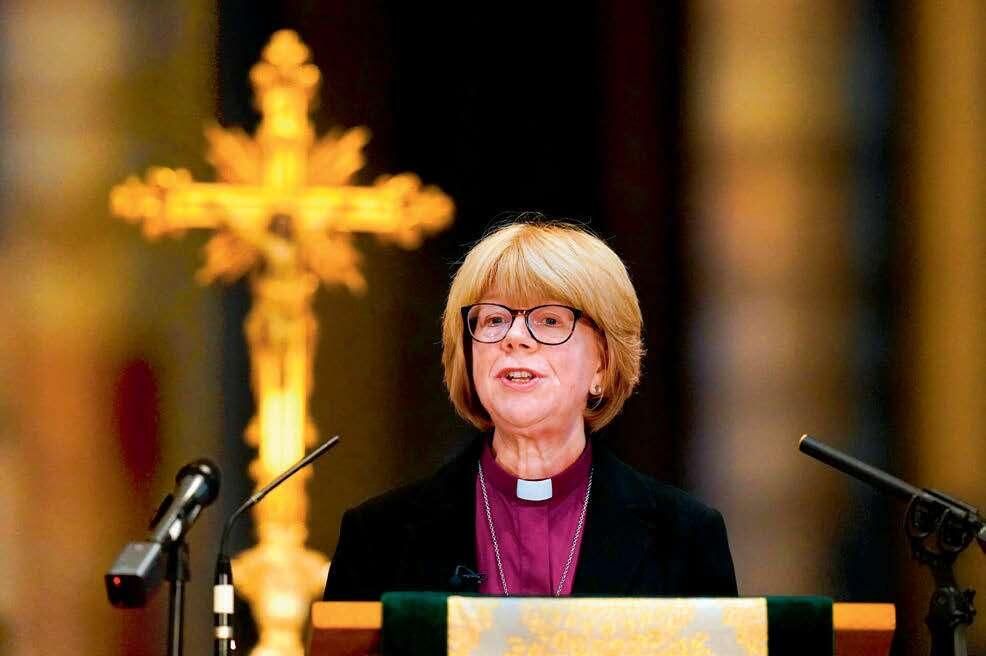
A monumental Gothic throne awaits the new Archbishop of Canterbury on March 25, 2026. For the first time in its 1,400-year history, the archbishop who takes the helm of the Church of England is a woman. British Sarah Mullaly will be enthroned at Canterbury Cathedral, after taking office on January 28. She will arrive in procession and preside over a thousand-year-old liturgy.
For part of the Anglican Churches of the North (England, Canada, United States, etc.), with a liberal tendency, the scene will be memorable. But for many Churches in the South (Nigeria, Uganda, India, etc.), which are more conservative, it will be dismaying. While the Church of England embodies the unity of the Anglican Communion – a network of 77 million faithful – the organization of GAFCON (Global Anglican Future Conference) is already trying to overshadow it. On March 7, this organization of conservative churches announced the creation of the World Anglican Council, in reaction to the induction of Sarah Mullally.
A point of no return
With this Council, strict supporters of fidelity to the Bible virulently oppose the ordination of women and the authorization to bless homosexual couples in several communities in the North.. The conflict began in 2008, when GAFCON was created to bring together the “persecuted” of the Anglican world. She publicly expressed her disagreements and threatened to distance herself, to the point of no return.
From March 3 to 7, 2026, 347 bishops met in Abuja (Nigeria) and declared that they no longer recognized the “instruments of communion” of the Anglican Communion, electing Rwandan Archbishop Laurent Mbanda president of the rebel movement. Some bishops in Nigeria, Rwanda and Uganda welcome their independence, but some communities find themselves torn apart. To whom should they take refuge?
“We do not know who subscribed to the declaration in detail,” points out Rémy Bethmont, professor of British history and civilization at the University of Paris 8. The primate of the province of Alexandria, for example, is part of GAFCON, but it is surprising that he wants to turn away entirely from world bodies. He contributed to projects to reform its operation! We can also wonder what path the conservative bishops of the North will follow. »
For Rémy Bethmont, many communities could have both sides: remaining in traditional Anglican bodies while joining the new World Anglican Council. The Abuja declaration is intended to be reassuring. There is no question of founding a separate Church or provoking a schism. On the contrary, it leaves room for maneuver to the provinces, faithful to the Anglican tradition of autonomy. Those which remain in communion with the Church of England – by their history or their constitution – will be able to remain there while participating in the Anglican Council. But will the game be worth it?
The new World Anglican Council is very clear. The primates will not be able to be part of the leaders of the organization if they persist in sitting on the bodies of the Anglican Communion. They will also not be able to have decision-making power if they are financially supported by Northern Churches. Problem is, many bishops practice in developing countries of great poverty. “There will probably be memberships with variable geometry,” observes Rémy Bethmont. Some would have a lot to lose by breaking completely with the traditional bodies of the Anglican Communion or the provinces not part of GAFCON. Particularly conservative evangelicals within the Church of England. »
GAFCON’s act of rebellion could lead to a definitive rupture. In 2009, the conservative Anglican Church in North America was created in reaction to the liberal movement. Today it presents itself as a competitor to the Church of England and has nearly thirty dioceses.