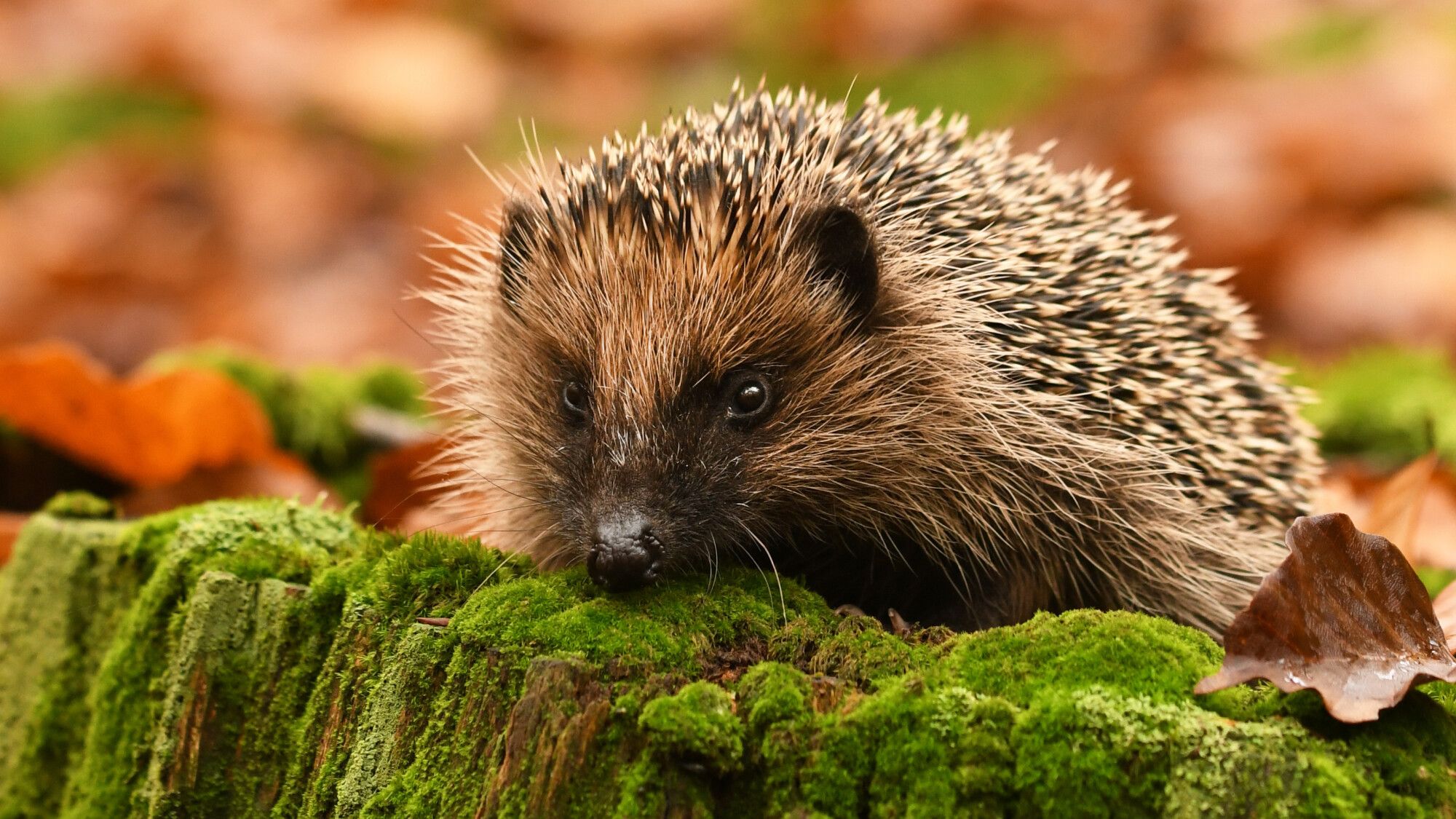
Sleep, food, defense … What do you know about this endearing animal?
Eating a hundred grams of earthworms every day can be a delight. In any case for a hedgehog. But beware: worms also contain earth and silica grains which gradually use the teeth, and ultimately reduce the ability to feed on this small prickly mammal, covered with a coat of 5,000 to 6,000 stiff and sharp hairs. Fortunately, there are also other dishes on the hedgehog: Carabes and beetles, slugs and snails, even small amphibians and chicks, but also fruits, seeds and mushrooms.
To observe it at the bottom of the gardens, near hedges or on the edge of forests, you have to be ready to spend a white night: the animal, in fact, is active during three phases, between 6 p.m. and 8:30 p.m. , then between midnight and 2 a.m. and finally between 4 a.m. and 5:30 a.m. the rest of the time, three -quarters of the day, is devoted to sleep. In winter, the counter rises 100 % since the hibernate hedgehog after having accumulated enough brown and white fat to spend the bad season, between December and May. Refugee under a cluster of branches or between logs, it lets its body temperature fall under 10 ° C. His heart only beats at 20 beats per minute. And at times, he only breathes twice in this same period of time. When it wakes up, the animal quickly resumes its activities, taking advantage of its good memory of the place to find the tracks that lead it to its favorite prey. Arition and olfaction do the rest. He can thus detect a mouse over five meters away and hear the slightest rustle of an insect in his leaf litter.
Learn more about the hedgehog
Described by the naturalist Carl von Linné, in 1758.
Latin name: Erinaceus Europaeus.
Common name: Hedgehog, in English.
Reign: Animal.
Phylum: Chordés.
Infraphylum: Vertebrates.
Class : Mammalia (Mammals).
Order: Eulipothyphla.
Family : Erinaceidae.
Gender : Erinaceus.
Size and weight: Between 18 and 31 cm, with a small tail of 2 to 3 cm. For a weight between 800 and 1,200 g.
Conservation : Almost threatened, on the IUCN red list. The animal can live from 3 to 10 years, depending on its living conditions.