“The end of the regime is getting closer”
When you talk with Cubans on the island, what do they tell you about their daily lives?
Their situation is very difficult. Power outages are daily. Since the start of the year, the island has been completely without electricity twice. Cubans lack food and medicine. Infrastructure is collapsing, from the electrical system to water distribution. Exports are reduced to almost nothing. The regime had invested massively in the construction of hotels but, after a peak in 2019, tourists fled and will not return: who visits a country that is collapsing?
It is estimated that nearly 90% of the population lives below the minimum survival conditions defined by the United Nations. We travel by bicycle or in horse-drawn carriages. The regime boasted of being a “medical superpower”: today, aspirin is hard to find. Because garbage is not collected, it piles up in the streets of Havana. Mosquitoes are everywhere. In the last five years, nearly 2.5 million Cubans, the nation’s lifeblood, have fled. With a fertility rate lower than that of France, Cuba is today the oldest country in Latin America. This is not sustainable.
When we start asking questions and the regime only responds with indoctrination, we look for answers elsewhere.
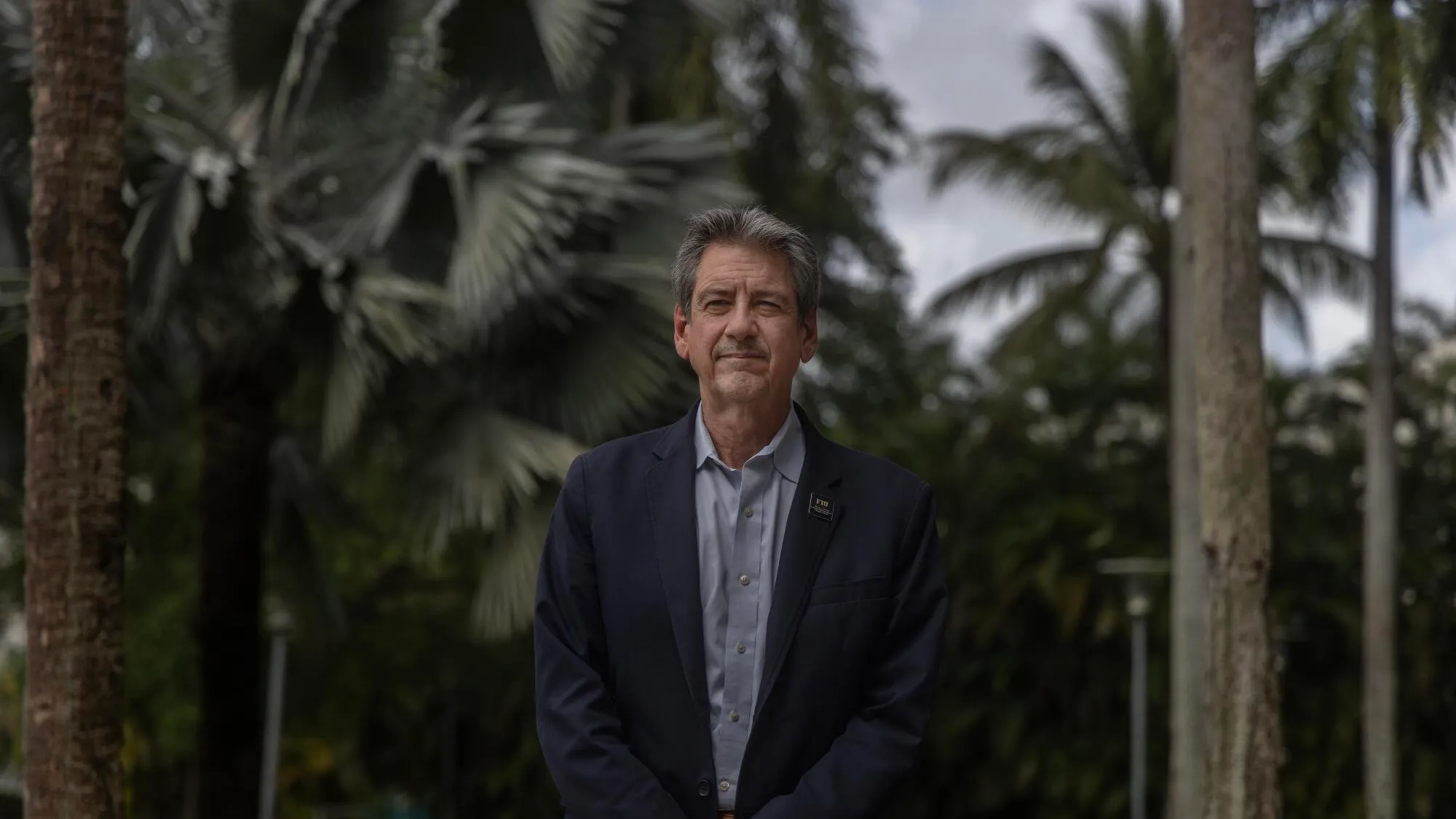
Sebastian Arcos
From the place of your exile, do you have the feeling that the Castro regime is collapsing?
Cuba is suffering the worst situation since the war of independence of 1895. The regime is only holding on through terror. Repression has intensified in recent years. Lacking economic credibility and political legitimacy, those in power can only rely on this card. And he still holds the reins firmly.
You come from a family that participated in the Castro revolution. How did you become a dissident?
The reality of the diet very quickly contradicted my family history. My uncle, who participated with Fidel Castro in the assault on the Moncada barracks in 1953 (the first feat of arms of the Castro guerrillas, editor’s note)was accused of being a traitor because he opposed the establishment of communism. I quickly saw around me how the regime treated those who wanted to leave: they lost their jobs, were harassed day and night, their children were expelled from school. In 1981, my family also tried to flee. The smuggler betrayed us. We were arrested, my father was sentenced to six years in prison, my uncle to seven, and me to one year.
Has this year of imprisonment changed you?
I was 20 years old. It allowed me to meet those who were fighting for human rights in Cuba. More generally, it was during this period of my life that I realized that communism and fascism operated in the same way. When we start asking questions and the regime only responds with indoctrination, we look for answers elsewhere. Even under a totalitarian regime there remains a black market, banned books and films and, at one point, in a country without freedom, certain individuals decide to live as free men.
What is the state of mind of the Cuban diaspora in the United States?
Many Cubans here are torn between hope and excitement. We are close to a tipping point. This is our fall of the Berlin Wall! The end of the regime is approaching. Because the United States, with this second term of Donald Trump, has changed its policy: from a passive observer, it has become an active agent of change.
Should we take the American president seriously?
Yes. The United States will use the necessary means: this starts with the intensification of economic sanctions. Military intervention cannot be ruled out.
When Donald Trump promises to “capture Cuba,” is it to make it the 51st American state?
No. Yet many Cubans would support such an idea. Cuban nationalism, which Fidel Castro had largely used against the United States, is today at its lowest point. But Washington refuses to integrate new states, as shown by the example of Puerto Rico, an American territory without being a state. With his thunderous words, Donald Trump above all wants to say that he wants for Cuba what he obtained in Venezuela: a regime ready to work with the United States. In other words, he hopes to see the emergence within power of a personality capable of preparing the democratic transition.
Isn’t this illusory?
It’s possible. But it will be complicated: Venezuela was an authoritarian regime, but not totalitarian, where the Americans were able to identify individuals with whom to deal. Today, this is not the case in Cuba. As with Iran, the idea is to shake up the regime enough that internal fault lines open at the top and factions oppose each other. At that point, yes, we can determine who to rely on, perhaps within the armed forces. It takes time.
The Cuban government has just announced a timid liberalization of private investments in Cuba. What do you think?
This is not new. The authorities had already partially opened the economy to the market in 2010, then in 2021, with rollbacks and numerous restrictions. The latest announcement, last March, of a call to Cuban-American investors, is just another small step. When he became president in 2008, Raul Castro said he did not want to follow the Chinese model which combines a market economy and communist dictatorship. His brother, Fidel, was an opportunist; he is a convinced orthodox Marxist ideologue.
And today, at 94, he remains the real power. The current reigning president, Miguel Diaz-Canel, is just a facade. Unlike the communist regimes of Eastern Europe where the army was subordinate to the Party, in Cuba, it is the army which is the most important political and economic force. In 2014, when American President Barack Obama adopted a policy of openness towards the regime, it was the armed forces who took advantage of it to concentrate enormous economic power. Raul Castro was Minister of the Revolutionary Armed Forces from 1959 to 2008! The Cuban army is its child.
Do you think this means that the regime cannot change peacefully?
I seriously doubt that the regime will embark on a transition to democracy of its own accord. Not with the Castro family: these people have tasted absolute power for too long to let it slip away. It will take someone else to start this process. In Chile, in Spain, in Brazil, we have seen in the past individuals within the system opting for transformation in the face of an untenable status quo.
In such a damaged country, can the Church play a role in preparing for the future?
Yes because it is seen as a neutral and acceptable partner by all parties. But more, undoubtedly, the Vatican than the Cuban Church, a little timid vis-à-vis Cuban power. Make no mistake, however: it is the United States that will impose the conditions. Secretary of State Marco Rubio (of Cuban origin, editor’s note) has just declared very clearly that the regime must make changes on the economic level, but first on the political level, because it is the current political structures which are opposed to a real reform of the economy. He is absolutely right.
Can we rebuild Cuba while avoiding a phase of chaos?
Material reconstruction will be rapid because the Cuban-American community is wealthy and ready to invest when political conditions change. The biggest challenge will be the reconstruction of mentalities. The weight of totalitarianism was more crushing than in Poland or Hungary. Three generations of Cubans have lived under the reign of widespread suspicion, distrust of the authorities, and the devaluation of effort. What’s the point of working if the government takes everything from me?
Would you return to live in a free Cuba?
No, my children are Americans. I would visit Cuba but I would probably die in the United States.
The biography of Sebastian Arcos
- 1961. Born in Havana (Cuba).
- 1981. Arrested and sentenced to one year in prison for attempting to flee the island by sea.
- 1987.Joined the Cuban Committee for Human Rights, the first independent NGO in this area.
- 1992. Authorized to leave the country for the United States, where he reunited with his mother, from whom he had been separated for a decade.
- 1998-2000. Advises the US Department of State, under President Bill Clinton, on the issue of human rights in Cuba.