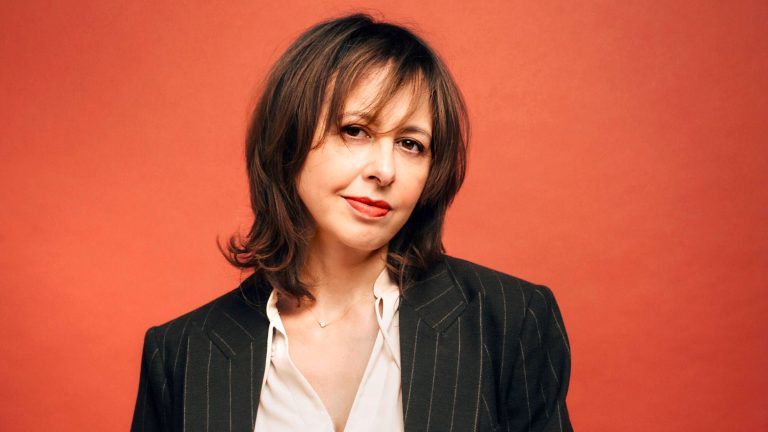

“The Islamists have not erased Iranian identity”
A month and a half after the largest wave of demonstrations against the Iranian regime, it nevertheless celebrated the anniversary of the Islamic Revolution of 1979 on February 11. How did you experience it?
For us Iranians, this anniversary is the day when misfortune and misery arrived. Before we were free, our country was modernizing, was recognized in the world, we had a form of dignity. In one night, we lost everything. In forty-seven years, the mullahs’ regime has done nothing except ruin the country and spread its propaganda. What is happening now is dramatic. We are talking about more than 30,000 deaths. How is this possible? We see images of body bags, families in tears… This regime has been criminal from the beginning but it is today that the whole world truly understands it.
You have only known this diet in your life. What personal experience do you have? And to begin with, what family were you born into?
I was born in 1993 in Mashhad, the country’s second largest metropolis, which has more than 3 million inhabitants. It is a very religious city, notably because there is a high place of pilgrimage: the tomb of Ali Reza, the eighth Shiite imam, who lived in the 9th century. But it is a sad city, including during major religious holidays when everything is dressed in black. This is where I grew up, knowing nothing else during my childhood. My father is a civil engineer. My mother doesn’t work. I have a little sister. My family is not very religious. But in Iran, even if you are not convinced, not practicing in the domestic sphere, you have to show that you are pious in order not to have a problem. We therefore adopt behaviors that become habits, and we end up not really knowing how to separate things. We live a double life, with this permanent contradiction, where anxiety, anger and resignation in the face of oppression mingle.
One of the symbols of this oppression is the compulsory wearing of the hijab for all women. You tell in your book about the day when this scarf was tied on your head…
I was 6 years old. A zealous religious neighbor came to tell my parents that I had grown up and that we must now follow this precept. They put me in a hijab. I experienced this as a humiliation and as the end of my freedom as a child. Suddenly, people looked at me differently. In reality, this religious symbol is used to frame and oppress women, but also the entire population. In a society where women are not free, prosperity is impossible.
Men are also broken by this regime. The portrait you paint of your father is moving…
In 1979, my father participated in the protest movement that brought down the Shah (Mohammad Reza Pahlavi, editor’s note). Then he quickly understood that the Islamic regime was a scam. Everything Ayatollah Khomeini said, all his promises, turned out to be lies. But these religious leaders had armed force and millions of followers on their side. My father therefore lived with a permanent feeling of helplessness and frustration.
It was he who introduced you to chess, with the ambition of making you a champion. Was this a way to gain control over destiny?
Chess is very popular in Iran. It is said that it may have been there, in the ancient Persian Empire, that they were born about fifteen hundred years ago, or perhaps it was in India. When my father saw that I had potential, he thought that chess would allow me to have a different future than the one that was planned for me. When I was little, I understood the difference between “playing” and “becoming a champion”, which requires winning constantly. So I sacrificed my youth to this game. What followed proved my father right since I twice became world vice-champion under 10, then, after several participations in major international competitions, Asian champion, in 2015.
Do you like this game?
When you are a champion, you can both love and hate the discipline you practice. Not long ago, I met a swimming champion who told me he hated water. I understood this feeling very well. Failures are part of my identity. They allowed me to develop my rationality, my capacity for analysis, the management of my emotions, but also to travel, to discover the world, to broaden my horizon. If I hadn’t played chess, I wouldn’t be here with you today. And I probably would not have understood either that the life to which we are condemned in Iran is neither dignified nor normal.
“With failures, I understood that the life to which we are condemned in Iran is neither dignified nor normal”
Mitra Hejazipour Iranian chess champion
How did this realization come about?
It takes time. Throughout my travels abroad and my exchanges with other young people, I began to see things differently. I gradually abandoned religion. Deep down, I had always been detached from the faith, but I blindly followed regulations and superstitions which gave rise to a lot of fear, anxiety and pressure in me. From primary school to university, we learn the history of Islam and the life of Ayatollah Khomeini. It’s brainwashing. Asking any questions is prohibited. Doubting is forbidden. You have to follow blindly. One day, I took off the pendant adorned with a Quranic verse that my mother had given me and which is considered a shield. Nothing happened to me. Then I stopped praying and nothing happened either…
And in 2019, during a world championship, in front of the cameras, you decided to take off your hijab and reveal your hair. It is a very strong act of rebellion against the regime. Tell us…
It was a carefully considered decision. Like it or not, playing for Iran is playing for the Islamic regime. Iranian athletes currently participating in the Winter Olympics are helping to normalize things. Just competing under the current Iranian flag, that of the regime where the name of Allah has replaced the lion and the sun of the historic flag, seems to me to be a guarantee. In 2019, I wanted to show that I was not with them and create a snowball effect in the world of sport.
What were the consequences of this action?
I was not the first woman to publicly remove my veil, but in the world of sport, it was very rare. This got people talking. By doing this, I knew above all that I would no longer be able to return to Iran. I had prepared myself. But the rest was still very difficult. While I loved Farsi (majority language in Iran, editor’s note) the witticisms, the puns, I arrived in Brest without speaking a word of French. I had no friends. I couldn’t communicate with anyone. And I must add that the weather in Finistère – may the Bretons forgive me – is not always conducive to joy (laughs) . I returned to computer science studies in the second year of my degree. My life was hard.
“I have not found anywhere else in the world patriotism equivalent to that of the Iranians”
Mitra Hejazipour Iranian chess champion
But you held on. Your book tells of a form of rebirth…
I lived an intense life. Since 2019, I obtained my license, then a computer engineering diploma, I worked for two years in a company, I got married – my husband is Iranian. I met him in Paris where he had come to do his doctorate in architecture. I also obtained French nationality and became French chess champion. With the women’s national team we obtained two bronze medals, one at the European Championship and one at the World Championship. And I wrote a book! This is all luck. I owe a lot to France. While continuing to passionately love Iran.
This love of Iranians for their country is striking. We have the impression that the dictatorship, as harsh as it is, has never succeeded in killing thought, dreams, rebellion…
The fabric of Iranian civilization is strong. The population is educated, including women, who, although oppressed and considered second-class citizens, do more studies than men. The Islamists have never succeeded in erasing Iranian national identity and replacing it with an exclusively religious identity. We are proud of our history, of our beautiful country. I have not found anywhere else in the world patriotism equivalent to that of the Iranians. Many people in exile today dream of returning, of investing, of rebuilding.
And you ? Do you have dreams?
I’m 32, which is still young for a chess player. Why not become European champion? And of course, I dream of returning to Iran, to a free country. It is very clear today that the vast majority of Iranians reject this regime, which is only maintained by force. We must no longer negotiate with these criminals. They must be overturned. All their allies are weakened or eliminated: Hamas, Hezbollah, the government of Bashar El Assad in Syria, that of Maduro in Venezuela. In my eyes, we have in Reza Pahlavi (son of Mohammad Reza Pahlavi, editor’s note) a credible leader. Everything is ready for the fall of the regime, all that is missing is intervention from the international community.
Men are also broken by this regime. The portrait you paint of your father is moving…
In 1979, my father participated in the protest movement that brought down the Shah (Mohammad Reza Pahlavi, editor’s note). Then he quickly understood that the Islamic regime was a scam. Everything Ayatollah Khomeini said, all his promises, turned out to be lies. But these religious leaders had armed force and millions of followers on their side. My father therefore lived with a permanent feeling of helplessness and frustration.
It was he who introduced you to chess, with the ambition of making you a champion. Was this a way to gain control over destiny?
Chess is very popular in Iran. It is said that it may have been there, in the ancient Persian Empire, that they were born about fifteen hundred years ago, or perhaps it was in India. When my father saw that I had potential, he thought that chess would allow me to have a different future than the one that was planned for me. When I was little, I understood the difference between “playing” and “becoming a champion”, which requires constantly winning. So I sacrificed my youth to this game. What followed proved my father right since I twice became world vice-champion under 10, then, after several participations in major international competitions, Asian champion, in 2015.
Do you like this game?
When you are a champion, you can both love and hate the discipline you practice. Not long ago, I met a swimming champion who told me he hated water. I understood this feeling very well. Failures are part of my identity. They allowed me to develop my rationality, my capacity for analysis, the management of my emotions, but also to travel, to discover the world, to broaden my horizon. If I hadn’t played chess
ITS ORGANIC
- 1993. Born in Mashhad (Iran).
- 2002 and 2003. Vice-world champion under 10 years old.
- 2012. Champion of Iran.
- 2015. Asian champion. Receives the title of “international grandmaster”.
- 2019. At the world championships in Moscow, she takes off her hijab in front of the cameras. She was dismissed from the Iranian national team. She settled in France.
- 2021. Is authorized to compete for France.
- 2023. Obtains French nationality in March. Crowned champion of France in June.