
“The relationship between Orban and Putin is a mystery”
How are the upcoming legislative elections in Hungary unique?
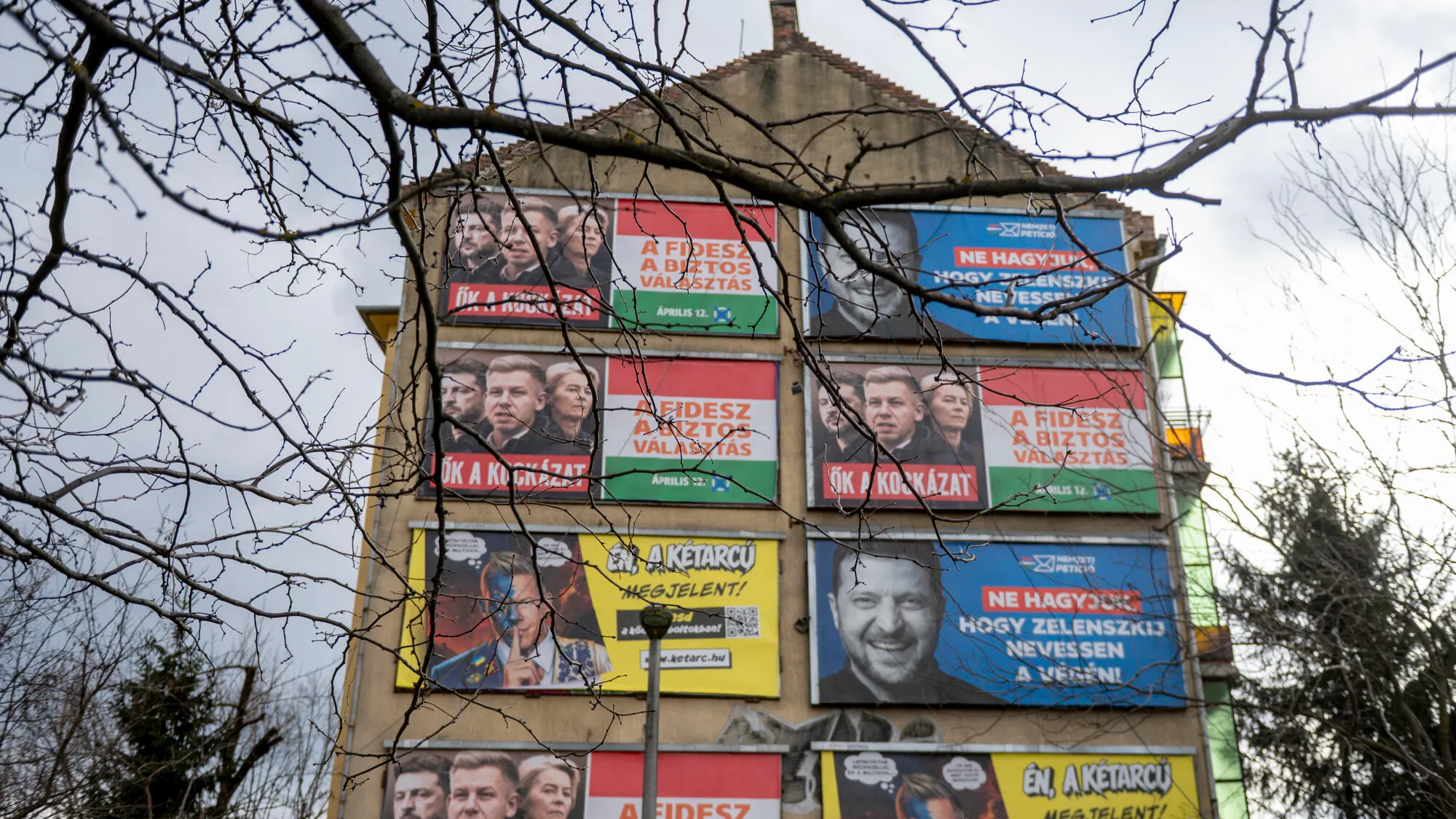
This is the first time that there is the prospect of a defeat for Fidesz, the party in power since 2010 (illiberal, pro-Putin, Editor’s note). This had never been the case until now. Viktor Orban, the current Prime Minister, has always been re-elected without much difficulty. This time, the signals are strong. For more than a year and a half, polls have shown opposition candidate Peter Magyar winning. The gap continues to widen.
How can we explain this turnaround?
Viktor Orban has always been able to establish his legitimacy by taking pride in a good economic result. He came to power after the financial crisis of 2008, a traumatic event for Hungarians. Part of the middle class was trapped with property loan contracts taken out during the 2000s based on foreign currencies such as the Swiss franc (the Hungarian economic situation was good at the time).
But the financial crisis caused the forint, the national currency, to depreciate and the amount of borrowing to explode. Many households found themselves unable to repay. An austerity policy had to be put in place. Viktor Orban came to power two years later and benefited from a better economic situation. It provides new state subsidies and loans to national companies and blocks gas and electricity prices to reduce household bills.
He still maintains a solid electoral base among the conservatives…
We must understand that in Hungary, there is a significant base of conservatives, particularly in rural areas. Viktor Orban has succeeded in forming a solid base within the middle class: liberal professions, traders, etc. Especially since there is a big divide between the capital and the rest of the country, traditionally based on its conservative bases. This is explained by an aging population. Many Hungarians have left to work outside the country, particularly among young professionals.
What is the relationship of Hungarians with Putin and the European Union?
According to polls, they are very pro-European. They do not see the country outside the EU, even if Fidesz propaganda is in full swing to weaken Brussels and keep a sovereign Hungary. Traditionally, there is a distrust of Russia. Just look at the past: in 1849, during the revolt against the Austro-Hungarian Empire, the Russians violently suppressed the population. Then in 1956, Soviet troops bloodily suppressed the Hungarian uprising.
How to explain the fraternal relationship between Orban and Putin?
It’s a mystery. Until the end of the 2000s, Orban was hostile to Vladimir Putin, particularly because of the 2008 Russian invasion of Georgia. However, he changed his mind shortly before his election in 2010.
We imagine that there were negotiations around the financing of his campaign, while a rumor suggests a kompromat (blackmail used by the Russian authorities by threatening to disclose a compromising document, Editor’s note). Since then, they have maintained close economic ties, notably with the cheap energy agreement, but also around a project such as the extension of the only nuclear power plant in Hungary, managed by Russia.
Today, it is certain that Orban sees Putin as a reference figure, particularly in terms of the authoritarian way in which he manages his public affairs. And then, Hungary is a small country of less than ten million inhabitants: seeing Orban meet Russia flatters national pride.
But then, why does his electoral base not hold such proximity against him?
It’s paradoxical, in fact. If part of the population denounces him, particularly among the anti-Orban, this proximity has never been called into question by his electoral base. The country had regained economic health and a place on the international scene. This helped show European partners that Hungary had its own voice.


