
“Reconnecting with our food”
Have we lost sight of our links with the cosmos around us?
As a philosopher, I see clearly that all these words – cosmos, ecology, etc. – are loaded with sometimes very different meanings. For my part, I am more sensitive to the word Creation, especially if we understand it as the multitude of creatures of which we are part. In such a representation, the encounter turns out to be central. So I can form a bond with my friend Florence, who is a cattle breeder, and who herself meets the animals she takes care of on a daily basis.
So the act of eating is fundamentally a moment to enter into a relationship?
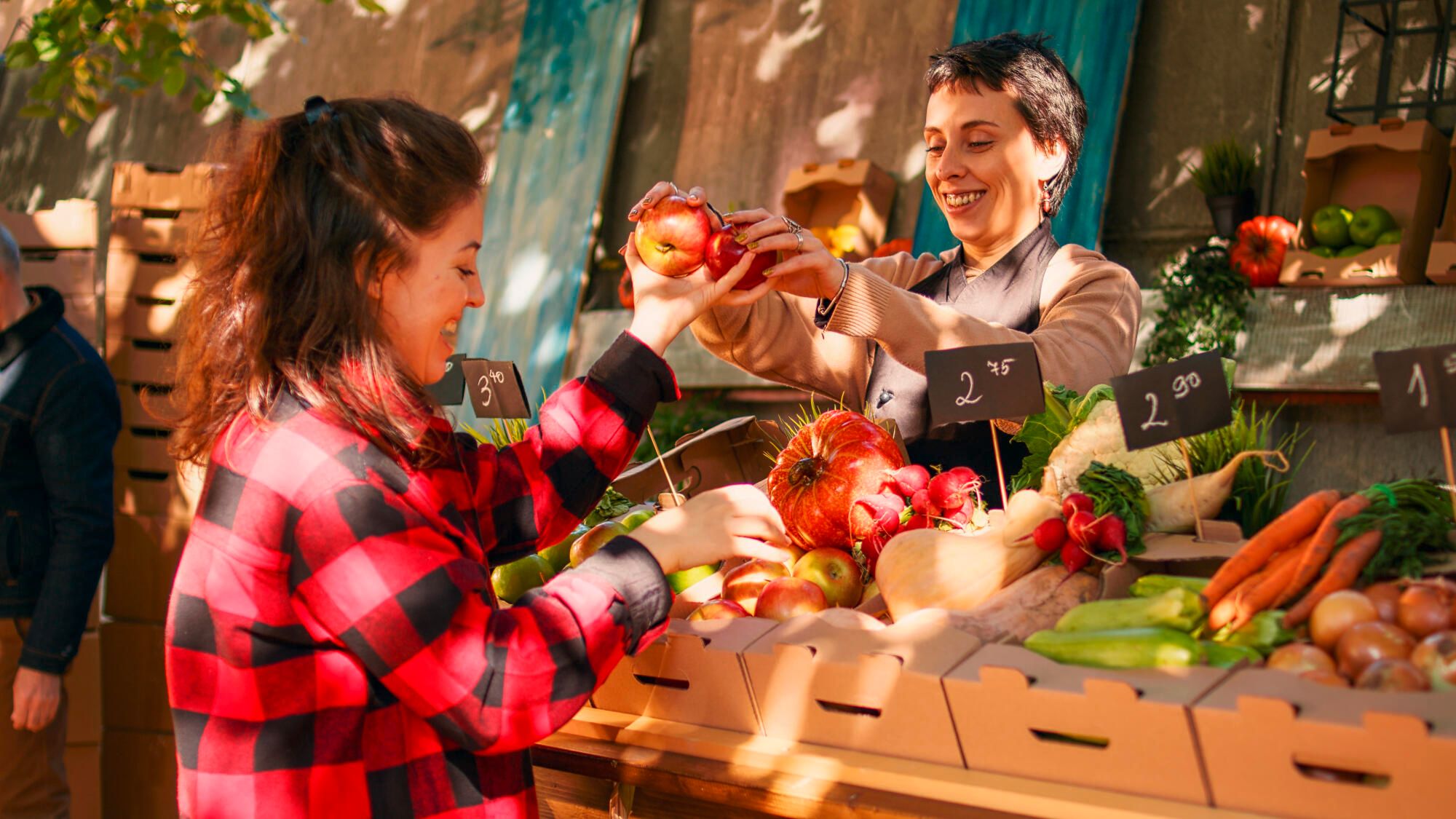
We must move away from this terribly reductionist reading which confines it to the fact of taking nutrients from nature to fill our bodies with them. Eating is above all establishing a relationship with an environment, with beings. However, this is what modern agro-industry has destroyed with its dominant supermarket model. Firstly because it induces waste, generates destruction and even, ultimately, famine in certain parts of the world. Then because on our supermarket shelves, all these human relationships are hidden behind products and brands. For my part, I believe in the urgent need to recreate short-circuit peasant agriculture to be able to preserve these links.
However, on certain boxes of milk or chocolate bars, we sometimes represent these producers, whether local or from further afield…
Unfortunately, very often, this is still just disguised advertising. Because, in the end, we don’t create a real attachment with these people, if they really exist. We wander in our supermarkets as if in a faceless world. It is a real structure of occultation of the realities of the world. When I was a child, I remember that for my mother, shopping in these departments seemed like a chore. Today, with my four children, I go by bike every Friday morning to the market in the village where we settled, in Côte-d’Or. Just before school. It’s a very festive moment for them because they know the producers, who also know them.
The agricultural world, too, suffers from this model…
We still have to sort things out: some dominant unions criticize Mercosur (free trade agreement between the European Union, Argentina, Brazil, Uruguay and Paraguay, editor’s note) while being linked to the traditional fertilizer and pesticide sectors. But others seek to escape and develop another way of producing and selling food, at the cost of immense effort.
Didn’t this agri-food model allow post-war generations to escape poverty?
One thing should be noted: these generations experienced other ways of doing things in their youth. It is therefore not difficult for them to frequent both anonymous supermarkets and small weekly local markets, thus maintaining places to make connections. But the youngest, who were born into this model of anonymous consumption, often have no other resources than the ordinary supermarket. This is perhaps why many people perceive its harmfulness more easily. It is urgent for them to reestablish real connections between the food on their plate and the faces and landscapes that produce their food.
Are Christians well placed for this?
Their faith in divine incarnation normally gives them a passion for meeting the faces of others. A spiritual quest which is a natural antidote to the anonymization underway in our society. Meet the other in their unique singularity, and also refuse to nourish yourself to the detriment of others. We must join local initiatives that allow this, like these farmers who preserve old seeds or who cultivate their land with respect. So, the bread they produce is free and truly carries faces and landscapes. A Eucharistic gesture guaranteeing a fairer world.


