
On the Portuguese path to Compostela
What Jacquaire routes had you traveled before, and how did you get the idea to discover this route?
I traveled the Puy-en-Velay route several times, first alone, then with my family, between 2009 and 2016. When I retired, in 2017, I went to Santiago de Compostela in two months from my home in Angers. Since then, every year, I have traveled the French and Spanish routes.
A pilgrim I met on the way to Vézelay suggested that I meet him on the Camino portuguésI accepted. He was leaving from Porto. For my part, I chose to leave Lisbon. I left this city on May 8, 2024 to arrive in Santiago on June 3: 26 days of walking for a distance of approximately 620 km, or an average of just under 23 km per day.
Did this path meet your expectations?
Apart from the Puy-en-Velay route, shared with the GR®65, the Jacquaire routes are not hiking trails, but paths of pilgrimage, of meeting and also of solitude. I knew that the part between Lisbon and Porto, which includes a lot of asphalt, was not very pleasant. So I wasn’t surprised. The historical and architectural interest of the towns crossed fortunately compensates for the inconvenience of certain common portions with main roads.
Is the route well marked?
The route is perfectly signposted. To avoid the suburbs of Lisbon, I took the metro and then the train for a short distance. To follow the route, I mainly used the Buen Camino application, which indicates the length and difficulty of the stages, as well as the accommodations available.
Starting from Lisbon, the route is common with one of the Routes of Fatima (double markings, with blue arrows for the latter), up to Santarém. From there, if you wish, you can turn off towards Fátima. This variant extends the route by around twenty kilometers.
Is the network of accommodation and supply points comparable to that of the Camino francés ?
The network of accommodations is sufficient, and it is not necessary to book. Simply call the day before the next day to ensure that the gîte is open. I just had difficulty finding accommodation in Santarém, due to the main pilgrimage of Fátima which takes place in early May. In this case, it is best to book several weeks in advance. As for restaurants, they are numerous and inexpensive. The overall average budget (accommodation and food) per day is around forty euros.
What is the nature of the paths taken?
The route of the path sometimes merges with tarmac roads, which are therefore busy, especially between Lisbon and Porto. It is even recommended to wear a yellow vest to complete this portion. Leaving Lisbon, the route runs along the Tagus estuary, offering a landscape of lagoons. Quickly, the path deviates from the river to find the sea upon arriving in Porto. It is a green route from town to town, from village to village, without any particular difficulty. In a few places, you walk on paved floors which are remains of Roman roads (calçada portuguesa), and we see mile markers.
Is this a historic path?
It is a historical path, whose route is inspired by the story of an Italian cleric who left Lisbon for Compostela in 1594. Its markings, on the other hand, date back around thirty years.
Statistics from the Pilgrims Office of the Cathedral of Santiago de Compostela show that this path is the most frequented after the Camino francés. Have you encountered a lot of pilgrims?
This route is mainly practiced from Porto (i.e. for a walk of around ten days), which explains these advantageous statistics. And the number of pilgrims increases further from Tui, for the last hundred kilometers, as for the Camino francés from Sarria: you must then collect two stamps on your credential.
I hiked this path in May 2025 in good weather conditions. After Santarém, leaving the Fátima route, I walked mostly alone to Porto. Then there were more backgammons in the inns.
Your book is called A Portuguese path. Are there other Jacquaire routes in Portugal?
I walked on the Via lusitanaalso called “central path”. There are at least seven other paths in Portugal. For example, the Camino de la Costawhich leaves from Porto; THE Trilho das Areasfrom Lisbon to Porto by the coast. Another path, further east and more rural, the Tavira Quintanilhais less crowded: calm and solitude guaranteed!
Since the Via lusitanayou can join the “spiritual variant” from Pontevedra. Including a boat crossing on the Arousa estuary, it follows the route of the transfer of the relics of the Apostle James the Greater, and joins the traditional path at Padrón. This variant is a little longer (4 stages, 70 km), but it allows you to discover emblematic monasteries such as those of Poio and Armenteira.
What are the notable places on this path?
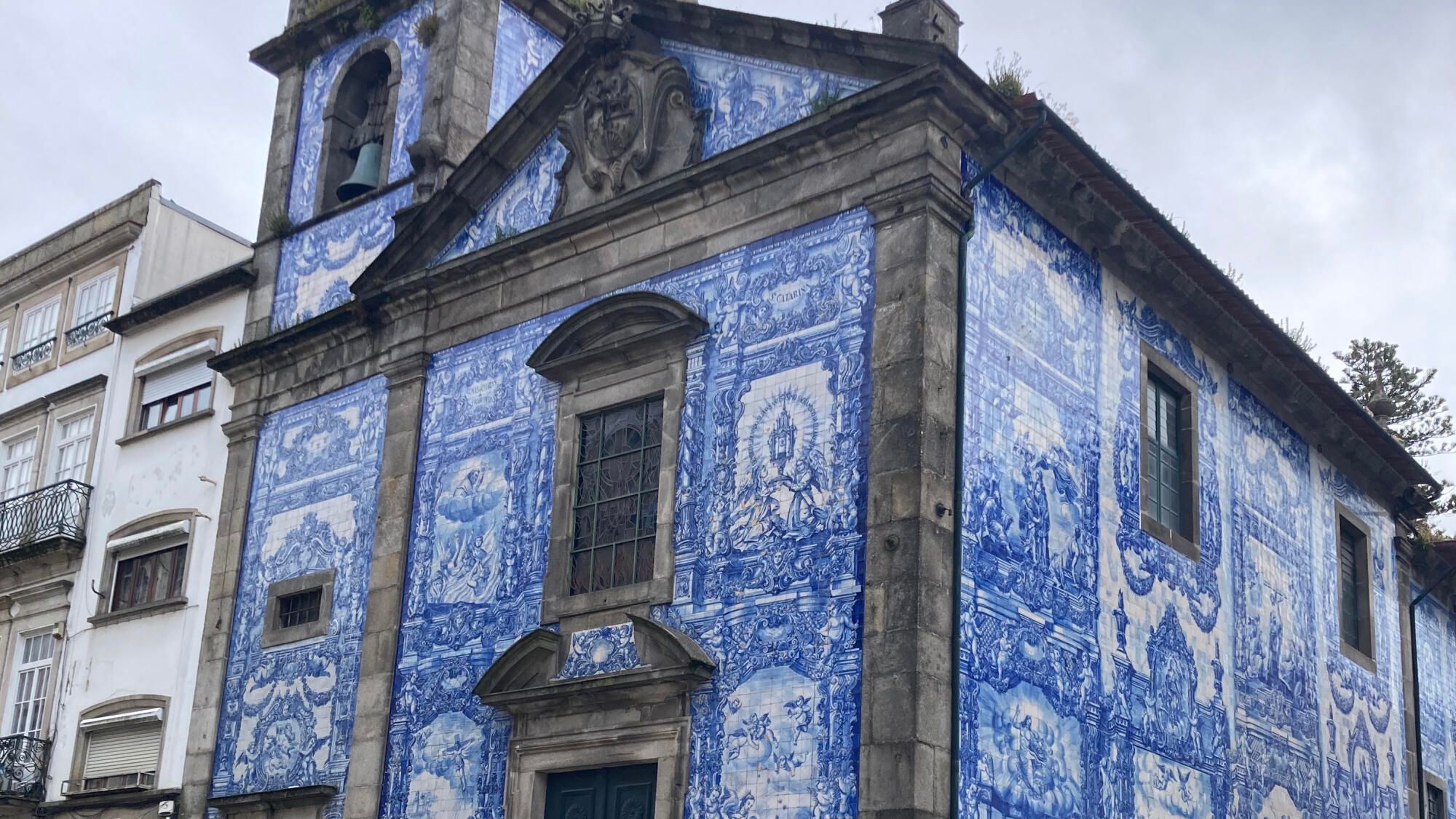
All the towns we pass through are notable places. An adage evokes the particular character of each: “While Lisbon is beautiful, Coimbra studies, Braga prays and Porto works. » But outside of these cities, I would cite: Tomar, Templar city; Barcelos and its famous rooster (related to the legend of the “Hanged Man”, which certain traditions place in this city); Ponte de Lima, with its Roman bridge with multiple arches; the Church of the Pilgrim Virgin of Pontevedra, shaped like a shell; the Chapel of Souls, in Porto. So many surprising discoveries which would require more time than the pilgrim has available!
Portugal is also a country of festivals, secular or religious. Which ones do you recommend to the pilgrim?
It is difficult to make a route coincide with the numerous festivals, often religious and of pagan origin. By chance, I attended the very colorful Coca Festival in Redondela, linked to the celebration of Corpus Christi and the legend of a sea monster. I narrowly missed the Ascension festival in Azambuja, like that of the “Vacas das Corda” in Ponte de Lima.
During this period, the pilgrim has the opportunity to encounter many on his path. The dates are changing: for example, the Coca Festival took place on June 19 in 2025 and is scheduled for June 4 in 2026.
Do you have to speak Portuguese to be understood?
Many Portuguese speak French and, with a few more words of English, I had no difficulty making myself understood. Two or three polite terms, such as “ obrigado/a » (thank you) or “ bom caminho » (good path), are a plus!
You are an architect. What architectural features did you notice?
The quality of contemporary achievements, even in small villages, is remarkable. The break between the old buildings and the new is sometimes brutal, but it symbolizes the rapid progress of this country since its integration into the European Union. It is also to an internationally renowned Portuguese architect, Alvaro Siza, that we owe the first church built in Brittany in the 21st century, in Saint-Jacques-de-la-Lande, near Rennes.
You quote François Cheng’s sentence: “Don’t forget, we just live for a few meetings. » What encounters left an impression on you?
This is what I believe: life is made up of encounters, even if we will end it alone. They are inseparable from the path. But François Cheng’s “few” is important: there are “few” significant encounters, which last well beyond the trip, and those which result in a simple moment of sharing.
Two characters from the path also left an impression on me: at the exit of Rabaçal, a Frenchman who created an extraordinary garden intended for pilgrims; and a hermit, after the Brea Vella of Canicouva, who stamps credencials in a caravan.
During your walk, you took notes because you wrote: “A few hours are enough for memories to fade, wither and fall like the petals of a rose to the ground of oblivion. » What are your best and worst memories?
Each day brings its share of good or less pleasant surprises, and I consider the journey as a whole, without separating the good moments from the bad.
However, if I had to name the best memory, it would be when I left home to discover this new path. And the worst memory would be a health problem that occurred on the way. But I was able to get back on track when I was thinking about giving up, because the pain went away overnight. What happens along the way is sometimes surprising!
You also write that this path was a “life parenthesis”. What did she bring you?
I call the period when I move away from everyday life and the material that usually surrounds me a “life parenthesis”. This path has become a physical as well as a spiritual need for me. I repeat this experience every year, as long as I have the strength. Reducing my needs to the contents of a backpack lightens my body and mind, relieves me, for a time, of the weight of the useless.


