Who are the Revolutionary Guards?
A few seconds were enough to shake a forty-seven year old regime. The remains of Ayatollah Ali Khamenei, the austere-faced Supreme Leader, now await his funeral. The Israeli-American bombings still need to stop. They have not stopped since February 28, 2026, killing, on that day, the strong man of Iran, hated by a large part of the population who paid the high price during the demonstrations in January 2026 – at least 30,000 dead.
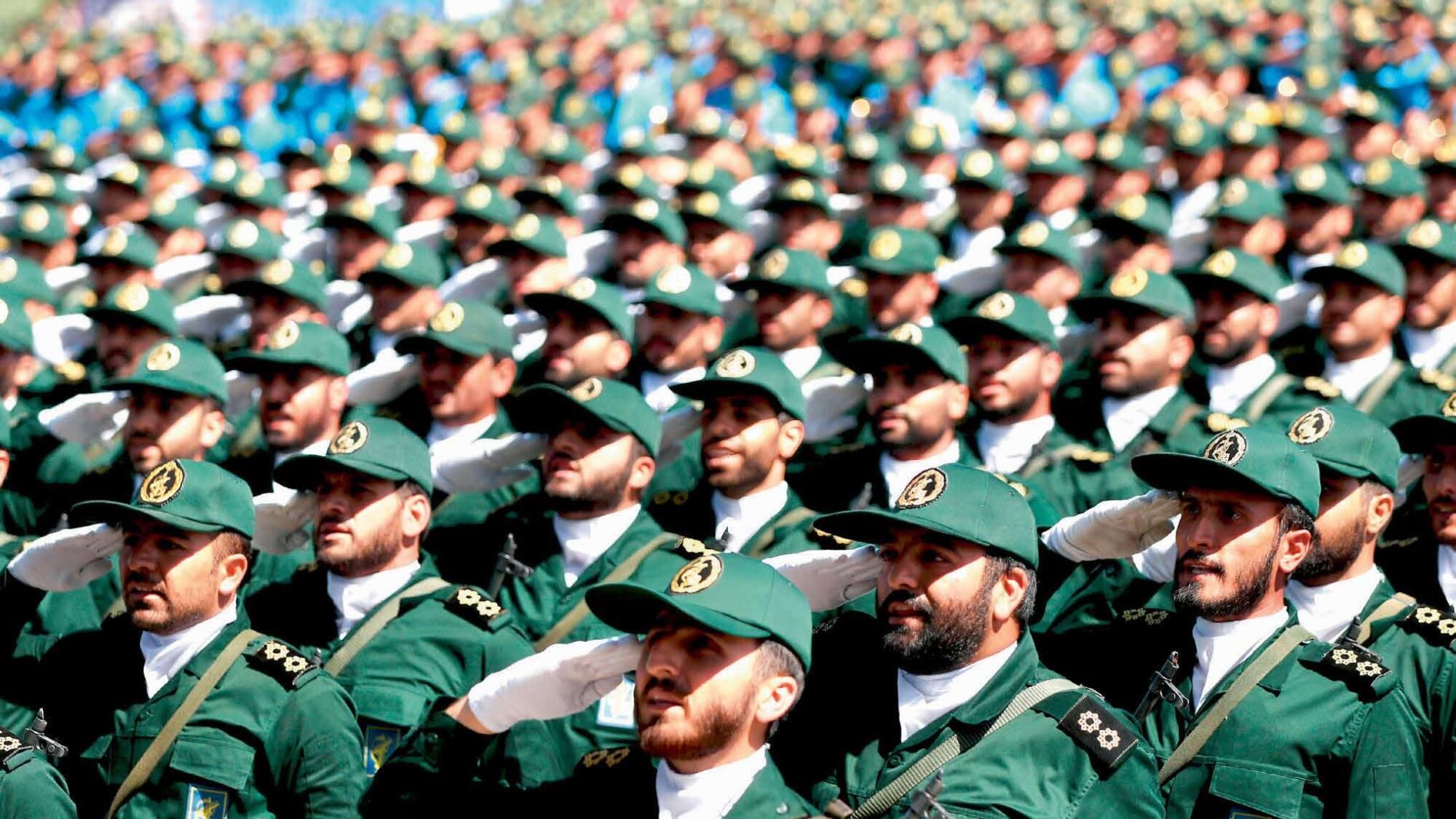
But if Iranian power is cracking a little, it is not wavering. Mojtaba Khamenei was elected Supreme Guide on March 8, 2026 in place of his father. Far from wanting to lead a palace revolution, the Revolutionary Guards, or Pasdarans in Persian, classified as a terrorist organization by the European Union, maintain the system.
This is their original mission. In 1979, when Ayatollah Khomeini overthrew the monarchical power, he formed a militia of 5,000 men to hunt and muzzle political opponents. He legitimizes his theocracy by exploiting two-decimal Shiite Islam, the majority in Iran, which advocates the return of the Mahdi, the twelfth imam, supposed to establish justice at the end of time.
To prepare for his arrival, he imposes strict religious laws: compulsory veil for women, morality police and religious courts, a messianic vision which encourages fanaticism among some. “They are no longer human beings, but killing machines, convinced that the people in the streets are the enemies of God, absolute Evil,” says Hassan Habibi, who has lived in France for more than thirty years.
Massoumeh Raouf saw it with his own eyes. Journalist and opposition figure, she was arrested in 1981 during a demonstration and sentenced to twenty years in prison. She then found herself at the mercy of the revolutionary guards. Blindfolded and hands tied, she was beaten, flogged… “There was no limit to their savagery,” she remembers. Violence comparable to that of the Gestapo.
The Basijs as reinforcements
With around 150,000 members today, the Revolutionary Guards are all-powerful. They even rely on the Basijs, volunteers, who exercise social control in universities, bazaars, the metro… And can shoot at the population if necessary. “In exchange for a place at university, they benefit from discount coupons for shopping,” explains Franck Radjai, research director at CNRS and analyst at the Foundation for Middle East Studies (FEMO).
Members of the Revolutionary Guards are very frowned upon. Rejected, they withdraw into themselves. “We never invited my cousin to family meals again. At his father’s funeral, no one wanted to shake his hand. Today a commander in intelligence, he has blood on his hands,” confides Hassan Habibi.
The Pasdarans are corrupting all structures (administration, parliament, army, etc.), making a coup d’état almost impossible. Without forgetting the economy, which they would control by 30%, or even 60% for the informal market. They invest in all sectors: construction, ports, banks, petrochemical industries, gas exploitation – the country has the second largest gas reserves in the world. This kleptocracy gave rise to oligarchs who could maintain the regime in place. Meanwhile, the population suffers from hyperinflation and struggles to feed itself.
A rain of missiles
The new head of the Guardians since March 1, 2026, Ahmad Vahidi, is perfectly inclined to continue the confrontation with Israel and the United States. He has been wanted by Interpol since 2007 for his involvement in the 1992 bombing of the Israeli embassy in Argentina. Prepared for war, the Pasdarans nevertheless seemed to fire blindly by raining down, during the first four days of the war, 798 missiles and 1,628 drones on the Middle and Near East (1).
On the other hand, Washington and Tel Aviv do not communicate on the extent of their strikes. But they welcome their firing on Iranian missile launchers, drastically reducing the pace of a regime capable of anything so that power does not fall. “During the crackdown in January, some shooters spoke Arabic. The regime brought back Iraqi paramilitary groups,” reveals Franck Radjai.
In the minds of the guardians, if the regime does not survive, then neither will Iran. “They will only leave behind them a scorched earth,” alarms Massoumeh Raouf (2). Guardians ready to open the gates of hell.
- According to the report by the Institute for the Study of War and Critical Threats Project.
- Author of O mothers of Iran, Éditions Intervalles, 190 p. ; €18.