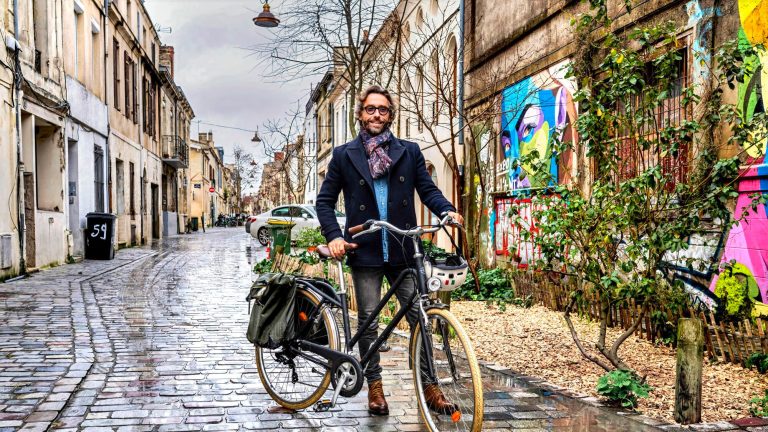
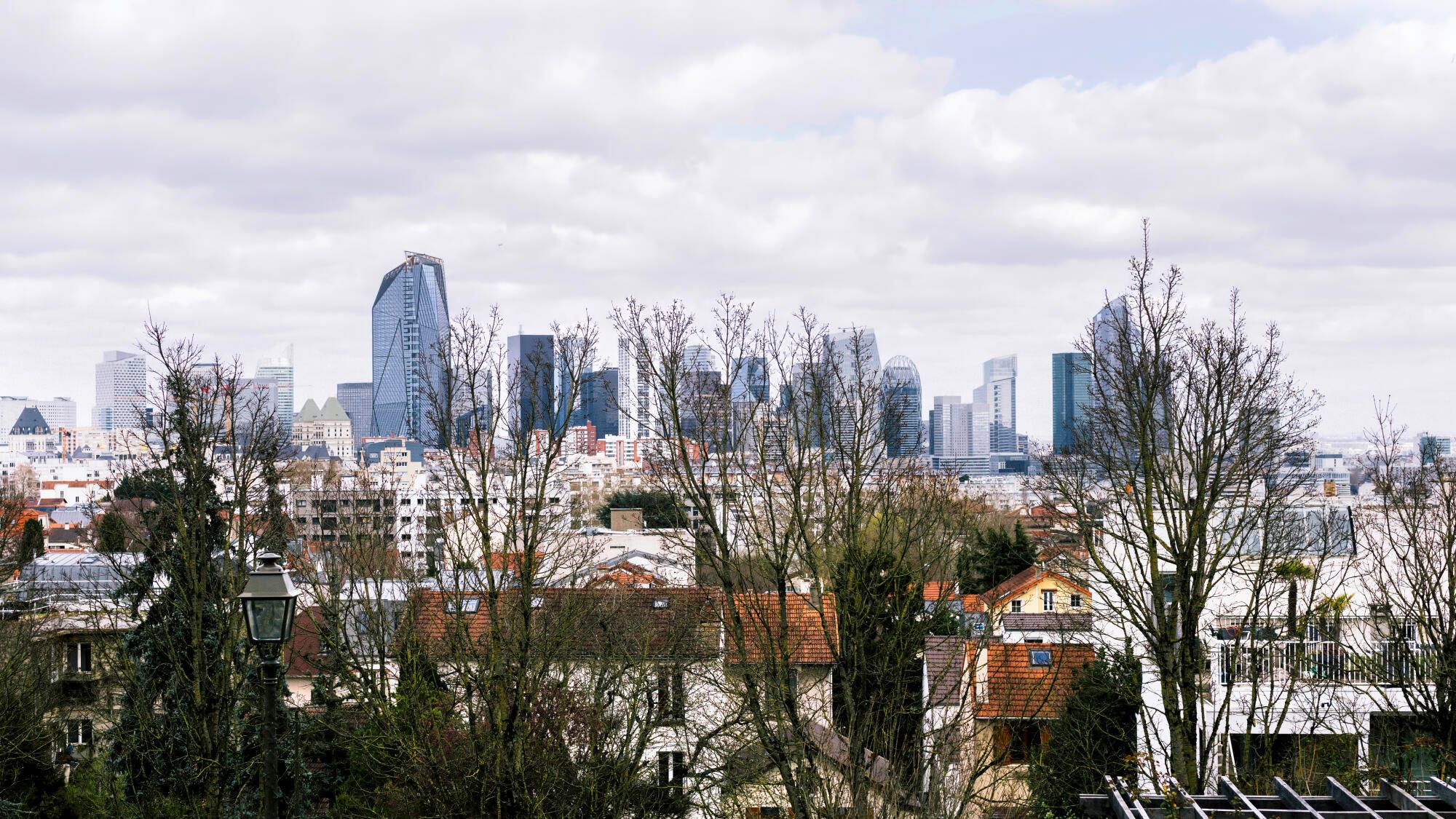
In Suresnes, residents strive to live a secular everyday life
After a day of classes, the nursing students from the IfsiFoch training institute in Suresnes (Hauts-de-Seine) descend in small joyful groups the slope which takes them to the RER station from where they leave towards Paris, Nanterre or more distant suburbs. Some wear an Islamic veil, others a cross, a medal, or various pendants – tree of life, clover leaf, heart… Beautiful image of the youth of this country, who laugh together or chat peacefully.
Foch Hospital, where these students carry out their internships, is a private, non-profit health establishment. As such, it carries out a recognized mission of collective interest. The last three years have seen more female employees (around ten currently) wearing an Islamic veil or an abaya, a large traditional dress in Arab countries, obligatory in certain regimes while being the subject of discussion in others. Of the 2,000 employees, this proportion is tiny. But what are the effects of this choice on the relationship with hospital users, or on the working relationships with their colleagues?
In France, conflicts linked to the expression of religious beliefs sometimes appear in the news, in a tragic way. On March 2, the verdict of the appeal trial for the assassination of Samuel Paty saw the emergence of the new offense of “digital fatwa”. But most often, these differences are embodied in quarrels on a local scale (such as the presence of a Christmas nativity scene in town halls) whose intensity astounds our European neighbors. Named or not, this issue also weighs on the judgment made by voters about their municipality.
Far from controversies, The Pilgrim wanted to investigate the way in which secularism is interpreted on a daily basis in Suresnes, a town of around 50,000 inhabitants which, with 35% social housing, experiences a strong social mix. Hospital, community center, company, sports club, school: between regulations and learning to live together, vision of society and personal identities, secularism is brought into play in very different contexts, and is generally experienced in good harmony.
Favor what brings people together
Pascal Jazat is the general secretary of the hospital. Do the Islamic veil or abaya worn by certain employees bother other people? “Imagine that you come to see a doctor in his office. As you enter, you see a large poster of a politician with beliefs opposite to yours. How would you feel about this doctor? Would you have the same confidence in him? » According to his experience, secularism, he emphasizes, creates between citizens “a specific framework of relationship”. It thus allows us to concentrate on what brings us together: in a hospital, care; in a school, learning; in an administration, the implementation of people’s rights.
In fact, signs ostentatiously indicating what I am or what I think disturb the care relationship. What French law calls “neutrality” therefore requires hospital employees to put aside their religious identity or political opinions. On the other hand, the hospital is committed to respecting the religious freedom of patients and their visitors (see box at the end of the article).
The intervention of chaplains of different religions within its walls is not only authorized, but this possibility is even made obligatory by law. “In a culture of care, my function is well understood,” appreciates Anne-Marie Thomas Ledhernez, chaplain at the Foch hospital for the Catholic Church.
But what should we do when the religious or cultural beliefs of certain patients or their families lead them to refuse to be treated by a man? “Rejecting their request in principle would not be in the interest of care, which includes a psychological dimension,” observes Pascal Jazat. We must then discuss on a case-by-case basis to build a solution together.
Respecting each person’s religious convictions without losing sight of the reason for being together: this is also the challenge of secularism in a company. Krialys is an IT start-up employing 15 employees of various nationalities and cultures. According to the latter, cultivating “the good sense of living together” requires a mixture of interest in others, humor and reciprocal efforts to adapt. When she takes advantage of her break time to go to mass, Tatiana does not have lunch with her colleagues. This led to questions, explanations and laughter about everyone’s identity traits: Tatiana’s Lent, come on, it’s not as serious as Sheriff’s Ramadan! Humor is a difficult art, but necessary: the joke is born from the difference that it takes into account and puts into perspective. Antoine summarizes: “Secularism is due to the good will of each person as much as to the obligations imposed by the State. »
Resident of the garden city, in the upper part of the city, Laurent Mortiez is the president of the basketball club. “We experience a peaceful social mix here,” he describes. There are many associations. That contributes to it too. » He notes that sport naturally nourishes relationships between residents of diverse origins: “By playing together, we tease each other, we cooperate. » Once the reason for being together has been defined – in this case the game – it remains to help everyone build their identity as a player “without creating problems where there should not be any”.
The evolution of the law regarding secularism in sport prohibits “the wearing of signs or outfits demonstrating religious or political affiliation” during competitions under the aegis of national federations. Concretely, a basketball player can therefore wear an Islamic headscarf in training, but must remove it during an official match.
How, as a supervisor, can we explain this rule so that its application is not experienced as anonymous and brutal? At SKBC, a Suresnes kickboxing club, its president, Arnaud Petin, is faced with the same problem. A first crucial point, he insists, is to situate the rules in relation to the requirements specific to the sport concerned. A young girl prefers long clothing to shorts? No problem. Does she want to cover her hair? If the accessory is adjusted to the head, Arnaud Petin sees no problem with it. But a looser veil “could present safety concerns if a foot gets caught on it during a high kick.” Another key point is to endure together what might seem restrictive. And for this, he notes, nothing beats sharing experience between elders and younger people.
The values of the Republic
In France, secularism is perceived by some as prohibitive, particularly at school: a ban on wearing conspicuous religious symbols in establishments, on demonstrating one’s religious identity, etc. However, it has a positive side: it conveys a vision of society, born of the republican project resulting from the Enlightenment. If this vision is embodied by the way of being of the educators themselves, then the prohibitions are no longer perceived as arbitrary. Claire Bonhomme is a history-geography teacher, union representative for the CFDT-Éducation in the Versailles academy, to which Suresnes depends.
Without denying the tensions, she is convinced that the heart of secular education is to situate oneself with the student, and not in front of him, within the framework of the rule. This allows him not to perceive it as an instrument of domination. “At school, we reconstitute a microsociety” where the diversity of adult profiles and their behavior serve as an example, note Frédéric de Robert and Jérémy Ferret, who work for the city to provide after-school support for primary school children. Rather than putting forward prohibitions, their educational effort focuses on building a secular culture of diversity. “Making a difference between students is already creating additional difficulty,” they testify.
Meeting, the key to tolerance
Meeting, the key to tolerance Nassita Gakou is the daughter of the founder of the Salam mosque, where she volunteers. From the previous mandate, the different religions got into the habit of meeting with the public authorities, then visiting each other. “After October 7, 2023 (Hamas attack and start of Israel’s response in Gaza, editor’s note), we felt that it was even more important to continue to see each other. We have to keep people in front of us. » Being locked into beliefs, “even legitimate ones,” is a danger, she fears. And for this native of Suresnes, how do things go on a daily basis? “I was veiled at my workplace. This has never been a problem. There is a desire to live together that drives people. »
“I am veiled: there are plenty of jobs that I will not be able to do, and even internships for which I will not be able to apply,” she remarks with sadness. “Will the Republic one day be able to recognize itself in me? » she asks herself in front of the town hall where she has gone so often.
Alongside a rich associative fabric, neighborhood centers are also one of the ways for the city to encourage meetings between its residents. “The geography of Suresnes is particular: when you live “up there”, you don’t necessarily move “down there”. And even “at the top”, the two more popular districts of Chênes and Sorbiers are separated by Mont Valérien,” explain Ms. Simonnet, youth leader, and Mr. Thiam, responsible for the structure. The premises are common to everyone: we must share and listen to each other between young people, families and older users. Everything is thought of to “break down barriers, create connections, break down prejudices. »
“A Christian neighbor who has known me since I was little asked me why I had chosen to veil myself. He was able to ask me his questions, and I was able to answer him. Ultimately, it didn’t change anything in our relationship. »
Yasmin Resident of Suresnes
A fruitful neutrality
Cultivating the bond and reciprocal consideration: this is the ambition of Mourad Toussaint and the street mediators of the Association du site de La Défense (ASD), who reach out to young people on the neighboring La Défense esplanade. A slab where executives in suits and ties and idle young people meet without mixing. Mourad and his colleagues are subject to the obligation of neutrality. “It is an essential condition of our work, which allows us to help these young people evolve in their point of view. They seek to define themselves in society with their own identity. If religion is part of it, then we must support them in this effort. And help them calm down on these questions. »
Weaving together, in a peaceful manner, secularism: the challenge is not simple. If not because the religious and cultural diversity of France in 2026 is much more accentuated than in 1905. Our survey shows, however, that this objective is not insurmountable. “A Christian neighbor who has known me since I was little asked me why I had chosen to veil myself. He feared that I had become radicalized, Yasmine testifies. He was able to ask me his questions, and I was able to answer him. Ultimately, it didn’t change anything in our relationship. »
What the law says
Health. In a health establishment, the religious freedom of patients must be respected: to pray in their room, to be informed of the religions present, to receive a visit from a chaplain. Certain private structures have a public service mission: their agents must remain neutral regarding their religious beliefs.
Business. In a private establishment not participating in the public service, neutrality is not obligatory. The freedom to practice (without proselytism) is regulated by two notions: the requirements of the task (hygiene, safety, representation of society) and the proper functioning of the company.
Sport. In 2025, the Senate opened an evolution of the law supported by the government to “prohibit the wearing of religious symbols in competitions organized by public service delegated federations”. Until the final version of the law, the situation varies depending on the sport.