
a unique laboratory in Europe that tracks viruses
Under the neon lights of the Vectopôle in Montpellier (Hérault), thousands of mosquito larvae wriggle in white bowls filled with water, carefully aligned and dated. Soon, they will become nymphs and then adults, ready to serve research.
“Here we have strains of local and tropical tiger mosquitoes, as well as the Anopheles gambiaethe vector of malaria,” explains Fabrice Chandre, research director in medical entomology at the Research Institute for Development (IRD). Composed of three security levels, the highest of which allows the handling of viruses dangerous to humans, this research platform dedicated to insect vectors of pathogens, including ticks, is unique in Europe.
“With 500,000 annual deaths due to infectious diseases that it transmits such as malaria, dengue fever or zika, the mosquito is the animal that steals the most human lives on Earth,” explains Frédéric Simard, research director at the IRD, specializing in the study of these flying insects… and thieves. Globalization and climate change favor its presence everywhere, except at the poles. There is a huge challenge in containing its development.
How ? Through multidisciplinary scientific research, which combines human health with that of animals and the environment. This is the One Health approach, which will be the subject of an international summit in Lyon (read box below). Appearing in the early 2000s, this concept saw renewed interest following the Covid-19 pandemic, a global demonstration of the seriousness that a virus that is transmitted to humans by animals (in this case bats) can take.
Preventing pandemics
In the rooms adjoining the insectarium, researchers examine the behavior of mosquitoes, testing their reactions to different molecules. The goal? Find alternatives to insecticides. “The more we use them, the more resistance the mosquitoes develop,” notes Frédéric Simard. Furthermore, these substances used for more than fifty years turn against human health and the biodiversity essential to crops, such as pollinators. »
Manipulations within the IRD contributed to developing the sterile insect technique (TIS): males are irradiated in order to render their spermatozoa ineffective. Once released, they will no longer produce offspring. The fertility ofAedes albopictus (tiger mosquito strain) was reduced by up to 60% in the areas studied in Reunion, according to an IRD study.
“This innovation is emblematic of a One Health approach,” believes Marisa Peyre, epidemiologist at CIRAD, who collaborates with the IRD on these experiments. It preserves the environment while protecting humans and animals, such as ruminants, which succumb to pathogens carried by mosquitoes. »
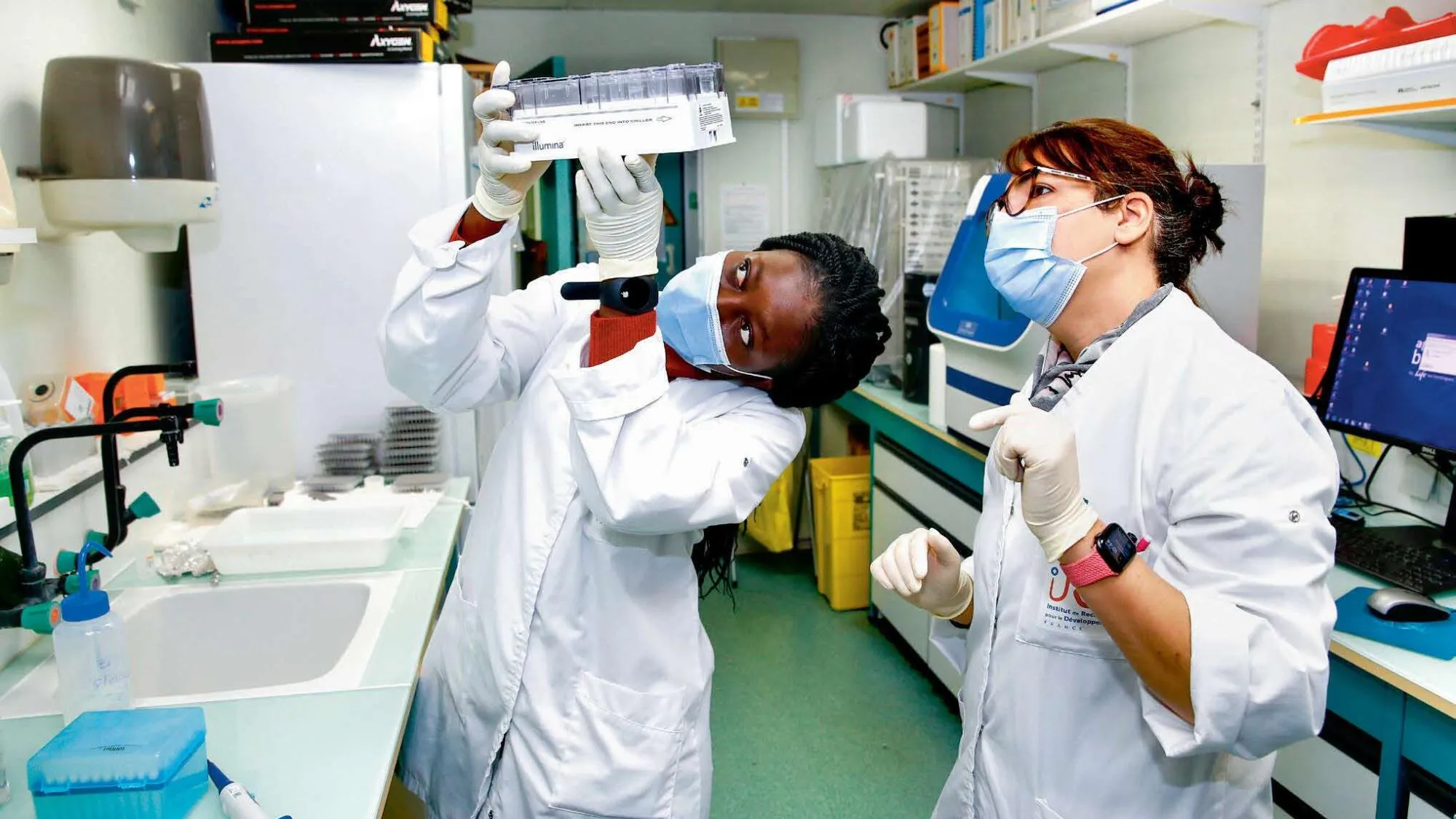
But not all diseases are transmitted, far from it, by insect vectors. On the first floor, Guillaume, an engineer at the TransVIHMI* research unit, manipulates a pipette and tubes containing a sample of squirrel blood from Africa. These serological tests aim to identify whether the rodent has been in contact with the mpox virus (formerly called monkeypox or monkeypox), first identified in the Democratic Republic of Congo.
“We still do not know exactly from which animal reservoir the transmission to humans originated,” explains Christelle Butel, virology study engineer at TransVIHMI. However, this knowledge is essential to prevent future epidemic outbreaks. This would allow targeted actions among local populations, in order to prevent them from coming into contact with the carrier animal. »
Understanding the emergence of diseases at the interface between humans, animals and the environment has been a major focus of research since Covid-19. The question of the means put into prevention to avoid excessively costly health crises remains unresolved. This will be one of the subjects that heads of state and public or private investors present in Lyon on April 7, 2026, will have to decide.
* Translational research on HIV and infectious diseases (IRD, Inserm, University of Montpellier).


