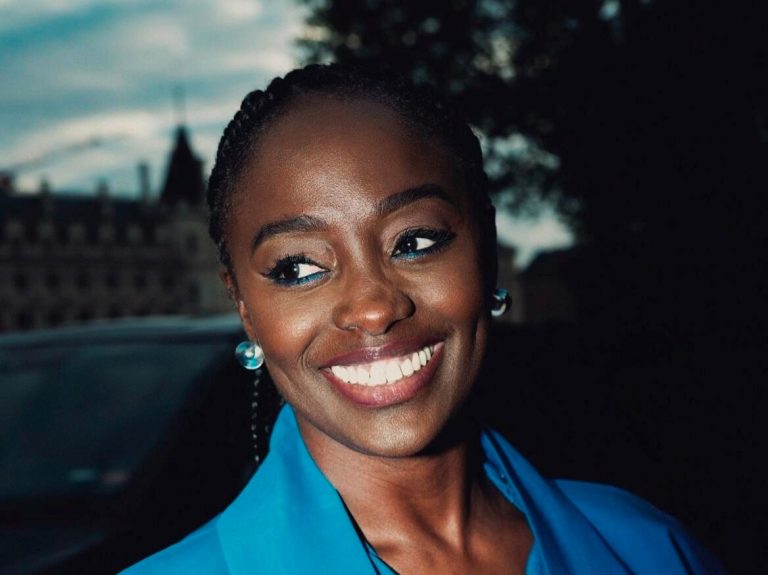

Constance and Hamza tell their faith
You are about to go to Rome for the young people. What do you hope for there?
Constance: The election of Leon XIV was an immense joy. I am happy to welcome him in the middle of all these young people. I usually do not participate in large gatherings, but going to Rome is also a way of measuring the stability of the church through the eras.
Hamza: I do not know Rome, and I am curious to discover this city steeped in history. In Islam with which I grew up, there is no tutelary figure like that of the Pope. So I may be less touched than others by what he embodies. On the other hand, the theme “Pilgrims of Hope” speaks to me. Hope is one of the virtues that have accompanied my way to baptism. For me, it is summed up in this sentence of Péguy: “Hope sees what is not yet and which will be. »»
Your routes are very different. How did you receive the Catholic faith?
C.: For my parents, it was essential to send us faith. This resulted in mass on Sundays and some family prayers, without necessarily having discussions on the merits. As a teenager, the practice has become very painful to me.
In terminal, I had a training to be chief scout: for the first time, I met girls of my age engaged in a joyful faith. It seemed crazy to me. I understood that I too wanted to live this relationship with Christ. From now on, this faith is obvious to me, I cannot do other than believe.
H.: My parents, Muslims, educated me in great freedom. It is paradoxically thanks to them that I was able to embrace the Catholic faith. My studies in literature led me to discover the Church first as a historical reality. Its weight in history and society have strongly challenged me.
Comrades invited me to the chaplaincy, just to discuss. I met the living church there! I then participated in several pilgrimages. The different crossed priests welcomed and accompanied me by answering my questions, in particular on the Scriptures, while leaving me free.
At one point, I made the decision to stop an antidepressant treatment. It was trying, but I felt that something called me to trust. I then had a click. I entered the catechumenal path. Four years later, I was baptized.
Today, how do you live your faith?
H.: I pray a lot Mary and I speak to God during the day. I really trust the priests, without putting them on a pedestal. My godfather is a seminarian with Salésiens. I have a lot of admiration for religious vocation.
I go to mass every Sunday and sometimes also on weekdays, but I still find it difficult to find a parish. I peck, looking for the one that suits me. Which is not ideal: rather than receiving mass as it is, I have a disembodied, almost consumerist practice …
C.: The parish is not the unity in which I live my faith either. I am often in a mop on weekends, without fixed geographic catchphrase, and I favor the proposals of mass of very dynamic young people, even if it can create a form of inter-self. That said, recently, I rub shoulders with a parish close to my home. The family spirit makes me want to invest myself.
In addition to the Sunday mass, I happen to go there during the week, and I pray to God and Marie every day. I wear a miraculous medal, a small cross and the scapular, to assert my loyalty to prayer. I am about to become a psychologist, I want both these signs to be discreet, but I want to keep this presence of God on me.
What are the figures of spirituality that speak to you?
H.: Those committed to the political issue, such as Madeleine Delbrêl or Dorothy Day: they have grasped something from the Gospel. I like the radicality with which their life was turned towards political action. Besides, if the clergy should not tell us who to vote for, it must give tools that make it possible to discern political choices.
C.: I really like Saint Joseph, a model of humility. And my great-grandmother, who died three years ago, divorced, which did not communicate for forty years, but has kept a very strong faith all his life.
Between the pilgrimage of Chartres, with traditionalist liturgical practices, and sometimes radical ecological commitments, how do you perceive the diversity of sensitivities in young Catholics?
H.: I had not imagined how dissensions between progressives, charismatic … I would like to bring together these sensitivities which are often caricatured. I have been delighted that the synod on synodality addresses the question of women in the church.
The reflections on inclusion are dear to me: many homosexual friends told me to find a place in the church. The ambient speech, or certain homilies, are not conducive to their welcome, nor to that of the divorced or women who have abortion. What was not my shock to learn that, in certain life situations, we refuse baptism to people!
C.: I believe that our generation is not very sensitive to labels. Many young people around me have already gone to a session of the Emmanuel and to a mass in Latin, without this posing their problem. The motu owner Traditionis custodes Pope Francis (who restricts the conditions for celebrating mass according to the old form of the rite, editor’s note) also seemed little aware of our reality.
H.: He also challenged me a lot. I have already participated in masses in Latin. The language barrier bothers me, but if some people recognize themselves, where is the problem? The pilgrimage of Chartres, on the other hand, seems to me more inclined to political and identity reaffirmation …
Is it difficult to talk to each other between young Catholics about different sensitivities?
C.: I can’t find. It is rather with older generations that there can be misunderstandings, even tensions. Some, for example, reject the very idea of the port of cassock among young priests.
H.: There are still explosive subjects, for example the reception of migrants or the ban on abortion. And then, I sometimes perceive a form of mistrust vis-à-vis what comes from outside.
During the Olympic Games, the parody of the Last Supper shocked a lot, when it could have been an opportunity for us to explain the message of the last meal, and to question the reasons why we are sometimes targeted. Little by little, it pushes us to fall back on ourselves.
Is that the challenge of young people today?
C.: As Catholics, we are sometimes attacked. It is legitimate to help yourself to stay in the world and maintain our hope. But that should not close us to others.
H.: I am indeed wary of the temptation of the inter-self. She deprives others of a love message. When Christians oppose the reception of migrants, they go against this message for example. God loves us, his love is made to be spread: what should I then protect myself?
The biographies of Constance and Hamza
Consistency
- February 6, 2000. Birth in Paris.
- 2017-2021. Chief scout.
- 2022. One year’s commitment to the Magdala evangelization mission.
- 2020-2025. Student in psychology.
Hamza
- July 19, 1999. Birth in Suresnes (Hauts-de-Seine).
- December 2022. First pilgrimage with student chaplaincy.
- 2017-2023. Literature student.
- 2023-2025. French teacher.
- April 19, 2025. Baptism.