
his fight after the shock of the diagnosis at 29
Fingers that tingle a little, a hand curled up when you wake up, slight tremors, muscles that are a little weak… When you are 29 years old, with a demanding job, a young child and no medical history, you don’t pay much attention to these signals. For Guillaume Brachet, as for the majority of French people, Parkinson’s disease primarily affects the elderly. At this time, in 2018, the young man from Tours (Indre-et-Loire) brushed aside his symptoms and continued his life.
One day, he witnesses a cardiac arrest and decides to seek medical help. He learned that he had Parkinson’s disease early, like 20% of patients. After a few years of “denial” during which he was “very busy masking its effects”, he managed to transform his “stunnedness” into a fight. It will be the one of his life.
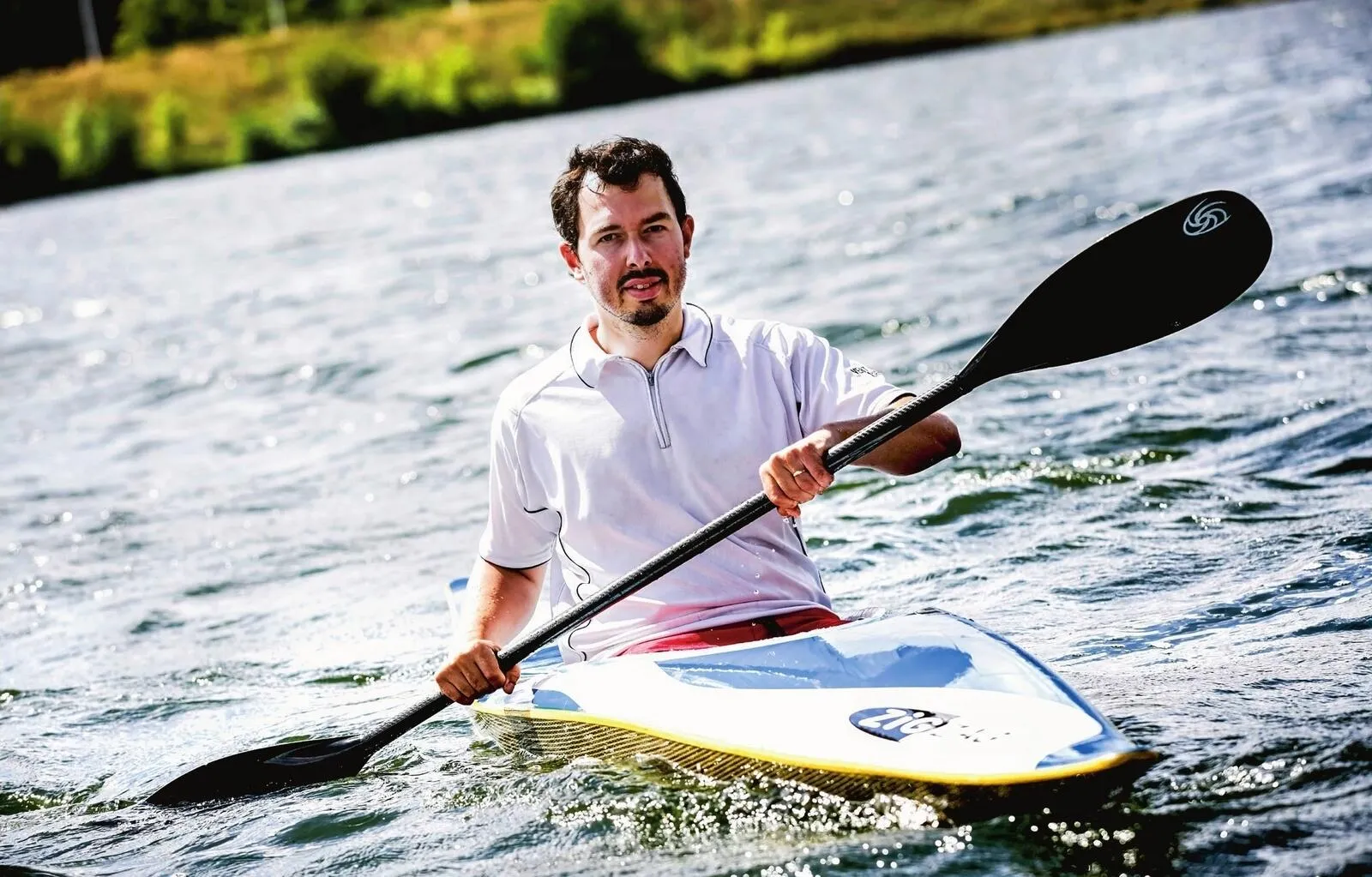
Working in the pharmaceutical field, he looked at the 500 to 700 existing scientific studies on the subject and suddenly had an idea: what if we could combine existing treatments to produce a new therapeutic effect? Guillaume is stepping up initiatives to publicize his research and raise funds, such as going up the Loire against the flow, by kayak, in 2022, despite his symptoms. “I wanted to show that I was capable of going all the way,” he remembers, amused. He also filed a patent.
The first tests are proving conclusive: they demonstrate that the combination, at low doses, of two antidiabetic drugs makes it possible to protect neurons against the disease in vitro. The data give hope for an effective treatment, with few adverse effects in humans. These results are all the more revolutionary as this solution could slow down the progress of the disease, and not just, like current treatments, attenuate the symptoms. “A medical first,” he says, full of hope.
A cure within ten years
To achieve this, Guillaume hired eight employees and created two companies specializing in the repositioning of drugs against incurable neurological diseases. “We are studying eight. It’s on Parkinson’s that we are most advanced,” specifies the entrepreneur, now 37 years old.
Before possible marketing authorization, multiple clinical trials will still need to be validated. “But the best sign of our current success is that it would be impossible for us today to file a patent, because our idea is largely validated,” says Guillaume. Supported by the France Parkinson association, it is seeking 18 million euros to move on to phase 2 trials on humans. These should begin in early 2027.
“I want to tell patients to hang on and not give up: our treatments will arrive within five to ten years,” confides Guillaume. This is said without vanity, just with immense determination.


