
In Algeria, a new look at the mission
How did Algeria, since Charles de Foucauld (1858-1916), become a center of exchange between Christians and Muslims?
Charles de Foucauld, canonized by Pope Francis, marks the beginning of a new conception of mission. He settled in Algeria to convert Muslims, in an approach similar to that of the colonists who thought they were bringing the benefits of their civilization. But he experienced a second conversion, after the one which made him leave his dissolute life as an officer. In 1908, during a terrible famine, he experienced a moral and spiritual crisis. He didn’t convert anyone. Sick, exhausted, he risks dying. But he is saved by a Tuareg, Dassine, who, with her companions, brings him milk and dates. Women whose free life, when they were not married, shocked him.
In what way then does he experience a second conversion?
Dassine makes her understand that she does not need the God of Christians. She has her religion. After this experience of hospitality, he better discovered his place as a “universal brother”. He considers his role as preparation for God’s action in hearts: God will do what he wants, when he wants. After Charles de Foucauld, many others developed a new way of considering the mission.
Who do you think of?
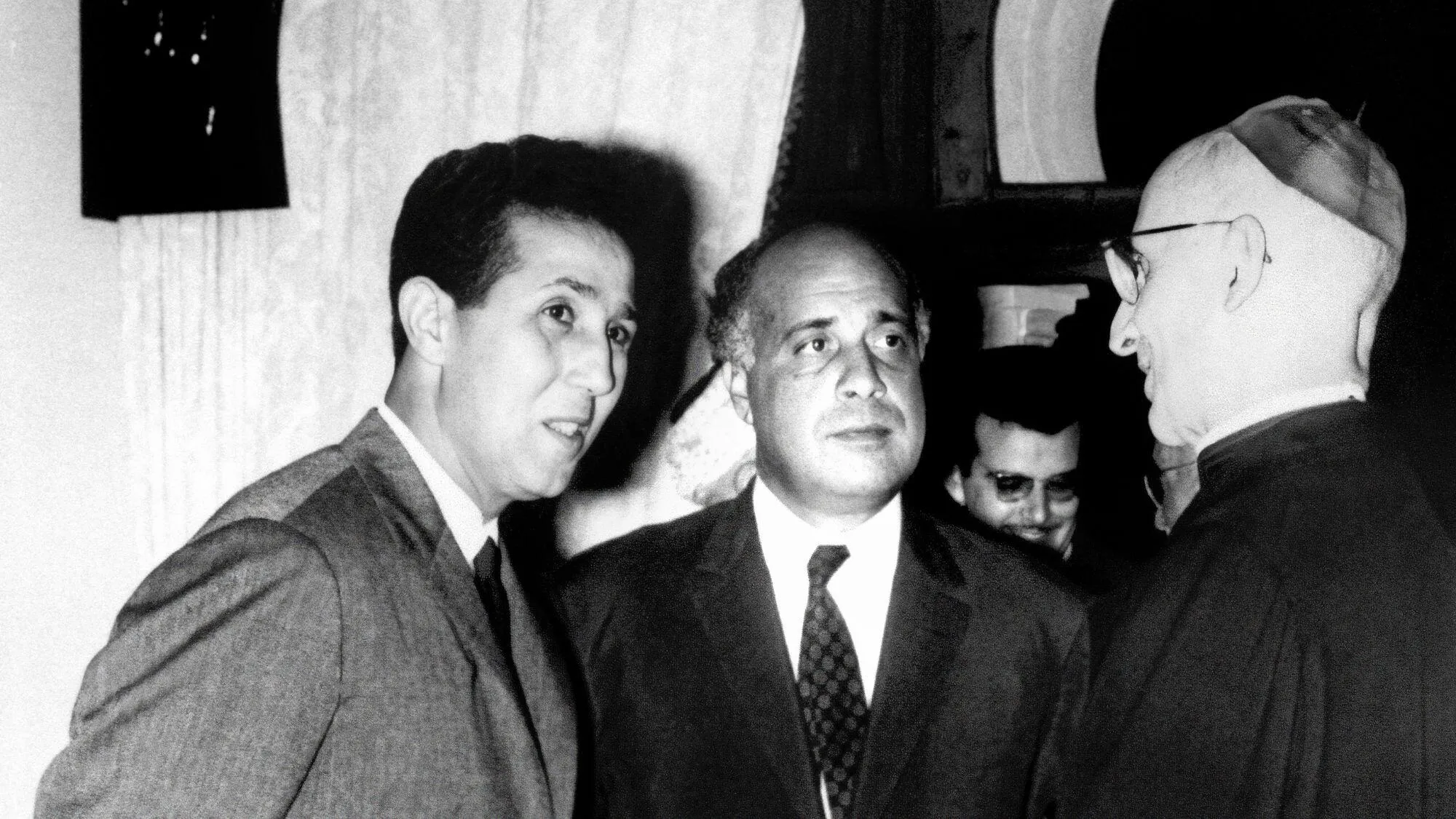
I am thinking, for example, of Cardinal Duval, archbishop of Algiers from 1954 to 1988. He wanted the Catholic Church in Algeria not to be the Church of Europeans passing through, but the Church of Algerians, in dialogue with Islam.
He himself, a great reader of Saint Augustine, obtained nationality after independence in 1965. During the dark decade of the civil war (1992-2002), this small Church of Algeria amply confirmed the authenticity of its presence among the Algerian people. The nuns remained, at the cost of their lives for nineteen of them between 1994 and 1996. In May 1996, seven monks from Tibhirine, including prior Christian de Chergé, were assassinated. On August 1 of the same year, Pierre Claverie, bishop of Oran, lost his life in the attack which targeted him, along with the Algerian friend who accompanied him.
The beatification of Mgr Claverie and the eighteen other martyrs, on December 8, 2018 in Oran, was a way of encouraging the choice of dialogue by the Church of Algeria…
Certainly. Without forgetting that during this ceremony of beatification of the martyrs, tribute was paid to the tens of thousands of Muslim victims of the civil war, in the form of a minute of silence.
How did you discover Christian de Chergé’s theology of dialogue?
With Father Jean-Marc Aveline (today cardinal archbishop of Marseille, editor’s note), In 1992, we created the Institute of Science and Theology of Religions. Bishop Coffy asked us, when he was Archbishop of Marseille, to better understand the faith of others, Muslims and Jews, and thus better experience religious plurality in the diocese. After the assassination of the monks of Tibhirine, the abbey of Aiguebelle (Drôme) recovered their archives and gave us access to them. It was then that I discovered the writings of Christian de Chergé.
“Islam and Judaism lead us to account for our faith in the Trinity. »
Christian Salenson Theologian
What is its contribution?
Like Charles de Foucauld, he was very marked by a personal experience of hospitality. In 1959, during his military service, he was saved by a friend, Mohamed, who paid with his life. His approach has a mystical aim: in his will, he projects himself near God, plunging his “gaze into that of the Father to contemplate with Him his children of Islam”. He refuses to enter into comparison with other religions to evaluate their proximity or their differences with his own. He prefers to receive the questions they ask him, based on the riches they contain. A great theologian of the 20th century, Henri de Lubac, proceeded in this way with regard to atheism.
Is this a new way of approaching the theology of religions?
In a way, yes. But dialogue is the very heart of God’s relationship with humanity, as the Second Vatican Council affirmed: “The invisible God addresses men in his superabundant love as friends.” (Dei verbum, § 2). God has undertaken a dialogue with humanity, with each person. This is why the dialogues that men and women have with each other are a privileged place where we can hear God speak to us.
How does Christian de Chergé testify to this?
He meets the other, with extreme benevolence, without any objective to achieve, because authentic dialogue, for him, supposes gratuity. And gratuity is fruitful. He does not project a priori ideas onto the other. “We meet the other at the level where we seek them,” he writes. If you think that Islam is violent, you will encounter the violence of Islam, no doubt, but that is all you will encounter. He practices prayerful meditation on the Bible, of course, but also on the Koran. At the cost of “laborious work” on the Koran, according to his expression, he says he experiences the word of God. From this experience, he understands that the word of God cannot be confined within the biblical Scriptures. In fact, the Church affirms that the Bible is inspired, and it does not say that the Holy Spirit does not blow elsewhere.
The council also affirms the idea of a divine presence in cultures and religions…*
The council uses an expression from Saint Justin, a 2nd century philosopher converted to Christianity: “seeds of the Word”, or even “seeds of truth” are found in peoples who have not welcomed Christ.
But don’t the Koran and the Bible present a different God?
Rather, let us recognize that Islam and Christianity confess the one God. The one God of others is also the one we worship: “Muslims worship with us the one, merciful God,” recognizes the council (Lumen gentium, § 16). We Christians confess God one in three persons. Islam and Judaism, which affirm with us the oneness of God, lead us to account for our faith in the Trinity. For us, the one God is communion in himself.
How can we move forward today in this culture of dialogue?
Dialogue requires knowing your own religion well. However, ignorance is widespread among Christians and Muslims alike. In Marseille, Catholic schools welcome Muslim children. How can we awaken them to the intellectual dimension of their faith without getting involved in interpreting the Koran? We have a responsibility towards them. At the Catholic Institute of the Mediterranean, we train dozens of teachers or school directors each year in the knowledge of religions. To further deploy this mission, we have just created an Institute of Science and Theology of Education Teaching.
* Decree Ad gentes (§ 9 and 11). Constitution Lumen gentium (§17).