“Populism only reveals the problems”
Donald Trump, Giorgia Meloni, Javier Milei, Marine Le Pen and Jean-Luc Mélenchon, the yellow vests… The epithet “populist” covers very different political realities and brings more confusion than clarity to the debate. Can we define populism?
It’s true, the word “populism” is confusing. It is exploited, even if some assume the label by explaining that they are close to the people. It is often used in the media without being defined. Some researchers advocate abandoning this term. Others, like me, think that it covers a new, widespread, lasting phenomenon, which escapes the traditional categories of politics. It can be defined in three ways.
It is first of all a very flexible form of ideology which explains the world by a fundamental opposition between a united, virtuous people, holders of the truth and elites who would pretend to have differences but who would come together to crush the people and plot against them. It is then a strategy based on an increased use of demagoguery, an often crude, supposedly popular language, breaking with the more complicated language of traditional formations. Finally, it is the political expression of a revolt of popular culture coming from below against that of the elites. Take the excitement caused by the environmentalist MP Sandrine Rousseau for whom cooking meat on the grill is macho… This type of comment can only fuel the process of disconnection from the elites.
Why are populisms so successful in the Western world today?
There is populist potential in any democracy, because democracy can never fulfill all of its promises and therefore breeds frustrations. This potential turns into an eruption when distrust grows towards institutions and elected officials, as is the case today throughout Europe, with a peak in France. But also when unemployment is high, when purchasing power stagnates, when access to health becomes complicated. And, finally, when increasingly diverse societies question their identity. Faced with these questions, the strength of populist parties is to promise a return to political voluntarism and efficiency by “giving power to the people”.
Could the populist response to problems that public action cannot resolve be misleading?
These parties develop a relatively coherent discourse to restore meaning to politics. In these times of immediate democracy, where elected officials address the people through social networks and where 24-hour news channels push for urgency, they often propose simplistic solutions to complicated problems. Immigration, for example: opinion surveys in Europe show an incontestable rejection. However, this is a possible response to demographic decline. In Italy, Giorgia Meloni, who had considered a naval blockade against immigration, is thus obliged to subscribe to the employers’ request to bring in nearly a million immigrant workers.
Doesn’t the Meloni case prove that populism is more of an electoral strategy than a government practice, which remains classic after all?
In power, Giorgia Meloni was confronted with the complexity of the economy and the European framework. It has thus discreetly accepted selected legal immigration, but spectacularly strengthened the fight against illegal immigration. I see that this choice is successful: it is becoming a European policy. When she addresses Italians, she nevertheless tends to find her style with the Roman dialect, language tics, a denunciation of “immigration elites”.
By its excesses of language, of which Donald Trump gives daily examples, does populism only change the form of public debate or more profoundly the nature of the democratic regime?
The populists impose their themes, their way of doing politics, a certain brutality – Milei, Trump –, the diktat of emergency. And their adversaries find themselves faced with a dilemma: to do otherwise or to resort to the same means. In 2017, facing Marine Le Pen, Emmanuel Macron, from the National School of Administration (ENA), the General Inspectorate of Finance and the Rothschild Bank, presented himself as the “anti-system candidate”… Basically, populists affirm that the sovereignty of the people is limitless. This is the argument hammered out in Poland (under PiS, editor’s note) and in Hungary (under Orban, editor’s note) : if we win, we can do what we want. It is a questioning of the very idea of counter-powers, like that of judges, for example.
Are these populist movements a threat to democracy or just one of its equally legitimate expressions?
It is a political expression, without question. When the political class forgets that its legitimacy comes from the population and does not respond to their aspirations, it frees up new space. This can also be a threat: the fiction of a united people, on which populism is based, means that if we are not with the people, we are no longer a respectable adversary, but an enemy, symbolically doomed to elimination. We saw it with Viktor Orban, in Hungary, who called into question the judicial power, the media power, the academic power, freedom of expression. That said, we see in Italy a strong resistance to possible temptations of this type.
The emergence of populism is finally an opportunity: populism is not the problem but the revealer of problems. If the working classes support these movements, it is up to the other parties to renovate our democracy and respond to this double aspiration which emerges from all opinion surveys: the search for authority and, at the same time, the expectation of greater democratic participation.
In Hungary, Viktor Orban, self-confessed champion of “illiberal democracy”, has nevertheless accepted his defeat and the alternation…
Yes, like the Polish PiS (Law and Justice) before him. In Hungary, the high participation, the scale of the defeat, the hope of playing a role in the future, the threat of continued blocking of European funds are all factors which explain why Orban did not contest the verdict of the polls. Especially since in Poland as in Hungary the populists have had time to place their cronies in the Constitutional Court and in key positions in the administrations.
Can we speak of a right-wing populist international?
Emmanuel Macron has raised this specter. In Washington and Budapest, there are attempts at coordination between the different experiences. They are found in the fight against immigration, the primacy of national sovereignty, the cultural battle against the left and a Europe accused by Orban – but not by Le Pen nor by the Dutch populists – of no longer defending Christianity against Islam. However, each of these groups first defends its national interests and the erratic personality of Donald Trump no longer serves these movements. In France as in Italy, the time has come to distance ourselves from the American president.
Can we distinguish right-wing populism from left-wing populism?
In France, they have in common the criticism of other parties, of the European Union, the denunciation of elites, but not of the same people. The National Rally (RN) attacks elites who, according to it, are favorable to migratory flows; La France insoumise (LFI), to those of international financial capitalism. Their conception of the people is also different. For the RN, it remains the ethnic French: in 2024, Jordan Bardella wanted to ban certain positions from dual nationals. And the “national priority” remains on the agenda. LFI claims a social, poor, “Uberized” people, but also “mixed” and “Creolized,” that of “New France.” Two national stories face each other.
Can the rise of populism be read as a response to a new betrayal of elites who have failed on issues such as debt or the rise of radical Islamism? You quote the historian Giovanni Orsina, who speaks of “rebellion of the concrete against abstraction”…
Yes, the current situation is the responsibility of the elites. And today, the elites are afraid of the people and their anger. In this regard, the 2005 referendum in France on the draft European Constitution was a turning point. While the parties and the media largely campaigned for the yes side, the no side prevailed. How can we rebuild two-way trust between the people and the leaders? This is the major question.
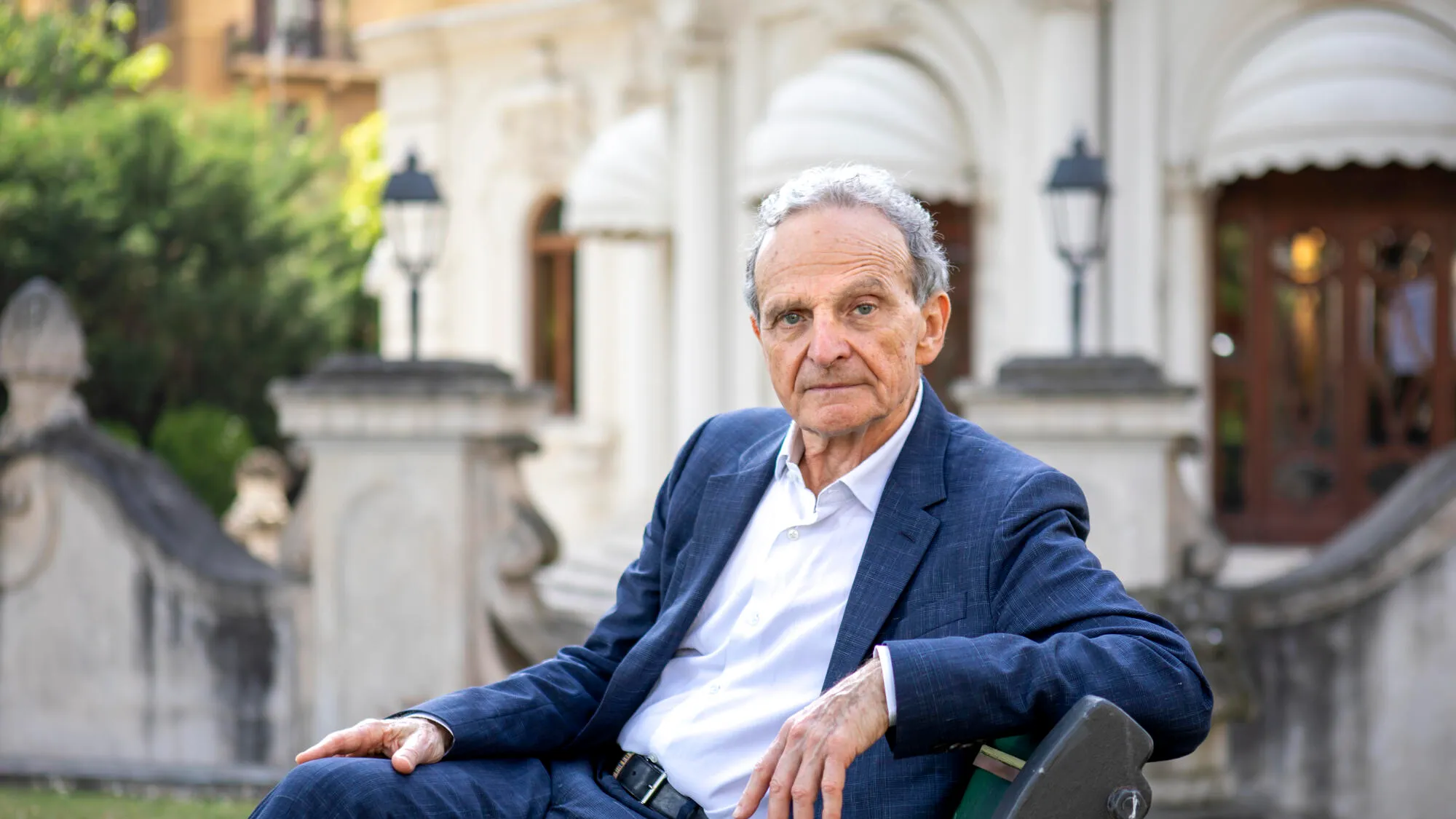
His bio
June 19, 1952. Born in Paris.
1979. High school history teacher.
1986. Jean-Monnet Fellow at the European University Institute in Florence (Italy).
1991. Professor at Sciences Po Paris.
2007. Professor at Luiss University in Rome (Italy).
2022. Professor emeritus at Sciences Po Paris.