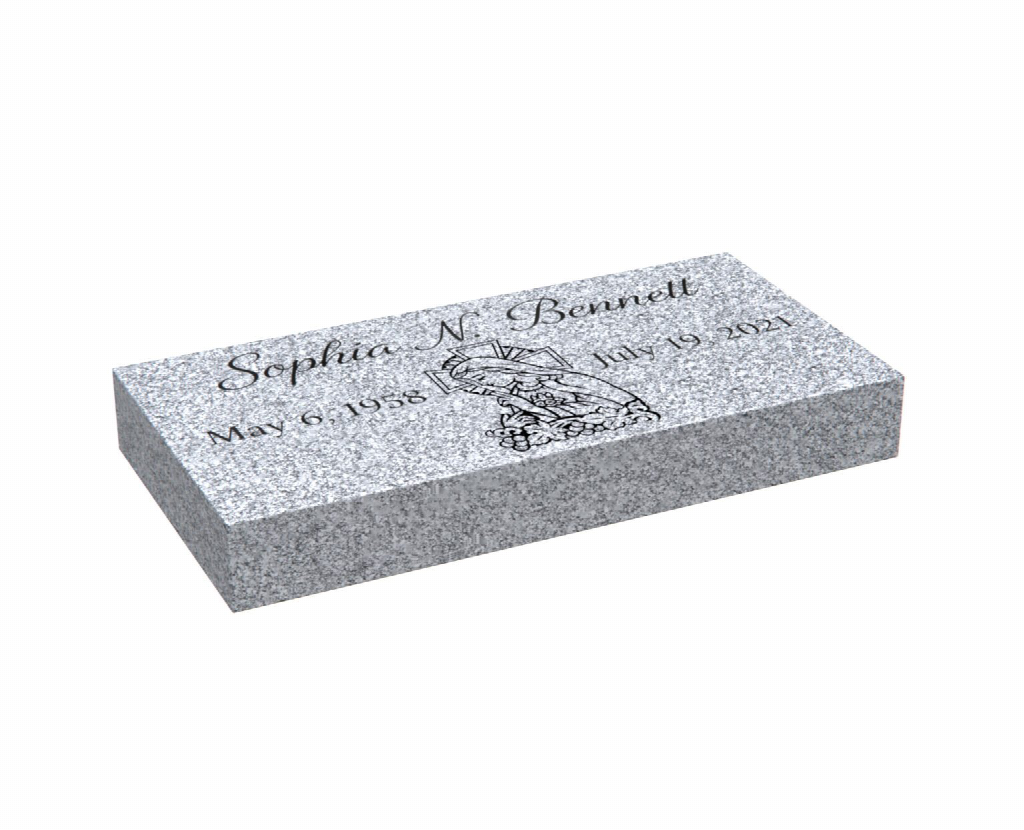
A Lawn Cemetery Reshaped American Burial Without Anyone Noticing
Look around an older cemetery before the year 1900, and look around a more modern one that dates from the years after 1950, and you’ll realize just how different those burial traditions are.
The older tradition of burying the dead was based on verticality, with obelisks, markers, monuments, tablets and other upright designs that competed among themselves in terms of quiet glory. The newer tradition focuses on horizontality, with a flat lawn dotted by occasional trees as well as the memorials only visible from ground level.
It isn’t a decision that anyone has made intentionally. It is a decision that has been made by accountants and the invention of the riding lawnmower.
The history of cemetery management economics that reshaped American burial
While the memorial park movement dates from the 1910s and 1920s, the economics behind it are as old as the profession itself.
Vertical monuments mean extra labor when it comes to grass-cutting. Every upright monument creates additional work for one of the workers with a trimmer who is going to do it the hard way — manually and slowly. It takes just a few years and forty acres before perpetual maintenance becomes impossible.
Flat monuments were the solution to this problem, making it easy for a mower to roll over their tops and requiring less staff to perform all of the maintenance tasks.
Cemetery after cemetery added flat markers-only rules to the section rules until half of the modern cemeteries became lawn-cemeteries. That is how the family finds out that they can’t erect any upright monument where they intend to bury their parents and that they need to look elsewhere for it.
This story is the most important information on flat grave markers since it tells the story behind their dominance on the modern funeral market.
Requirements the manufacturer’s specification sheets usually have
Since flush grave markers are subjected to different forces compared to upright markers, they have stricter requirements from the customer’s side.
Most markers have a fixed dimension depending on their use. Singles most frequently measure 24 by 12 inches, though there are also common singles that measure 24 by 14 inches and 28 by 16 inches. On the other hand, companion markers usually measure 36 or 44 inches in width.
Thickness is a parameter where many families make mistakes, thinking that they can use any flat grave markers they choose. There is one thing the families need to remember — four inches thickness is a convention of the industry and a requirement of most cemeteries for various reasons.
It makes sense since a three-inch marker looks the same but behaves differently during long-term exposure to moisture. If such a marker is rejected, the family will lose the money they paid for it. There are no refund policies for rejected monuments.
Another aspect is related to the setting method. Some of the cemeteries allow flush markers with the granite border, while others allow them to be embedded into the turf or poured into the custom foundation. Some of the cemeteries allow a flush vase and require them to be removable in order to avoid problems with mower blades.
Families should always request the specification sheets of the cemeteries from their offices and save those emails for future reference. The email request costs nothing, but saves the most expensive mistake in this case.
The case for granite flush grave markers explained
Flush markers experience much harsher conditions compared to their upright peers — water after rainy weather, weight of machinery, dirt, snow — and granite can withstand all of that easily.
It is dense, has very low water absorption, and the carved lettering doesn’t become blurred because of the freeze-thaw cycle that deteriorates it.
This is why the quality manufacturers use a limited palette of colors for their flush markers — black, gray and red. All of them have all of the necessary characteristics of the marker surface.
The second material that could be used for creating flush markers is bronze. They last long and withstand all the weather and mechanical factors well. Such monuments require extra attention since otherwise the patina won’t look like it is supposed to.
One thing the families should avoid — marble flush markers. Marble is a carbonate rock and acid rain affects it continuously, especially since flush markers stay right in these conditions. In addition to that, concrete markers are both inexpensive and unreliable.
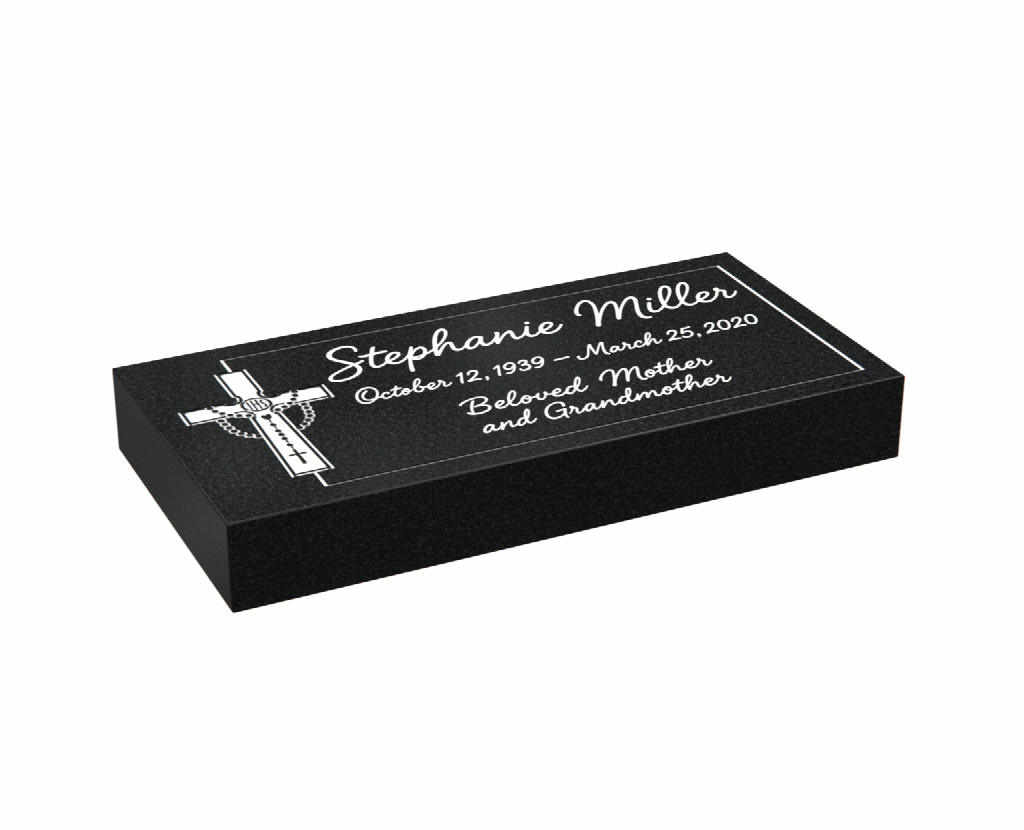
If portrait engravings are chosen, black granite allows laser etchings to last a long time.
Cremation shift changes this category
The trends in American burials are becoming very obvious recently. According to the National Funeral Directors Association, by the year 2025 the cremation rate is expected to reach 63.4% against burial rate of 31.6%, with 82.3% estimated in 2045.
Currently, only three states remain mostly burial states, but every state of the country will bury less than 50% of people by 2035.
Cremated remains still get buried, and interments need to be commemorated, which is why every cemetery has its urn gardens or scattering garden for the purposes of cremation.
As the result, the cremation sections are expanding and cemeteries introduce new flat sections. In addition to that, NFDA data tells the story of the cost of a funeral with viewing and burial ($8,300, or $9,995 with vault) against the lower cost of a funeral with viewing and cremation ($6,280). This is why flush markers become increasingly popular and require more design considerations.
How to design within a rectangle
The limitations exist and they make design work easy at the same time.
You work with the surface that is already flat and has a fixed width and height. Everything that you could have done when creating an upright marker has different effect now.
Simple, bold line engravings are fine, but hairlines disappear in several years due to lichen. Deep cuts last much longer than superficial fonts. Borders look good because rectangle is already a border. Religious symbols, military or other organization badges, one or two flowers, or even a verse in another language are fine.
By far the most common mistake that families make is adding too much stuff to the memorial — two names, four dates, religious verse, flower engraving and border to 24-by-12-inch surface. Such a design creates a clutter of elements and doesn’t give any space for breathing, which is why you should ask for a full-size sample before ordering anything.
Companion markers deserve special mention. Single markers that cover two people with one date reserved for later have become the most frequent purchase recently, which also reduces the costs compared to two separate markers and removes the risk of having matching markers impossible to find fifteen years later.
What to check before purchasing
One must confirm the allowed dimensions and thickness in the written form. One must also inquire about the possibility to use vases and about their permitted form.
In addition to that, one must find out whether the cemetery pours the foundation or not, and about the price of setting.
For the sake of the manufacturer, one needs to check that the engraving is included in the price, that shipping also is free, that a porcelain photo is included as a standard feature and not an upgrade, and what happens with the marker in case it will arrive with damage. Free repair and replacement should be guaranteed.
Check the manufacturing commitment period in days. Sixty days are an acceptable number for a custom-made marker cut from granite already held in domestic stock.
Lawn cemetery is created for efficiency rather than for aesthetics, but a good-looking, lasting and easily readable flush grave marker has become a product that this industry produces. To learn how the category is priced in case the engraving and shipment costs included, a catalog of Capital Grave Markers should prove sufficient.