“priests and faithful are supervised until mass”
When did you realize you had to leave Nicaragua?
It happened gradually. I was deprived of work as spaces of expression closed. Little by little, I lost my bearings, I was more and more worried about what could happen to me. As a public figure, I spoke in several media to denounce the situation in the country.
In 2007, agents linked to Rosario Murillo entered my home to steal personal belongings. It was a “message”. They knew where I lived, what I did. I had been living alone for forty years and I started to be afraid. In 2021, I learned that if I left Nicaragua, I would not be able to return.
So I decided to stay. I didn’t renew my passport or my ID card to make myself forget. But over time, the situation became unbearable. I finally left the country illegally through Costa Rica on February 8, 2025.
How do we learn to live elsewhere again, after forty years in this country?
I spent a few months in Madrid where I felt very alone. I was then able to settle in Granada. I live there today near Nicaraguan friends who are dear to me, including three former political prisoners. They kept me from falling into despair.
I often repeat these lines from Antonio Machado to myself (Spanish poet, editor’s note) :
“Black oak of the fields,
you push straight or crooked,
with this humility which never gives in
than the law of life,
which is to live as best we can. »*
I live as best I can. Exile teaches me humility. And when my situation makes me suffer, I think of all the people who are refugees in the world. I am one of them, but I remain privileged.
Are you still in contact with Catholic faithful or priests who remained there?
I kept in touch with a young religious engaged in a social work of his congregation – one of the rare organizations which was not confiscated or closed. Subject to the “law on foreign agents”, published in 2020, its community must delegate a cleric to produce the regime’s monthly reports.
This task makes him sick. He often repeats to me: “For now, we continue to work, but until when? » Uncertainty exhausts them, like the rest of the population.
Can we speak of a “persecuted” Church?
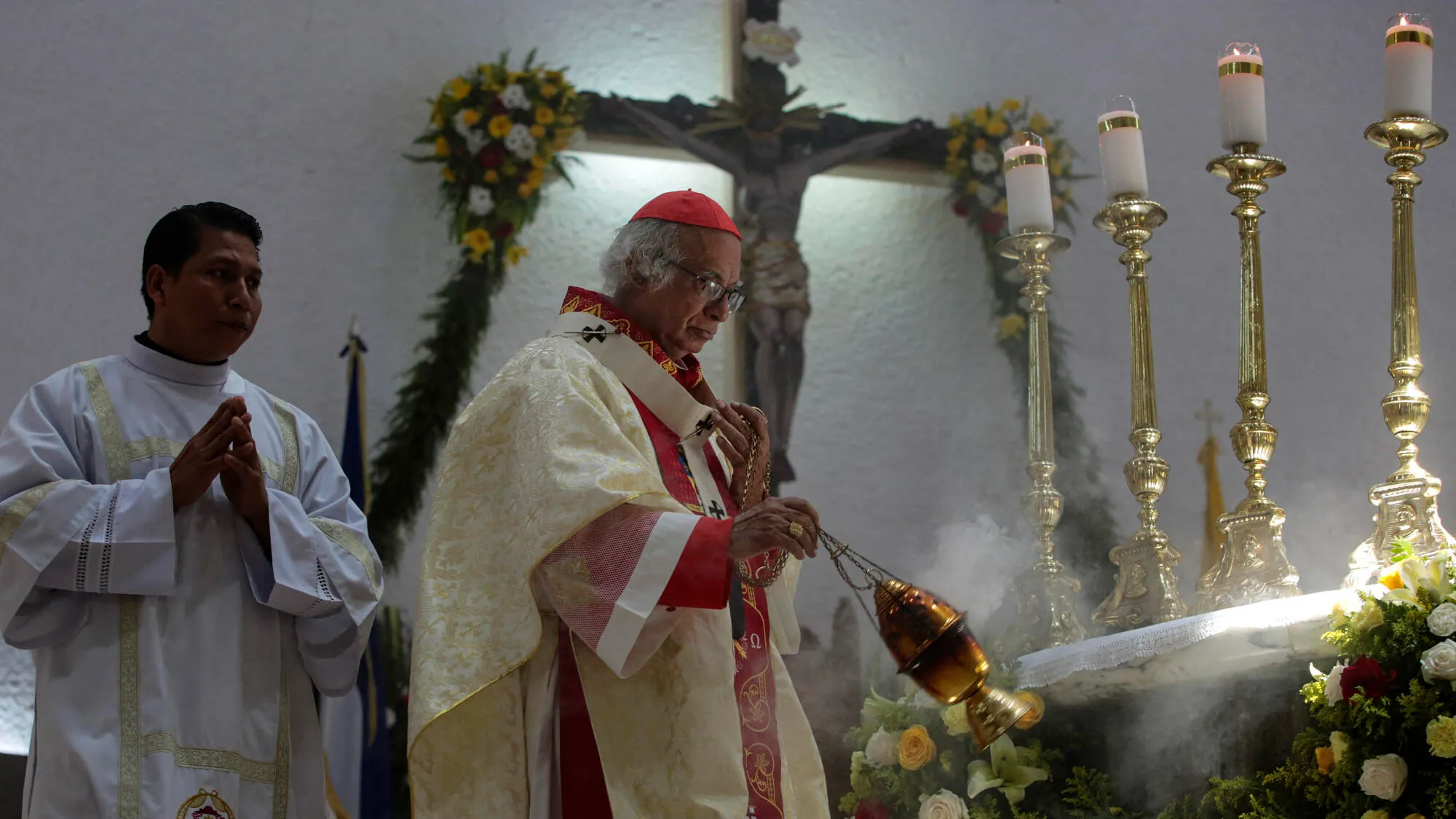
I think the correct term is a Church under dictatorial control. No one is safe: those close to the regime attend masses to record the homilies, priests must inform a police officer of their movements, their exits and their returns, as well as their reasons. The faithful are also monitored. And even in exile, Catholics speak little, fearing for their families remaining in Nicaragua.
How do you perceive the situation in the country since your departure?
With more than 800,000 people in exile since 2018, no family is spared from the crisis. A majority of the population experiences a feeling of resignation, nourished by faith. She told herself that “Only God will fix this”.
But since January 3 and the arrest of Venezuelan President Nicolás Maduro by the United States, a diffuse hope has been born, that something will change. Now Nicaraguans think “the United States will fix this.” This is what I perceive when talking with people I know. I too have hope.
How do you see the future of the Church in Nicaragua?
The future, not only of the Church, but of the whole country, seems very uncertain to me. When the dictatorship ends, it will be necessary to rebuild a destroyed social and ecclesial fabric. The challenge will be immense. Repairing the wounds inflicted on minds and hearts will be a test for those of us who return.
Do you think you will return there one day?
It’s my greatest desire, what makes me get up every morning. I left Nicaragua really desperate. Today I have hope that the dictatorship will end. And I want to come back to devote the time I have left to rebuilding the country that welcomed me.
*Machado, Antonio. “Las encinas.”, in Campos de Castilla1912.


