Spain: legislative elections under tension
Is Spain doing as well as people say? Often cited as an example for its economic performance, its weaknesses are resurfacing as the early legislative elections of November 29 approach. In power since 2018, after winning an unprecedented motion of censure, the socialist Pedro Sanchez is launching the race for a third legislature. The one too many? Known to be resilient, resistant, helped by a certain “baraka”, the outgoing Prime Minister wants to believe it. But this time, the polls predict a victory for the conservative right allied with the far right.
However, everything seemed to succeed and shine beyond the Pyrenees a few months ago, after the victory of the Spanish selection at the Football World Cup. Spain shows growth almost twice as strong as the euro zone average and a public deficit of 2.2% for 2025, the lowest in eighteen years. The unemployment rate, once endemic, remains high, but is no longer among the top concerns in public opinion (around 10%). In the street, however, the feelings are quite different, the Spaniards say they are not enjoying the fruits of growth.
In front of a supermarket in the north of Madrid, Sergio, in his forties, groans and sums up a widespread feeling: “People don’t care about gross domestic product, what matters to them is the money to buy what they need. We don’t care if the government says the economy is taking off like a rocket. What good does it do me if at the end of the month there isn’t much left? » Inflation, close to 5%, is galloping faster than wages. For several months, demonstrations have been increasing: nursery educators and teachers in Madrid are demanding higher pay.
National malaise
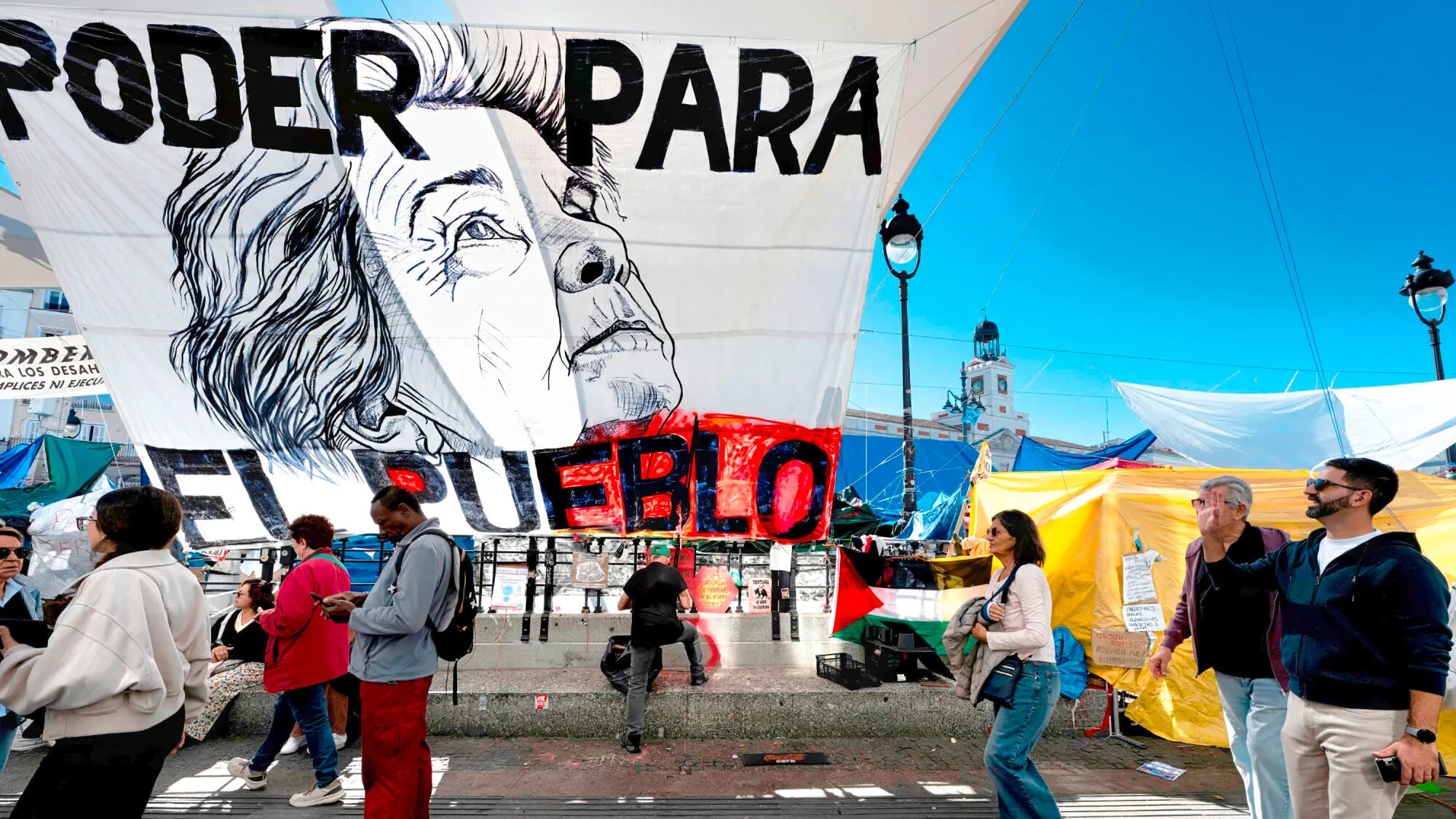
The anger is not new, but it remained diffuse until last September and the eviction of Maricarmen Abascal, an 87-year-old retiree, forced to leave the accommodation she had rented for seventy-one years, before dying two weeks later in hospital. It brutally symbolized this situation of a country where housing is becoming unaffordable.
In one of the many demonstrations this fall to protest the housing crisis, criticism came from all sides. Celia, a young woman of 28, lives with her partner in a one-bedroom apartment for 1,200 euros: “We feel rage, Pedro Sanchez hasn’t done anything in eight years. » The reality is more nuanced: the government tried some measures, but too late. The issue remains all the more complex as skills and decisions are shared between central government and regions. The conservative right, in the regions it leads, is slowing down these measures.
“In addition to the eight years of weariness of power and weariness in the face of cases of corruption of those close to Pedro Sanchez, the uneasiness is concentrated around inflation. The Spaniards are poorer than before,” explains Pablo Simon, professor of political science at the Carlos III University of Madrid.
Added to these social difficulties is a growing concern: the migration issue. The government also had to deal with the Ceuta crisis at the end of July, when more than 100,000 Moroccans illegally entered this Spanish enclave in northern Africa, where residents suffered from chaos and insecurity, sparking national unease and fueling criticism of the government.
Explosive cocktail
“The novelty in this campaign is the migration theme. We have never had a debate on this question,” continues Pablo Simon. The young far-right party Vox has taken up the subject since 2024. “Between a population which is increasing rapidly with immigration, a saturation of regional public services and the higher cost of living, we have a cocktail which partly explains this turn to the right”, estimates this political scientist. In this context, the activism of Pedro Sanchez on the international scene, to stand up to Donald Trump and recognize Palestine, is no longer enough. “In Spain, the economy and corruption are much more determining, especially when the latter directly affects parties,” assures Francisco Camas, sociologist and director of research on public opinion at the Ipsos institute. This contrasting assessment, weighed down by the railway disaster in the province of Toledo at the end of October, ended up dealing a fatal blow to the government. Already weakened by the absence of a parliamentary majority, subject to agreements with independence groups and without a voted budget for four years, he ended his mandate with a feeling of the end of his reign.