
a place to preserve the heritage of the Roquefort industry
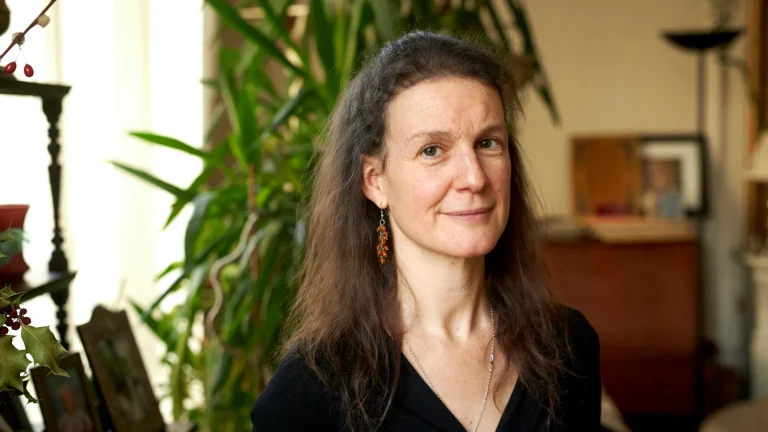
We open the door of a colorful house, at the foot of the Combalou limestone plateau. Delphine Atché welcomes you with the naturalness of those who live their mission as loyalty to a place. Responsible for the reception, information and promotion center at the Pays de Roquefort Tourist Office, she knows that the name is sometimes misleading: Le Saloir.
However, this site has never been a salting ground in the strict sense. “We named it thus to honor these vaulted rooms of the village where, in the past, salting completed the preparation of curd loaves before maturing, but also to say, in a wink, that salt gives taste to knowledge, in this case that of a village which gave its name to a cheese,” she declares.
“Genealogy readily intersects with the life of maturing cellars”
Inside the Saloir, curiosity awakens of its own accord. The shelves are overflowing with books, registers, old photos, press clippings, documents annotated over the years: a whole patient world, amassed by village enthusiasts, constantly enriched with donations, and today methodically listed by Delphine Atché.
“These are archives and objects which tell the story of the Roquefort industry from start to finish: from breeding to marketing, including production and official texts, and which preserve the memory of men and women linked to the cheese-making destiny of the country,” she explains. We come here to study, to research, to find a part of our family history sometimes. Because genealogy readily intersects with the life of maturing cellars.”
Memory box
In another room, the collection is tactile and concrete: scales and patinated weights, molds and cans, advertising materials, sheep bells… but also these cabanières’ blouses, expert workers for turning, salting and wrapping by hand the “king of cheeses”, as the encyclopedists Diderot and d’Alembert nicknamed it in the Age of Enlightenment.
The Saloir has nearly 400 objects and documents, a collection full of stories. The establishment’s mission is to preserve, study and share this treasure, and we feel that each object – however modest it may be – traces the epic story of Roquefort in detail. The history of the house itself says something about this daily loyalty. In the 18th century, it was a barn before being transformed into a dwelling house, later given to the town to become a school house. Over time, it also served as a post office. Today, on the Church Square, it has become a showcase of memory. The municipality took the initiative in 2018, to save archives threatened with dispersion.
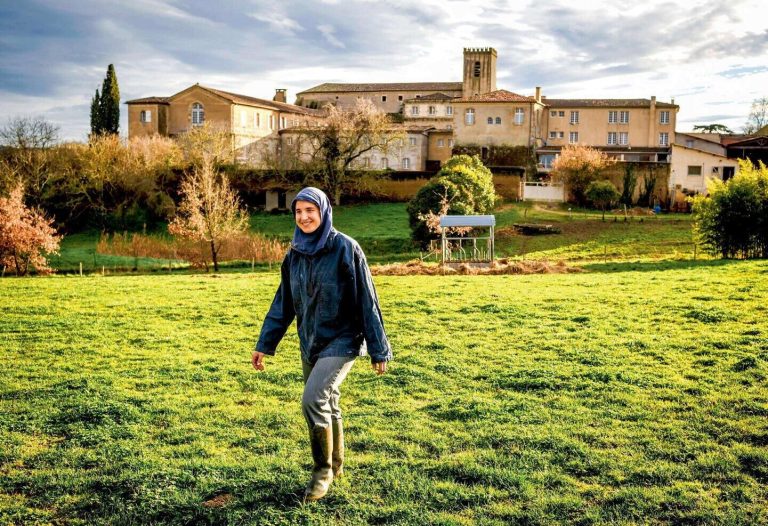
But the young woman does not confine the discovery between four walls. After the archives, she likes to take visitors through the alleys, towards the old salt works still visible, then on the paths which go up to Combalou. “To understand Roquefort, you have to read the landscape,” she insists. Up there, the millennial collapse has hollowed out the fleurines where fresh, precise air circulates, essential for maturing. The geology is explained, and the village nestled under its nourishing rock takes on a unique face. The hike becomes the natural extension of the visit: a sensitive way of approaching this cheese which could not be born elsewhere.
We leave Saloir with more than knowledge: a way of inhabiting the territory. This establishment says, in its own way, that memory is an art of living. It welcomes, it connects, it sets things in motion. And, like the salt that reveals flavors, it gives flavor to the stories that pass through the places.